How Crossed Roller Bearings Boost Robot Joint Precision
2026-05-26 01:30:54PRS Bearings
In modern robotics, joint precision is the cornerstone of repeatable motion, load handling, and overall system reliability. As robots are deployed in high-stakes environments such as medical surgery, semiconductor manufacturing, and collaborative assembly, even micron-level errors can lead to costly defects or safety risks. Crossed roller bearings have emerged as a critical enabler of this precision, offering a unique combination of rigidity, low friction, and multi-axis load support. This article explores the technical principles behind crossed roller bearings, how they directly improve robot joint performance, and why PRS has become a trusted partner for engineers seeking maximum accuracy and durability.
Understanding Crossed Roller Bearings: A Technical Overview
Design and Construction
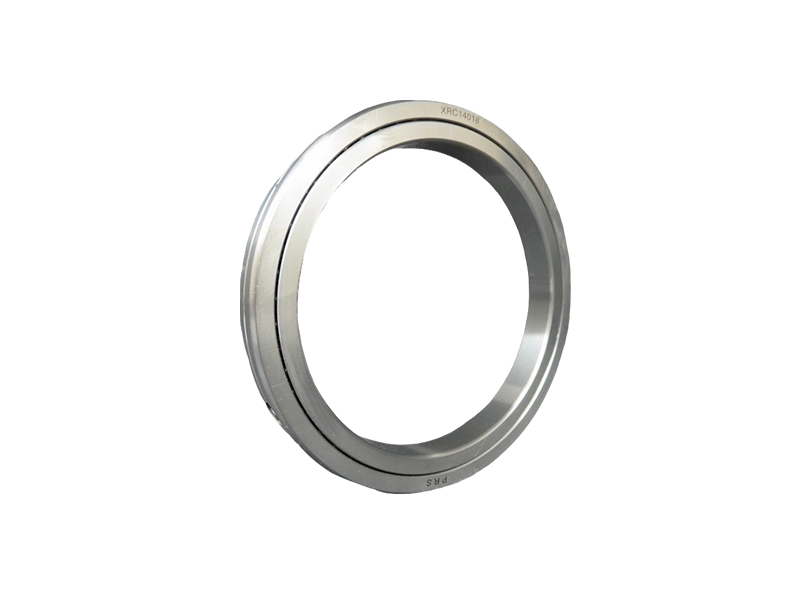
Unlike conventional ball bearings that rely on point contact, crossed roller bearings use cylindrical rollers arranged in a crossed pattern between inner and outer rings. Each roller acts like a miniature beam, distributing loads over a line of contact rather than a single point. This design allows the bearing to simultaneously handle radial, axial, and moment loads with minimal elastic deformation. The rollers are typically separated by a cage or spacer to prevent friction between adjacent rollers, ensuring smooth and consistent motion even under high preload.
Key Distinguishing Features
The most significant feature of crossed roller bearings is the 90-degree roller orientation. This configuration creates a highly rigid structure that resists tilting and twisting forces. Additionally, the absence of a conventional ball raceway eliminates the “ball spin” phenomenon, which causes uneven wear and position loss over time. The result is a bearing that maintains its original accuracy throughout its service life, a critical requirement for robotics applications where recalibration is costly or impractical.
The Critical Role of Precision in Robot Joints
Impact of Bearing Accuracy on Repeatability and Stiffness
Robot joints are subjected to complex, multi-directional loads: gravitational forces from the arm, inertial forces from acceleration, and external forces from tool contact. A bearing that deflects even a few microns under these loads will cause cumulative positioning errors, especially in articulated arms with multiple joints. Crossed roller bearings provide nearly zero radial and axial runout, typically maintaining tolerance classes within 2–5 µm. This translates directly to higher repeatability—the ability to return to a programmed position with extreme consistency—and stiffness, which prevents oscillation or overshoot during high-speed motion.
Preload Stability and Thermal Performance
Another critical advantage is the ability to apply controlled preload without excessive friction. In robot joints, preload eliminates clearance and improves resonance frequency, but too much preload creates heat and wear. Crossed roller bearings have a low coefficient of friction (often 0.002–0.004) and generate minimal heat even under moderate preload, allowing designers to optimize stiffness without thermal runaway. PRS has developed proprietary preload adjustment techniques that further enhance thermal stability in high-duty-cycle applications.
Why Crossed Roller Bearings Outperform Conventional Alternatives
To understand the practical benefits, it helps to compare crossed roller bearings with other common options in robotics:
-
Deep-groove ball bearings: Offer good radial load capacity but poor moment load stiffness. Under combined loads, internal clearance increases and accuracy degrades rapidly.
-
Angular contact ball bearings: Can handle axial and radial loads but require matched pairs for moment loads, increasing complexity, cost, and assembly time.
-
Crossed roller bearings: Single unit handles all load directions simultaneously. Achieves 5–10 times higher stiffness per unit size compared to ball bearings, with lower maintenance.
-
Needle roller bearings: High radial capacity but poor axial and moment load handling. Often require additional thrust bearings, adding weight and compliance.
For robot joint designers, the choice is clear: when peak precision and reliability are non-negotiable, crossed roller bearings deliver a level of integrated performance that simpler solutions cannot match.
Optimizing Robot Performance with PRS Crossed Roller Bearings
PRS has specialized in crossed roller bearing manufacturing for over a decade, focusing on the unique demands of robotics. Their product line includes thin-section crossed roller bearings that reduce joint weight without sacrificing load capacity, as well as integrated encoder-compatible designs that simplify assembly. PRS bearings undergo rigorous testing for preload consistency, noise, and vibration, ensuring each unit meets ISO P4 or better accuracy grades. Engineers working on collaborative robots, exoskeletons, or high-speed pick-and-place systems report that switching to PRS crossed roller bearings improves joint repeatability by 30–50% and extends maintenance intervals by 2–3 times compared to previous ball-bearing designs.
Application Examples
-
Six-axis industrial robots: Used in the wrist and shoulder joints to maintain positional accuracy during heavy payloads.
-
Surgical robots: Provide the micro-level smoothness required for delicate tissue manipulation without backlash.
-
Autonomous guided vehicles (AGVs): Steering and lift mechanisms benefit from the bearing’s ability to handle off-center loads.
Conclusion
Crossed roller bearings are not a niche component—they are an essential building block for any robot joint that demands sub-arcminute accuracy, high structural rigidity, and long-term reliability. Their unique crossed-roller geometry converts multi-axis loads into a stable, predictable mechanical response that ball bearings simply cannot replicate. For robotics engineers seeking to push the boundaries of precision motion, partnering with a specialized manufacturer like PRS ensures access to bearings that are designed, tested, and optimized specifically for the rigors of modern robotics. Whether you are developing a new cobot or upgrading an existing design, integrating crossed roller bearings is one of the most effective steps you can take to elevate joint performance.


 XRT Series Crossed Tapered Roller Bearings
 XV Series Crossed Cylindrical Roller Bearing
 XRU Crossed Roller Bearings
 XRSU Crossed Roller Bearings
 XRE Crossed Roller Bearings
 XRC Crossed Roller Bearings
 XRBH Crossed Roller Bearings
 XRB Crossed Roller Bearings
 Ultra Thin XRBS Crossed Roller Bearings
 Ultra Thin XRA-C Crossed Roller Bearings
 Ultra Thin XRA Crossed Roller Bearings
 XRBC Crossed Roller Bearings