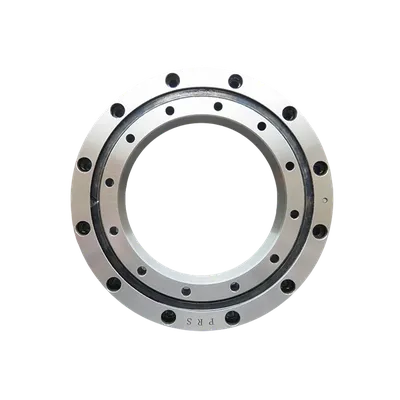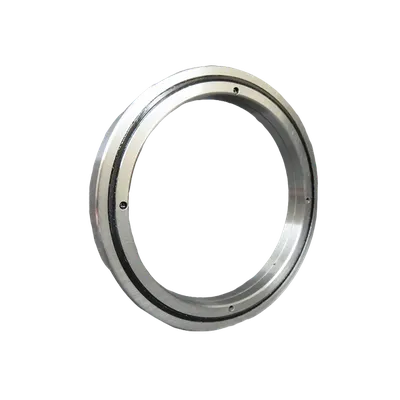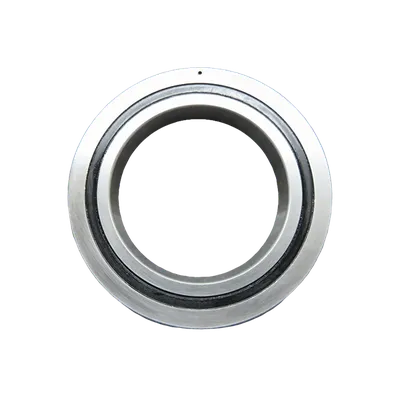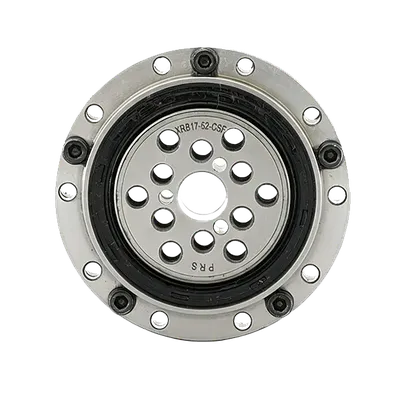

Crossed roller bearings are critical components in precision positioning systems, including industrial robots, medical imaging equipment, and rotary indexing tables. A single selection mistake can lead to premature failure, increased maintenance costs, or even safety hazards. Yet many engineers repeatedly fall into the same traps when specifying these bearings. Understanding the most common pitfalls — and how to avoid them — can save time, money, and operational headaches. As a leading provider of high-quality crossed roller bearings, PRS has helped hundreds of clients navigate these decisions. This article highlights the five most frequent errors and explains how to steer clear of them.
1. Misjudging Load Capacity Requirements
The most prevalent mistake is underestimating the actual load conditions. Crossed roller bearings can handle axial, radial, and moment loads simultaneously, but each direction has its own rating. Many engineers calculate only static loads or fail to consider dynamic loads during acceleration and deceleration. A bearing that works perfectly under steady-state conditions may fail quickly under repetitive shock loads.
How to avoid this error
- Always evaluate the worst-case load scenario, including start-up, emergency stops, and maximum acceleration.
- Use manufacturer-provided static and dynamic load ratings for each load direction.
- Apply a safety factor of at least 1.5 for industrial robots and 2.0 for medical applications.
- Request a load analysis from PRS, which offers free application engineering support for complex configurations.
2. Overlooking Precision and Tolerance Classes
Crossed roller bearings are available in several precision grades, from P0 (standard) to P2 (ultra-precision). Specifying too low a grade can cause unacceptable runout in high-accuracy rotary tables, while overspecifying adds unnecessary cost. Another common mistake is mismatching the bearing precision with the mounting surface tolerances. Even a high-grade bearing will not perform well if the housing and shaft tolerances are poor.
Selection tips
For general automation, P5 or P4 grades are typically sufficient. For semiconductor equipment and optical inspection machines, P2 is advisable. PRS recommends that customers provide detailed drawings of the surrounding assembly so that the bearing tolerance can be matched precisely to the mating components.
3. Ignoring Preload Requirements
Crossed roller bearings are often supplied with a specified preload to eliminate internal clearance. Applying too much preload reduces friction torque and increases stiffness but can also generate excessive heat and accelerate wear. Too little preload leads to play and loss of positioning accuracy. Many users assume that a standard bearing can be directly installed without adjusting preload, which is a critical mistake.
Best practices for preload
The correct preload depends on the operating speed, temperature range, and required rigidity. PRS provides preload recommendations based on application parameters during the quoting process. In some cases, custom preload settings can be applied at the factory, saving the user onsite adjustment time.
4. Neglecting Sealing and Lubrication
Crossed roller bearings have exposed rolling elements between the raceways, making them vulnerable to contamination. Many customers select a bearing without considering the operating environment — for example, using an open bearing in a dusty workshop or a sealed bearing in a cleanroom where outgassing is a concern. Improper lubrication (type, quantity, and relubrication interval) is another common failure cause.
How PRS simplifies the choice
- PRS offers integrated seal options: rubber lip seals for dust protection and labyrinth seals for high-speed applications.
- A standard grease or oil lubrication system can be specified; for special environments, PRS provides FDA-approved lubricants or vacuum-compatible options.
- Lubrication life calculations are included in the PRS selection tool to ensure maintenance intervals align with production schedules.
5. Failing to Consider Installation and Alignment
Even a perfectly selected bearing will perform poorly if installed incorrectly. Common installation mistakes include using excessive force to press the bearing onto a shaft, misaligning the inner and outer rings, and failing to parallel the mounting faces. These errors introduce internal stress that reduces bearing life drastically.
PRS recommends using a press with a proper fitting tool and checking parallelism with a dial indicator. For applications where space is tight, PRS can supply pre-assembled units that eliminate field installation risks.
Why PRS Is Your Trusted Partner in Bearing Selection
Avoiding the above mistakes often requires in-depth engineering knowledge and access to reliable data. PRS has been manufacturing and supplying crossed roller bearings for over 30 years, offering both standard and custom solutions. Our team of application engineers can review your load, speed, accuracy, and environmental requirements to recommend the optimal bearing configuration — often within 24 hours. We also provide comprehensive documentation, including load-life calculations, preload settings, and technical drawings.
Contact PRS today to ensure your next rotary motion project avoids costly errors. Our expertise helps you select the right crossed roller bearing the first time.