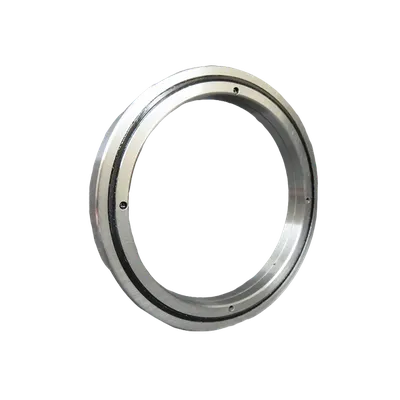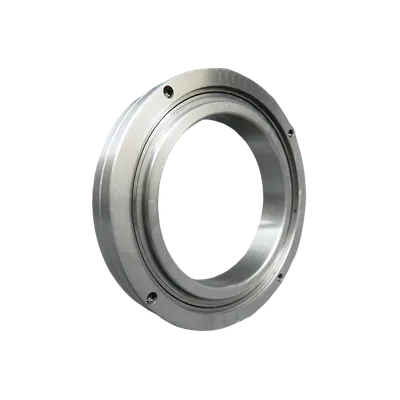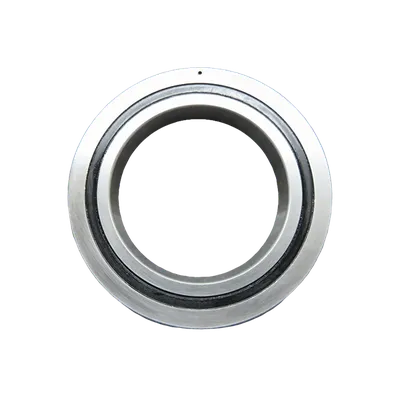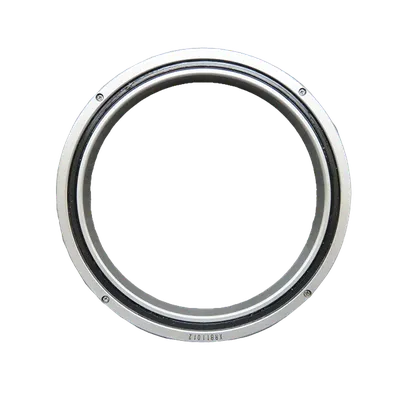
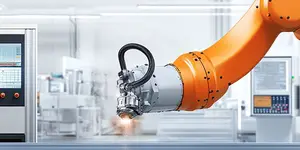
In semiconductor wafer handling robots, every motion must be executed with sub-micron precision under extremely demanding cleanroom and vacuum conditions. The bearing system directly determines the robot's positioning accuracy, stiffness, and long-term reliability. Crossed roller bearings have emerged as the preferred choice for these applications due to their unique combination of high load capacity, compact cross-section, and exceptional rotational accuracy. This article examines why crossed roller bearings outperform conventional bearing types in wafer handling robots, and how selecting the right bearing partner—such as PRS—can optimize your robot's performance and lifespan.
Why Crossed Roller Bearings Are Essential for Wafer Handling Robots
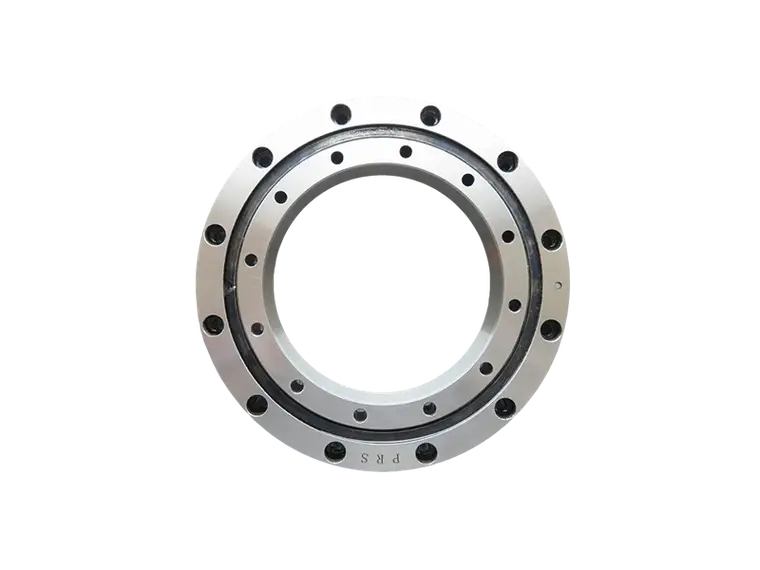
Semiconductor wafer handling involves rapid pick-and-place cycles, minimal vibration, and strict cleanliness standards. Crossed roller bearings meet these challenges through their distinctive design: cylindrical rollers arranged at 90° alternating orientation between inner and outer rings. This configuration provides several critical advantages.
High Rigidity and Load Capacity in Compact Form
Unlike ball bearings, which rely on point contact, crossed roller bearings use line contact between rollers and raceways. This results in significantly higher stiffness—typically 3 to 5 times greater than equivalent-sized ball bearings—for the same envelope. In a wafer handling robot, higher rigidity translates directly to reduced deflection under load, enabling faster accelerations without overshoot. The compact cross-section (often less than half the width of a comparable angular contact bearing pair) also frees up valuable space for other robot components, such as vacuum lines or sensors.
Superior Accuracy and Smooth Motion
Crossed roller bearings achieve rotational runout accuracy of 2–5 μm for standard grades, with some precision grades reaching sub-micron levels. The alternating roller arrangement cancels out radial and axial play simultaneously, providing pure rotational motion without parasitic tilting. This is critical for wafer alignment stages and end-effector joints where even micron-level wobble can cause misalignment. Additionally, the low friction torque (<0.1 N·m for small sizes) ensures smooth start-stop motions, reducing particle generation from stick-slip effects.
Comparing Crossed Roller Bearings with Alternative Bearing Types
To understand the value proposition, engineers often compare crossed roller bearings against deep groove ball bearings, angular contact ball bearings, and needle roller bearings. The table below summarizes key differentiators for wafer handling applications.
- Rigidity (radial + axial): Crossed roller bearings offer the highest combined rigidity due to line contact. Deep groove ball bearings provide only moderate radial rigidity, while angular contact pairs require preload adjustment and occupy more axial space.
- Compactness: Crossed roller bearings integrate both radial and axial load capacity in a single thin-section ring. Two angular contact bearings would double the axial footprint and require careful shimming.
- Moment load capability: Crossed roller bearings excel at handling overturning moments (common in robotic arms) because the alternating rollers create a large effective lever arm. Needle roller bearings are weak in axial direction and cannot sustain moment loads.
- Cleanroom compatibility: Crossed roller bearings can be supplied with low-outgassing lubricants, resin cages (e.g., PEEK or phenolic), and stainless steel or ceramic coatings. Ball bearings are easier to seal but generate more microparticles under high-speed oscillation.
- Speed limitation: Crossed roller bearings are designed for moderate rotational speeds (typically <2000 rpm for precision grades) which matches wafer handling requirements. Ball bearings can reach higher speeds but sacrifice rigidity.
For wafer handling robots, the superior rigidity and compactness of crossed roller bearings often justify their higher unit cost, especially when total cost of ownership includes reduced downtime and higher throughput.
Key Considerations When Selecting Crossed Roller Bearings for Semiconductor Applications
Choosing the right crossed roller bearing involves more than just size and load ratings. Semiconductor environments impose unique constraints that must be addressed during selection.
Material and Coating for Cleanroom Compatibility
Standard bearing steels (e.g., SUJ2) can corrode in aggressive cleaning chemicals or outgas hydrocarbons under vacuum. For ISO Class 1 or better cleanrooms, PRS recommends bearings made from martensitic stainless steel (440C or equivalent) or with a thin dense chrome (TDC) coating. Ceramic rollers (Si3N4) are also available for applications requiring non-magnetic properties and extreme wear resistance. The cage material should be selected for low particle generation: PEEK or PTFE-lined cages are preferred over brass or steel in wafer fabs.
Lubrication and Maintenance Requirements
Conventional grease can vaporize contaminants and attract particles. PRS offers special low-outgassing, halogen-free lubricants (<0.1% outgassing rate per ASTM E595) that withstand vacuum levels down to 10⁻⁶ Pa. For robots operating in high-humidity environments, a thin film of PFPE (perfluoropolyether) oil provides long service life. The bearing should be engineered to require no re-lubrication for the robot's life (typically 10–20 million cycles) to avoid maintenance-related downtime.
Integration with Robot Arm Design
The bearing mounting interface must account for thermal expansion, alignment tolerances, and preload control. PRS engineers collaborate with robot designers to specify the appropriate fit (typically H7/h6 for the housing shaft), mounting flange flatness (<5 μm for precision grades), and preload method (either integral preload via tapered spacer or adjustable nut). For robots that operate in both cleanroom and transfer chambers with different thermal profiles, a bearing with matched thermal expansion coefficient to the robot's material (e.g., invar or stainless steel) prevents loss of preload.
Why Choose PRS Crossed Roller Bearings for Your Wafer Handling Robot
PRS has specialized in precision crossed roller bearings for semiconductor capital equipment for over a decade. Our product range covers shaft diameters from 10 mm to 200 mm, with tolerances up to ISO P4 (equivalent to ABEC 7). Every bearing undergoes 100% inspection for bore, OD, runout, and torque consistency. PRS also offers custom designs: for example, through-holes for cable routing, integrated encoder mounting flanges, or special groove profiles for enhanced stiffness. With in-house cleanroom assembly facilities (ISO Class 4), PRS can deliver bearings that meet the most stringent particle and outgassing specifications. Our engineering team provides application support to help you select the optimum bearing configuration for your robot's payload, duty cycle, and environmental conditions.
To summarize, crossed roller bearings provide the high rigidity, precision, and compactness essential for modern wafer handling robots. By partnering with a specialized manufacturer like PRS, you ensure that your bearing selection aligns with the unique demands of semiconductor manufacturing—maximizing uptime and yield.