
Selecting the right bearing for a thin-section application is a critical engineering decision that directly impacts performance, service life, and cost. Two of the most common options are thin section ball bearings and cross-roller bearings. Though they occupy the same radial space envelope, their mechanical characteristics differ substantially. Understanding these differences is essential for engineers and procurement specialists who need to match the bearing to the actual load and motion requirements of the system. This article provides a structured comparison, outlining the strengths and limitations of each type, and offers practical guidance for making an informed selection.
The Fundamentals: Thin Section Ball Bearings vs. Cross-Roller Bearings
Thin-section bearings are designed to save weight and space while maintaining high rotational accuracy. They are widely used in robotics, medical equipment, radar systems, and semiconductor manufacturing. The two dominant designs are the ball-type and the roller-type, distinguished by their rolling elements and contact geometry.
Thin Section Ball Bearings
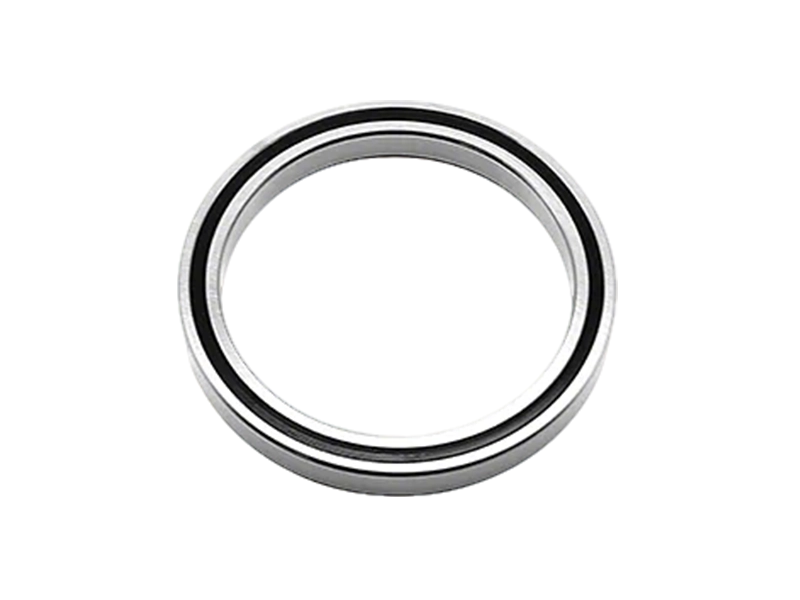
Thin section ball bearings use hardened steel balls as rolling elements. They typically have a deep or angular contact raceway, allowing them to handle radial, axial, and moment loads with relatively low friction. Because the contact area between a ball and the raceway is a point, the bearing can achieve high rotational speeds with minimal heat generation. They are available in various cross-section series such as A (angular contact), C (deep groove), and X (four-point contact), each optimizing a specific load distribution.
Cross-Roller Bearings
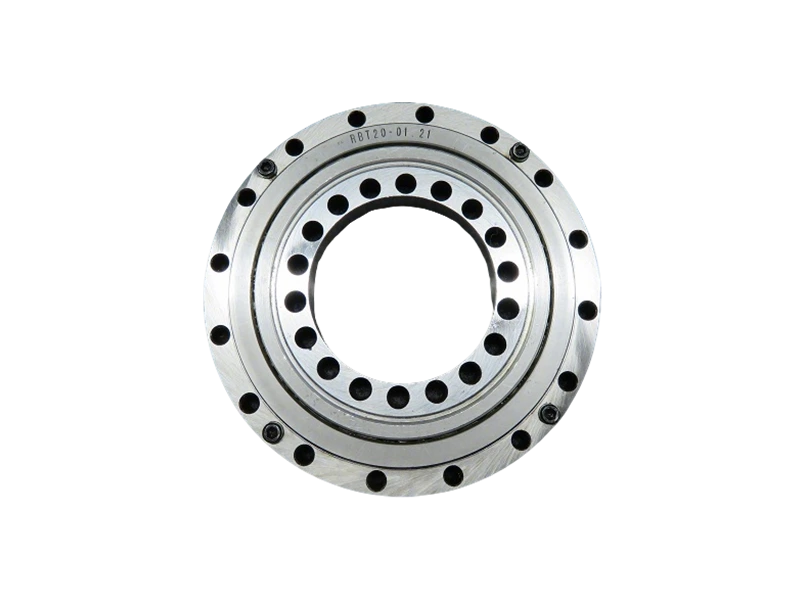
Cross-roller bearings contain cylindrical rollers arranged perpendicularly in alternating directions. This configuration provides line contact between rollers and raceways, significantly increasing the load-carrying capacity compared to balls of the same cross-sectional size. The crossing arrangement enables the bearing to support radial, axial, and moment loads simultaneously with high rigidity. Cross-roller bearings are often the preferred choice for applications demanding exceptional stiffness and load capacity in a compact envelope.
Head-to-Head Comparison: Key Performance Metrics
When evaluating the two bearing types, the following performance factors play a decisive role:
- Load capacity: Cross-roller bearings offer significantly higher load ratings due to line contact. For the same bearing cross-section, a cross-roller bearing can handle moments and axial loads that would exceed the limits of a ball bearing.
- Rigidity: The line contact of rollers provides greater elastic deformation resistance, giving cross-roller bearings superior stiffness. Ball bearings deflect more under load, which can affect positioning accuracy in precision applications.
- Friction and speed: Point contact in ball bearings produces lower friction, allowing higher rotational speeds and reduced heat generation. Cross-roller bearings generate more friction and are generally limited to moderate speeds.
- Accuracy: Both types can achieve high running accuracy, but ball bearings often offer smoother rotation with lower torque variation. Cross-roller bearings maintain better accuracy under variable loads due to their stiffness.
- Size envelope: Both designs excel in saving radial space, but cross-roller bearings typically require a slightly wider section to accommodate the roller geometry. Ball bearings allow more compact designs when speed is a priority.
- Cost and availability: Thin section ball bearings are more widely manufactured and often lower in cost. Cross-roller bearings are more complex to produce and usually come at a premium.
Advantages of Thin Section Ball Bearings
For many applications, thin section ball bearings offer compelling benefits that make them the first choice:
- Lower frictional torque, enabling higher speed operation and energy efficiency.
- Smoother runout and lower noise/vibration, which is critical in precision instruments.
- Greater flexibility in design due to multiple contact angles and raceway configurations.
- Easier lubrication and lower maintenance requirements in clean environments.
- More competitive pricing and shorter lead times, especially in standard sizes.
Advantages of Cross-Roller Bearings
Cross-roller bearings are the preferred solution when mechanical robustness and rigidity are paramount:
- Exceptional moment load capacity, making them ideal for indexing tables, robots, and rotary axes subject to tilting moments.
- High pre-load capability without sacrificing operating smoothness, resulting in high system stiffness.
- Better load sharing across the rollers, reducing wear and extending service life under heavy or reversing loads.
- Improved resistance to shock loads and vibration due to line contact and higher effective material volume.
- Compact cross-section paired with a high stiffness-to-weight ratio, enabling lighter machine design.
How to Make the Right Choice
The decision between thin section ball and cross-roller bearings must be driven by the specific application requirements. Start by analyzing the load profile: if the bearing is exposed to high moment loads or needs maximum stiffness, cross-roller is the safer choice. If operating speed is high and loads are moderate, ball bearings deliver better thermal performance and longer life. Here is a practical selection framework:
- Define the dominant load direction: Radial, axial, or moment? Cross-roller handles all three exceptionally well, while ball bearings require careful angular contact selection for moment loads.
- Assess stiffness requirements: For high-precision indexing or positioning, rigidity is non-negotiable. Cross-roller bearings are the established standard.
- Evaluate speed expectations: If the application rotates above typical speed limits for rollers, ball bearings are more appropriate.
- Consider environmental and lubrication constraints: Ball bearings are easier to seal and lubricate in vacuum or clean room conditions.
- Review total cost of ownership: Cross-roller bearings may have higher initial cost but can reduce maintenance and machine downtime if loads are severe.
Partnering with PRS for Your Bearing Needs
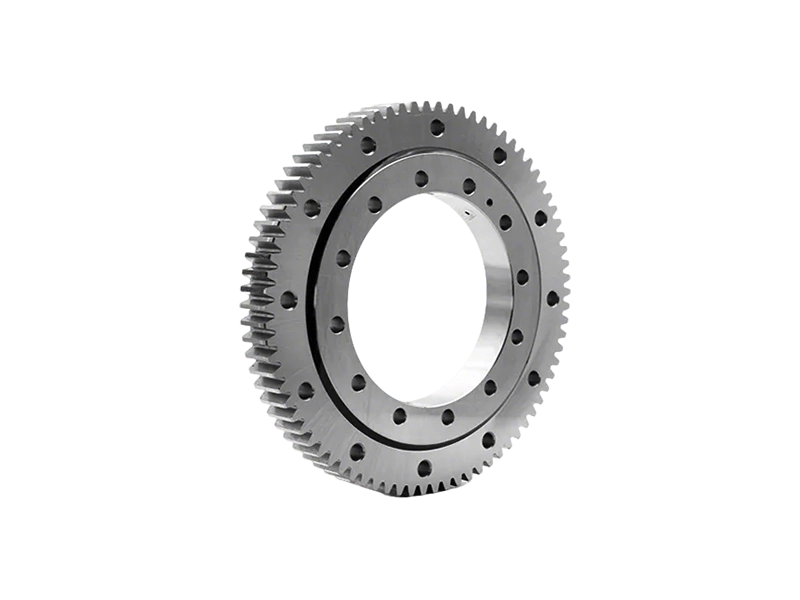
At PRS, we understand that bearing selection is not a one-size-fits-all process. Our engineering team provides impartial technical consulting, helping you evaluate thin section ball and cross-roller options against your exact performance targets. We offer both standard and customized solutions, with rigorous quality control and traceability. Whether you are upgrading an existing design or developing a new platform, PRS can deliver the bearing that optimizes your machine’s performance and reliability.
Conclusion
Both thin section ball bearings and cross-roller bearings have established their place in precision machinery. The ball bearing excels in speed, low friction, and economy, while the cross-roller bearing offers unmatched rigidity and load capacity. The correct choice ultimately depends on the load spectrum, stiffness demands, speed envelope, and budget. By evaluating these factors carefully and leveraging the experience of PRS, you can ensure that your bearing selection contributes to the long-term success of your product.