
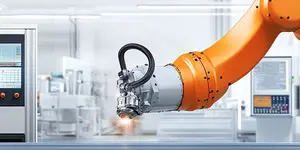
Crossed roller bearings are precision components engineered to handle simultaneous radial, axial, and moment loads in a compact envelope. When one fails prematurely, the consequences ripple through the entire machine—unplanned downtime, damaged adjacent components, and lost production. Understanding why these failures occur is the first step toward eliminating them. This article examines the most common crossed roller bearing failure causes, how to recognize each one, and what practical measures prevent recurrence.
Why Crossed Roller Bearings Fail: A Root-Cause Framework
Before examining individual failure modes, it helps to understand that the vast majority of bearing failures are not manufacturing defects. Industry studies consistently show that fewer than 1% of bearing failures stem from material or production flaws. The remaining failures trace back to application, installation, lubrication, or operating conditions. For crossed roller bearings—which operate with tight internal clearances and precise roller-to-raceway contact—even minor deviations from ideal conditions can accelerate wear dramatically.
PRS has supported customers across robotics, medical equipment, semiconductor manufacturing, and heavy machinery. In that experience, the same failure patterns appear repeatedly across industries, regardless of the specific application. Recognizing these patterns is what separates reactive maintenance from reliable operation.
The Six Most Common Failure Causes
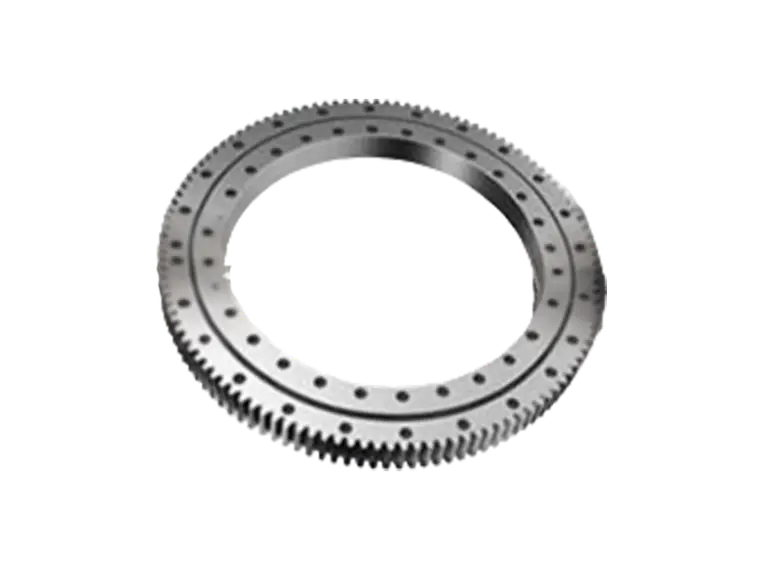
1. Inadequate or Degraded Lubrication
Lubrication failures account for a significant share of premature bearing failures. In crossed roller bearings, the lubricant serves three critical functions: separating rolling elements from raceways, protecting against corrosion, and dissipating heat. When any of these functions breaks down, metal-to-metal contact follows.
Common lubrication problems include:
- Using the wrong lubricant viscosity for the operating temperature and speed
- Insufficient lubricant quantity during initial assembly
- Lubricant degradation from heat, oxidation, or contamination
- Failure to re-lubricate at proper intervals
- Incompatibility between lubricants when switching brands or types
In crossed roller bearings, lubrication starvation is particularly damaging because the line contact between cylindrical rollers and raceways creates high stress concentrations. A lubricant film that would be adequate for a ball bearing may be insufficient here.
2. Contamination and Seal Failure
Crossed roller bearings are precision assemblies with internal clearances measured in microns. Particles as small as 10 microns—invisible to the naked eye—can bridge the lubricant film and create surface indentations on raceways. These indentations become stress risers, eventually leading to spalling and fatigue failure.
Contamination sources vary by application:
- Ingress of dust, metal chips, or cutting fluid in machining environments
- Water or coolant entry through inadequate sealing
- Debris generated internally as components wear
- Improper handling during installation, introducing foreign particles
Seal integrity deserves particular attention. A damaged or improperly seated seal provides a direct path for contaminants. In applications where the bearing operates in a dirty environment, PRS recommends specifying bearings with appropriate sealing configurations from the outset rather than attempting to retrofit protection later.
3. Installation and Mounting Errors
Installation errors are among the most preventable yet most frequently encountered causes of bearing failure. Crossed roller bearings demand careful handling because their internal geometry is easily disrupted by improper mounting forces.
Critical installation mistakes include:
- Applying force through the rolling elements during press-fitting, which creates brinelling (permanent indentations) on raceways
- Misalignment between the bearing and its housing or shaft
- Incorrect preload—too little causes excessive clearance and load concentration; too much generates heat and accelerates fatigue
- Damaged mounting surfaces that prevent proper seating
- Failure to follow the manufacturer's torque sequence for bolted connections
Even a seemingly minor installation error can reduce bearing life by 50% or more. Proper tooling, cleanliness, and adherence to mounting specifications are non-negotiable.
4. Overloading and Fatigue
Every bearing has a defined load capacity. When actual loads exceed design limits—whether through continuous overloading or shock loads—the bearing experiences accelerated fatigue. Crossed roller bearings are often selected for their high load capacity, but that capacity is finite.
Overloading can result from:
- Underestimating dynamic loads during the design phase
- Unexpected shock or impact loads during operation
- Load distribution problems caused by structural deflection
- Changes in operating conditions after installation
Fatigue failure typically manifests as spalling on raceways or rolling elements. Once spalling begins, it progresses rapidly, and the bearing must be replaced before secondary damage affects the entire assembly.
5. Misalignment and Geometric Errors
Crossed roller bearings tolerate very little misalignment compared to other bearing types. Their design relies on precise contact geometry between rollers and raceways. When shaft or housing misalignment exceeds allowable limits, edge loading occurs—stress concentrates at the edges of the contact area rather than distributing evenly.
Misalignment sources include:
- Machining tolerances in the housing bore or shaft journal
- Thermal expansion differences between components
- Structural deflection under load
- Wear in adjacent components over time
Regular inspection of mating surfaces and alignment verification during maintenance can catch these problems before they cause bearing damage.
6. Corrosion and Improper Storage
Crossed roller bearings are typically manufactured from through-hardened or case-hardened steel. Without adequate protection, moisture and corrosive chemicals attack raceway surfaces, creating pitting that disrupts the lubricant film and initiates fatigue.
Corrosion issues often originate before installation. Bearings stored in humid environments without proper packaging, or handled without gloves, can develop surface rust that compromises performance. In applications involving washdown, coolant exposure, or humid atmospheres, specifying corrosion-resistant materials or protective coatings is essential.
Diagnosing Failure: What to Look For
Identifying the cause of a bearing failure requires careful examination of the failed component. The appearance and location of damage points toward the root cause:
- Spalling along the center of the raceway suggests normal fatigue from reaching L10 life
- Spalling near raceway edges indicates misalignment or edge loading
- Brinelling (evenly spaced indentations) points to improper installation or shock loads
- Discoloration or scoring indicates lubrication failure
- Rust or pitting confirms corrosion as the primary cause
- Uneven wear patterns suggest contamination or load distribution problems
PRS works with customers to analyze failed bearings and trace damage patterns back to their source, helping prevent repeat failures rather than simply replacing components.
Prevention Strategies That Work
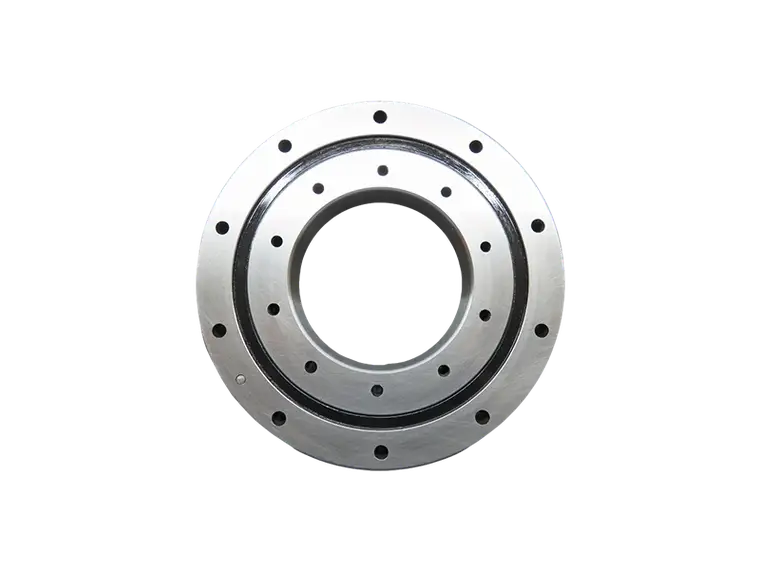
Eliminating bearing failures requires attention at every stage—from selection through maintenance:
- Right application engineering. Work with a supplier who understands your operating conditions and can recommend the correct bearing type, size, preload, and lubrication for your specific application.
- Controlled installation procedures. Train technicians on proper mounting techniques, provide correct tooling, and enforce cleanliness standards during assembly.
- Appropriate sealing and lubrication. Select seals rated for your environment and establish a lubrication schedule based on actual operating conditions, not generic intervals.
- Regular condition monitoring. Vibration analysis, temperature monitoring, and periodic inspection can detect early signs of degradation before catastrophic failure occurs.
- Proper storage and handling. Keep bearings in original packaging until installation, store in controlled environments, and handle with clean gloves to prevent contamination.
Frequently Asked Questions
How long should a crossed roller bearing last?
Bearing life depends on load, speed, lubrication, and environmental conditions. Under ideal conditions, a properly selected and maintained bearing reaches its calculated L10 life—the point at which 90% of identical bearings survive. In practice, most premature failures result from the causes described above rather than reaching natural fatigue life.
Can I replace a failed bearing with a different brand?
Crossed roller bearings are not always interchangeable between manufacturers. Internal geometry, preload, and tolerance specifications vary. Substituting without verifying compatibility can introduce new failure modes. PRS can help evaluate cross-references and ensure proper fit and function.
What is the most common cause of crossed roller bearing failure?
Lubrication-related failures and contamination are the most frequently observed causes across industries. However, the specific dominant cause varies by application—some environments present higher contamination risks while others stress lubrication systems through heat or speed.
How can I tell if my bearing failed from overload or fatigue?
Overload failure typically shows evidence of plastic deformation, brinelling, or fracture. Fatigue failure presents as spalling that develops progressively over time. The location and pattern of damage help distinguish between the two.
Conclusion
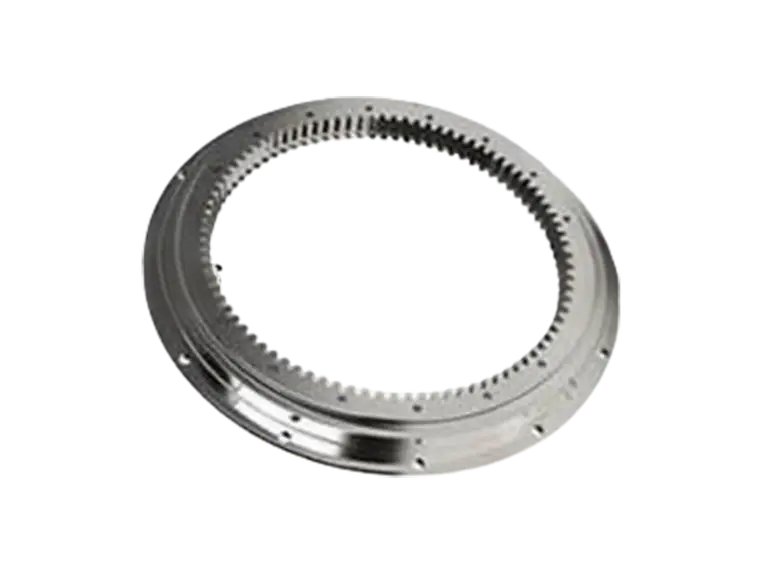
Crossed roller bearing failures rarely happen without warning or cause. Lubrication breakdown, contamination, installation errors, overload, misalignment, and corrosion account for the overwhelming majority of premature failures. Each leaves characteristic evidence that points to its origin.
The most effective approach combines proper application engineering, careful installation, appropriate maintenance, and condition monitoring. Working with an experienced supplier who understands both bearing technology and real-world operating conditions makes a measurable difference in reliability. PRS supports customers through selection, installation guidance, and failure analysis—because preventing failures is more valuable than explaining them after the fact.