
In CNC machine tools, machining accuracy depends on the performance of every load-bearing component. Crossed roller bearings play a particularly critical role in determining whether a cutting tool can hold micron-level tolerances. Unlike standard ball bearings or tapered roller bearings, crossed roller bearings arrange cylindrical rollers in an alternating 90-degree pattern, allowing a single bearing to handle radial, axial, and moment loads simultaneously. This configuration reduces the number of components in a machine assembly, lowers cost, and improves overall system rigidity. The sections below explain why crossed roller bearings matter, how they compare with alternatives, and what to consider when selecting them for a machine tool application.
Why Crossed Roller Bearings Matter in CNC Machine Tools
The core value proposition of a CNC machine tool is repeatable precision. Every axis that positions a tool relative to a workpiece needs support that is both rigid and stable. Crossed roller bearings deliver this because the rolling elements inside are cylindrical rollers—not spheres. These rollers are arranged in an alternating pattern, typically at 90 degrees to each other. The line contact between each roller and the raceway groove creates a high contact area that distributes load across the full length of the roller rather than concentrating it at a few points. The result is less elastic deformation under the combined loads that arise during cutting. For turning and milling operations, this matters because cutting forces rarely act in a single direction; they generate radial, axial, and moment loads at the same time.
Another advantage that is easy to overlook is space efficiency. A single crossed roller bearing can replace two or more ball bearing sets—for example, a pair of angular contact bearings plus a thrust bearing. That reduces the overall axial length and weight of a machine design, which is especially valuable in rotary tables and spindle heads where multiple axes are packed into a confined space. A smaller bearing envelope also means less thermal expansion to manage, which itself is a precision factor over long machining cycles.
Key Performance Characteristics to Consider
- High rigidity: Line contact between rollers and raceways resists elastic deformation far better than the point contact of ball bearings.
- Rotational accuracy: Standard grades typically achieve runout values equivalent to ISO P5 or better, and higher grades are available for ultra-precision requirements.
- Low, consistent friction torque: The difference between starting and running torque is minimal, which supports repeatable servo control.
- Compact cross-section: A low section height allows these bearings to fit into thin-walled housings without sacrificing load capacity.
- Mounting flexibility: Available with or without mounting holes, with or without seals, and with optional gear teeth for direct drive integration.
Crossed Roller Bearings vs. Alternative Bearing Types
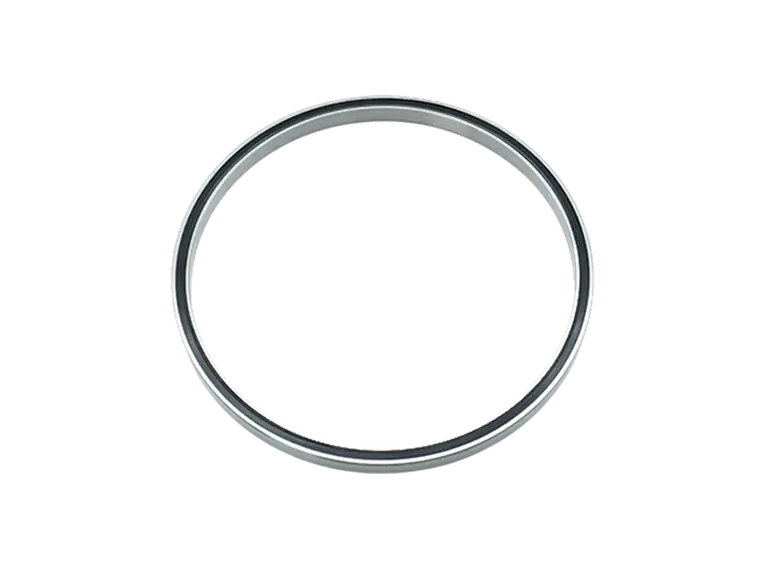
Before committing to a crossed roller bearing, engineers often compare it against two or three other options. The point of the comparison is not to declare one bearing type universally superior, but to evaluate which one delivers the best balance of rigidity, accuracy, and total cost for a specific machine architecture.
- Compared with angular contact ball bearings: Ball bearings are widely used and cost-effective, but they are point-contact devices. To achieve comparable rigidity in a rotary table, you need two or more of them preloaded against each other, which increases stack height and assembly complexity. A crossed roller bearing handles the same combined load in one unit.
- Compared with tapered roller bearings: Tapered rollers handle high radial and one-directional axial loads well, and they are common in lathe spindles. However, they require separate bearing sets for bidirectional axial and moment loads, and achieving low runout often demands careful adjustment of preload across multiple components.
- Compared with thrust ball bearings: Thrust bearings handle axial loads only and must be paired with a radial bearing. That means more parts, more tolerances to stack up, and more chances for assembly error. The crossed roller configuration consolidates these functions.
- Compared with plain sliding bearings: Plain bearings can offer high stiffness at low speed, but friction is higher, positioning is less predictable, and stick-slip behavior can compromise surface finish on interpolated cuts.
For CNC rotary tables, spindle heads, and indexing tables that must handle combined loads in a compact envelope, the crossed roller bearing is frequently the most direct solution. When evaluating cost, consider the total cost of ownership rather than the purchase price alone. Two angular contact bearings may cost less individually, but the machining and assembly time required to achieve the same rigidity can erase that advantage.Rigidity is not a luxury in CNC machining; it directly affects surface finish, tool life, and the ability to hold tight tolerances at high feed rates.
Selecting the Right Crossed Roller Bearing for Your Application
Selection starts with understanding the actual load case, not just the rated capacity of a catalog page. The following factors should guide the decision.
Load and Life Calculation
Begin by determining the radial, axial, and moment loads based on cutting torque and the mass of the workpiece and fixture. Then calculate the required dynamic and static load ratings against the desired fatigue life. For precision applications, static load rating and stiffness are often more relevant than L10 life calculations, because deflection—not fatigue—limits accuracy.
Accuracy Class and Preload
Precision rotary tables commonly require P5, P4, or higher accuracy grades. Preload is equally important. Light preload removes internal clearance and improves rigidity, but excessive preload increases friction and heat generation. Confirm the recommended preload class with the supplier and verify that the drive system has enough torque margin to handle it.
Lubrication and Sealing
Grease lubrication suits most medium-speed machine tool applications. High-speed spindles or cleanroom environments may require oil or oil-air lubrication instead. Seals are critical in machining environments because coolant and chips can enter the raceway and cause rapid raceway damage. If the application involves heavy contamination, specify bearings with contact seals and consider additional external protection.
Mounting Configuration
Crossed roller bearings are typically mounted with either the inner ring or the outer ring rigidly clamped to the shaft or housing. The flatness of the mounting face and the bolt torque pattern directly affect final runout. A poorly machined mounting surface can distort the bearing raceway and compromise accuracy even before the machine cuts its first part.
Installation and Maintenance Practices
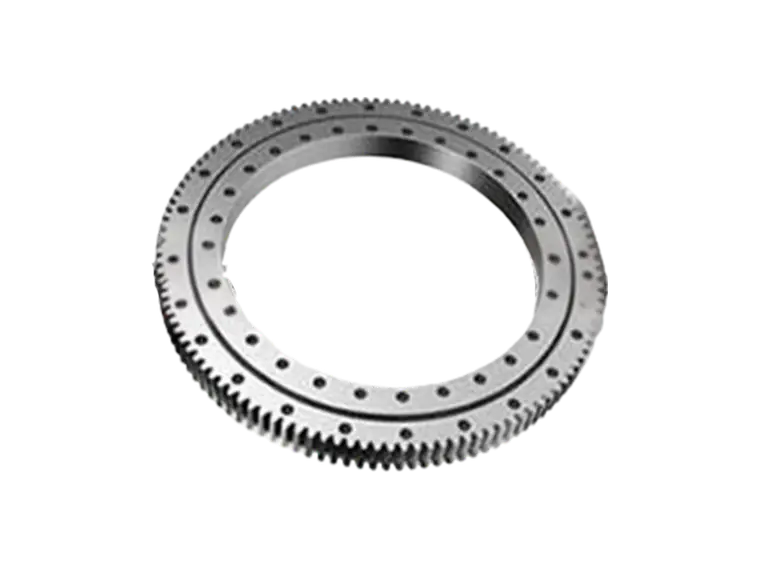
Even a high-precision bearing can fail prematurely if installation practices are careless. Follow these steps to protect performance:
- Verify shaft and housing roundness and perpendicularity against the bearing manufacturer's specifications before assembly.
- Tighten mounting bolts in a star pattern using a calibrated torque wrench.
- Measure actual runout after assembly and, if needed, adjust shims or mounting surfaces to correct it.
- Monitor operating temperature during the first hours of operation to detect excessive preload or insufficient clearance.
In terms of ongoing maintenance, many crossed roller bearings are sealed and lubricated for life. Applications with high loads or continuous operation may require periodic relubrication. Warning signs such as unusual noise, vibration, or temperature rise during operation often indicate loss of lubricant or raceway indentation. Addressing these symptoms early can prevent the need to replace an entire rotary table assembly.
What to Look for in a Bearing Supplier
Not all crossed roller bearings are manufactured to the same standard. Roller roundness, raceway heat treatment, grinding quality, and cage precision all influence service life and accuracy retention. Sourcing from a supplier that maintains traceable manufacturing processes and batch-level inspection data reduces the risk of a machine tool failing to meet precision specifications after installation. Suppliers with deep experience in precision bearing production, such as PRS, can support both standard catalog selection and custom bearing configurations for OEM machine tool projects.
When requesting quotations, ask for dimensional and runout tolerances, radial clearance or preload values, material certificates, and heat treatment records. For applications where downtime is costly, it is also worth asking about the supplier's after-sales support and failure analysis capabilities.
Frequently Asked Questions
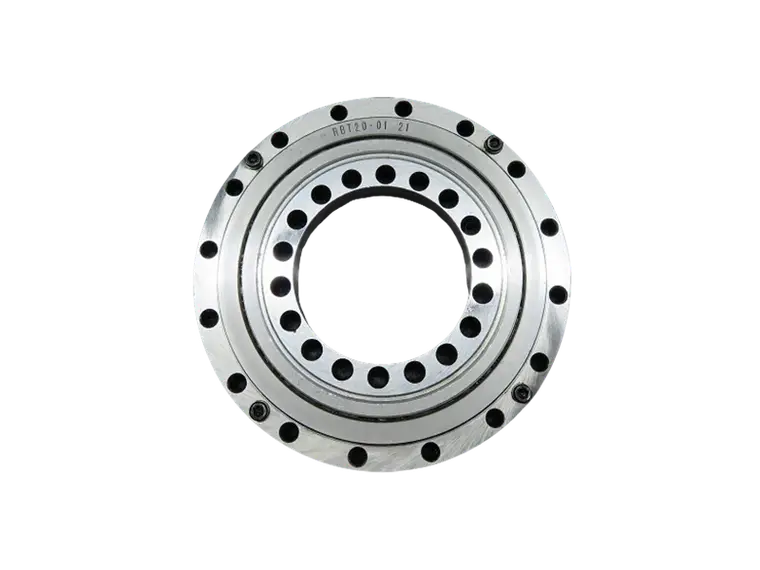
Can crossed roller bearings replace a combination of ball bearings?
In many rotary table and spindle head designs, a single crossed roller bearing can replace two or three angular contact or thrust bearings. This simplifies the housing, reduces stack height, and eliminates tolerance accumulation across multiple bearing seats.
What accuracy grade is typical for CNC machine tools?
Most CNC rotary tables and indexing heads use bearings in the P5 to P4 range. Ultra-precision applications, such as optical or semiconductor equipment, may specify P2 or equivalent grades with sub-micron runout requirements.
How often should crossed roller bearings be lubricated?
Sealed, grease-lubricated bearings can operate for years in moderate conditions. High-speed or high-load applications should follow the supplier's relubrication interval, which is based on speed factor and operating temperature rather than a fixed calendar schedule.
Conclusion
Crossed roller bearings give CNC machine builders a practical way to achieve high rigidity and rotational accuracy within a compact envelope. Their ability to carry combined loads in a single unit simplifies machine design, reduces assembly complexity, and improves dynamic performance under cutting loads. The key is to match the bearing to the actual load case, accuracy requirement, and operating environment, then follow disciplined mounting and maintenance practices. Working with an experienced bearing supplier such as PRS helps ensure that the component specified on the drawing performs as expected on the shop floor.