

A thin section ball bearing is a precision component that challenges every rule of conventional bearing lubrication. Its compact cross-section saves space and weight, but it also limits the amount of lubricant that can be retained inside the bearing. Without a disciplined lubrication strategy, even the best-engineered bearing will fail prematurely. This guide is written for engineers and maintenance professionals who want to extend the service life of thin section ball bearings through proven lubrication practices. From selecting the correct grease or oil to establishing realistic re-lubrication intervals, each step matters. Later, we explain how PRS supports customers with bearing specification and lubrication expertise.
Why Lubrication Determines Thin Section Bearing Life
In conventional bearings, a generous grease fill can mask lubrication errors. Thin section ball bearings do not offer that luxury. The balls and raceways are proportionally smaller, the ring cross-section is slender, and the available cavity for lubricant is limited. Every microliter of lubrication has to work harder.
The Role of the Elastohydrodynamic Film
Under normal operating conditions, a rolling element bearing creates an elastohydrodynamic lubricant film that separates the rolling elements from the raceways. In a thin section bearing, the contact geometry produces very high localized stresses. If the film is too thin, metal-to-metal contact occurs, causing wear, micro-spalling, and premature flaking. The film thickness must be protected by choosing a lubricant with the correct base oil viscosity at the operating temperature and by ensuring enough lubricant is delivered to the raceway regularly.
Common Failure Modes Linked to Lubrication
- Raceway wear caused by insufficient film separation.
- Micro-pitting and surface fatigue due to moisture contamination or thin oil film.
- Smearing or scuffing during low-speed oscillating motion with marginal lubrication.
- Corrosion of raceways and balls when the lubricant lacks rust inhibitors or has broken down.
- Premature grease hardening or bleeding that permits dry running.
Any one of these failure modes can reduce the life of a thin section bearing from its rated life to a fraction of it. That is why lubrication cannot be an afterthought.
Choosing the Right Lubricant for Your Thin Section Bearing
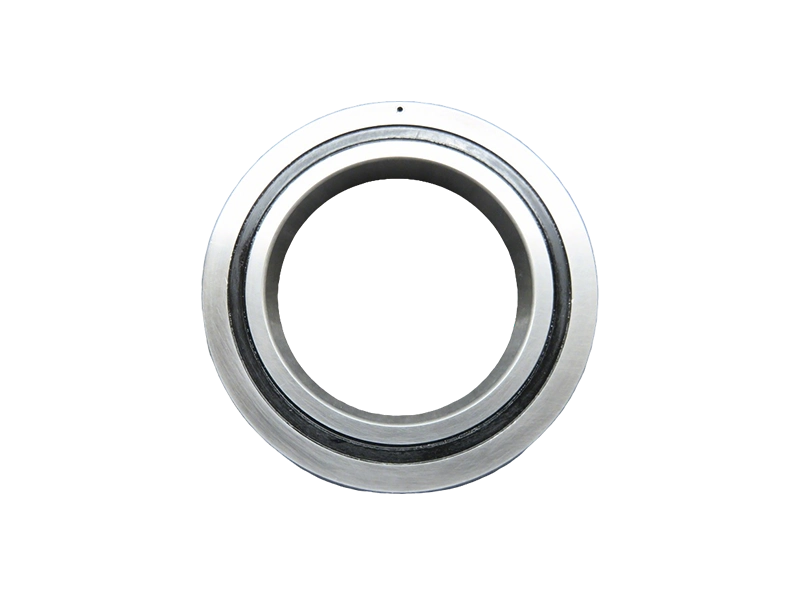
The correct lubricant is not necessarily the most expensive or the one with the highest viscosity index. It is the lubricant that matches the application's speed, load, temperature range, and environmental conditions.
Grease vs. Oil
For most thin section ball bearings, grease is the default choice. Grease remains in place, simplifies sealing, and offers long maintenance-free life in slow and intermediate speed applications. For high-speed applications, oil is often preferred because oil transfers heat more effectively and does not suffer from churning. But oil requires a circulation or oil-air system, which adds complexity. If the bearing is in a compact assembly such as a robotic joint, the lower running torque of oil may be attractive, but grease with a low-viscosity base oil can provide a practical compromise.
Base Oil Viscosity and Additive System
The single most important property of a grease or oil is the base oil viscosity at the bearing operating temperature. A low-viscosity oil improves low-temperature torque and speed capability but may fail to form a durable film under heavy load. A high-viscosity oil offers better load-carrying capacity but can cause churning losses at high speed. Use the bearing's DN value (bore diameter in millimeters multiplied by speed in rpm) as a screening tool, then work with a reputable lubricant supplier to select a viscosity grade. The additive package matters equally. A lithium complex or polyurea grease with anti-wear, oxidation, and corrosion inhibitors is a common starting point for thin section bearings used in industrial applications.
Cage and Seal Compatibility
Thin section bearings can be fitted with metal, polymer, or PTFE-based cages, and with rubber seals or metal shields. The lubricant must not attack the cage material or seal elastomer. Certain synthetic oils can cause swelling or degradation of seals. If the bearing is to be stored for a long period, the grease's rust protection also needs to satisfy the storage condition. At PRS, material compatibility checks are part of the bearing specification process.
Applying Lubrication Correctly
Selecting the right lubricant is only half of the solution. Filling the bearing with the correct volume and distributing the grease properly are frequently overlooked causes of bearing distress.
Fill Volume and Distribution
Over-lubrication is one of the most common mistakes. When a thin section bearing is packed with grease, the rolling elements churn the grease, raising temperature and accelerating oxidation. Start with a fill fraction of approximately 20 to 35 percent of the free internal volume for grease-lubricated thin section bearings. If the bearing has shields or seals, the free space is small, and the amount of grease must be adjusted downward. Distribute the grease evenly between balls and raceway, not just around the outer ring. A bearing that is correctly charged will run several degrees cooler than one that is overfilled.
Re-lubrication Intervals and Quantities
Sealed and shielded thin section bearings are typically lubricated for life and are not intended for re-lubrication. In contrast, open bearings mounted on a shaft with a lubrication groove need planned re-lubrication. The interval depends on operating speed, temperature, load, and environment. A good rule is to check the bearing chamber regularly, often every few hundred operating hours if the application is clean and moderate, but confirm the interval with a bearing expert. For critical rotating shafts, re-lubricate with the specified grease type and only in the quantity recommended by the supplier; too much grease after a long interval can cause the same overheating problem as a full pack.
Maintenance and Monitoring Practices That Extend Life
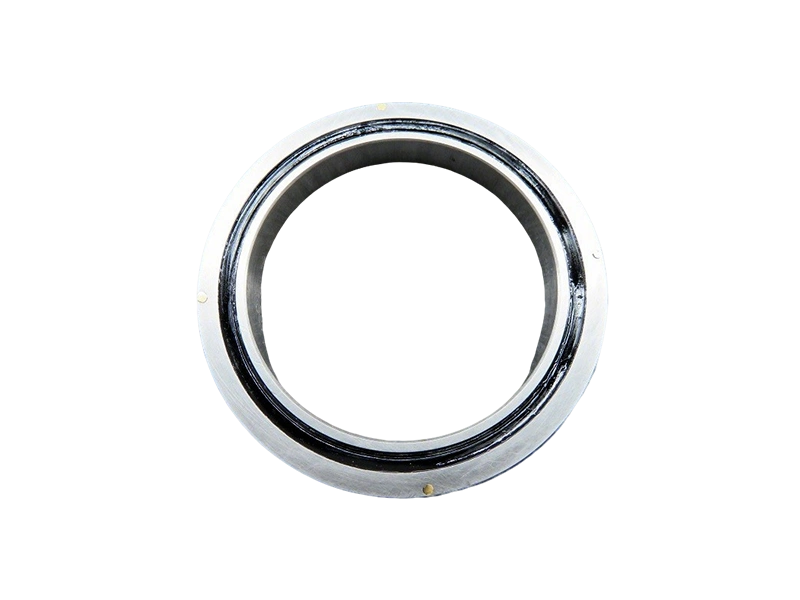
A lubrication strategy is only as good as the maintenance that supports it. Specifically for thin section bearings, the margin for error is lower, so monitoring should be more disciplined.
Contamination Control
Thin section bearings can be damaged by particles that would be harmless in a larger bearing. The small contact area means a single particle can indent the raceway and generate a vibration source that excites other defects. Store grease in clean conditions, use a grease gun with a clean fitting, and avoid introducing foreign materials during assembly. If the operating environment is dusty, consider a sealed bearing or an additional external seal.
Temperature and Vibration Monitoring
Bearing temperature is a fast indicator of lubrication health. A sudden rise in temperature may indicate a grease mismatch, overfill, or insufficient grease feed. A gradual rise may signal worn grease or a change in operating conditions. Vibration monitoring complements temperature checks by detecting surface damage before it becomes catastrophic. Record baseline temperature and vibration values for a new bearing and compare readings during scheduled maintenance.
Troubleshooting Lubricant Condition
If a bearing is opened for inspection, inspect the grease color and consistency. Fresh grease is smooth and uniform. Dark brown or black grease with a burnt odor indicates overheating. A watery or separated grease indicates contamination or incorrect mixing. When in doubt, replace the bearing and grease; the cost of a lubricant change is tiny compared with the cost of a thin section bearing failure in a precision system.
Partnering with PRS for Long-Lasting Thin Section Bearings
PRS specialists assist customers with bearing selection, lubrication, and application engineering. The interaction between internal clearance, preload, raceway profile, and lubricant is critical for thin section bearings. A lubricant that is acceptable for a standard ball bearing can be suboptimal in a compact, lightweight design. PRS helps identify the right grease or oil from the start, validates compatibility with seals and cages, and supplies documentation that supports maintenance planning. In high-volume production programs, PRS can also discuss the benefits of prelubricated bearings and when it makes sense to specify sealed units.
Finally, remember that lubrication is not a one-time event. It has to be selected, applied, monitored, and renewed. A thin section bearing with a well-designed lubrication regime will outperform one with an inadequate regime by a significant margin. By combining the correct grease, the right fill amount, and a proactive maintenance schedule, you ensure the bearing's full rated life is available for your equipment. Partner with PRS early in the design stage and you reduce the risk of costly revisions later.