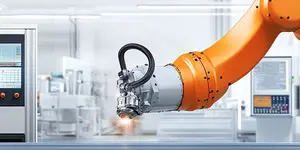
Moment loads are the hidden challenge in precision motion systems. Unlike simple radial or axial forces, a moment load applies a twisting or tilting force that tries to rotate a bearing assembly out of alignment. Crossed roller bearings are specifically engineered to resist these forces, making them a go-to solution for robotic arms, rotary tables, and medical imaging equipment. This guide explains how moment loads work, why crossed roller bearings handle them so effectively, and what to evaluate when selecting a bearing for your application.
What Exactly Is a Moment Load?
A moment load occurs when a force is applied at a distance from the bearing's center, creating a lever arm effect. Think of a robot arm extending outward: the weight of the payload doesn't just push down—it tries to tilt the entire joint. That tilting force is the moment load. In engineering terms, moment load is measured in Newton-meters (Nm) or pound-inches (lb-in) and combines the magnitude of the force with the distance from the pivot point.
Moment loads are distinct from radial loads (perpendicular to the shaft) and axial loads (parallel to the shaft). While radial and axial loads push or pull, moment loads twist. This distinction matters because a bearing that excels under radial load may fail quickly under a significant moment load if it isn't designed for it.
Why Moment Loads Are So Damaging
When a bearing is not designed to handle moment loads, the internal rolling elements experience uneven stress. One side of the bearing carries a disproportionate load while the opposite side may lose contact entirely. This leads to:
- Premature raceway fatigue and spalling
- Deflection that ruins positioning accuracy
- Increased friction and heat generation
- Vibration that affects the entire system
In high-precision applications, even a few microns of deflection can render a system unusable. This is why moment load capacity is often the deciding factor in bearing selection.
How Crossed Roller Bearings Counter Moment Loads
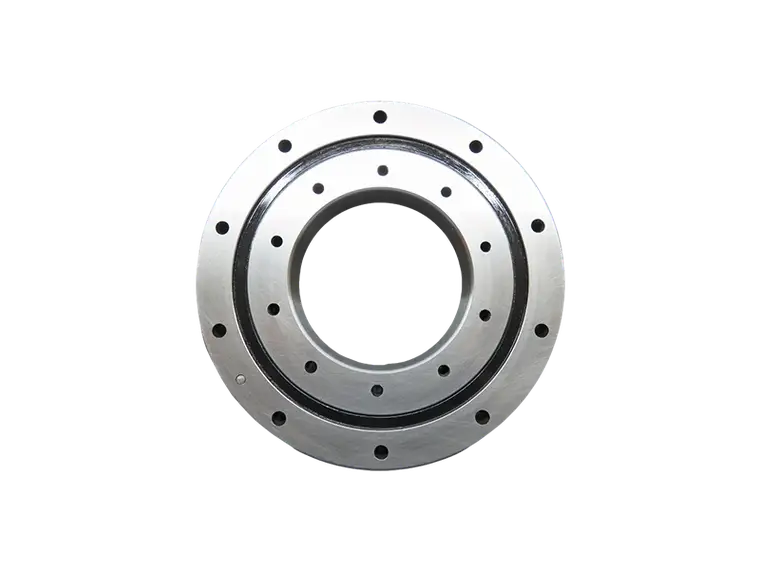
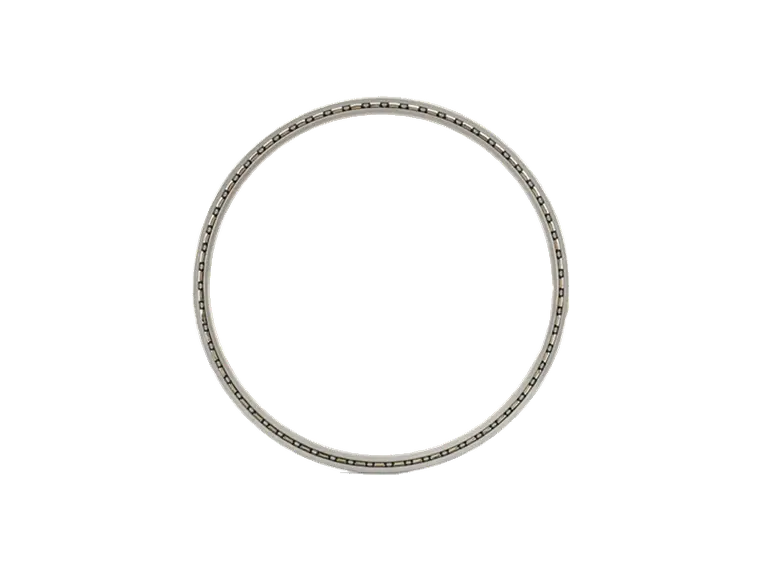
Crossed roller bearings get their name from their unique internal geometry. Instead of balls or standard cylindrical rollers, they use cylindrical rollers arranged in a crisscross pattern—each roller is oriented at 90 degrees to its neighbor. This alternating arrangement allows a single bearing to handle radial, axial, and moment loads simultaneously.
The key advantage is line contact rather than point contact. Balls touch their raceways at a single point, which limits their load capacity. Cylindrical rollers touch along a line, distributing force over a much larger area. When a moment load tries to tilt the bearing, the crossed rollers on the loaded side resist that motion across the full length of the contact line.
Structural Rigidity That Eliminates Deflection
Crossed roller bearings are typically manufactured with a rigid outer ring and inner ring that are precision-ground to tight tolerances. This rigidity means the bearing itself contributes minimal deflection under load. For system designers, this translates directly into higher positioning accuracy and repeatability.
PRS has worked with numerous OEMs to replace traditional bearing arrangements—such as a pair of angular contact bearings or a slewing ring—with a single crossed roller bearing. The result is often a smaller footprint, fewer components, and better moment load performance.
Key Parameters When Selecting a Crossed Roller Bearing for Moment Loads
Not all crossed roller bearings are equal. When evaluating options for a moment-loaded application, focus on these parameters:
1. Moment Load Rating
This is the maximum moment the bearing can withstand without exceeding acceptable deflection or risking raceway damage. Bearing manufacturers typically provide a moment load rating in their catalogs. However, the rating is often based on a specific safety factor and life expectancy. Always confirm the testing conditions behind the number.
2. Tilting Stiffness
Tilting stiffness measures how much the bearing resists angular deflection under a given moment. A higher tilting stiffness means less deflection, which is critical for applications like semiconductor wafer inspection or surgical robots where precision is paramount.
3. Axial and Radial Load Capacity
Moment loads rarely occur in isolation. Most applications combine moment, radial, and axial forces. The bearing must handle all three simultaneously. Crossed roller bearings excel here because their crisscross geometry naturally supports multi-directional loading.
4. Installation Precision
Even the best bearing will underperform if the mounting surface is not flat or the housing bore is out of tolerance. Crossed roller bearings are sensitive to mounting errors because the rollers have limited ability to compensate for misalignment. Machined mounting surfaces with flatness within a few microns are often required.
5. Lubrication and Sealing
Moment loads increase contact stresses inside the bearing. Proper lubrication reduces friction and wear, while effective sealing prevents contaminants from entering the raceway. For high-moment applications, consider bearings with integrated seals and pre-filled grease.
Crossed Roller Bearings vs. Alternatives for Moment Loads
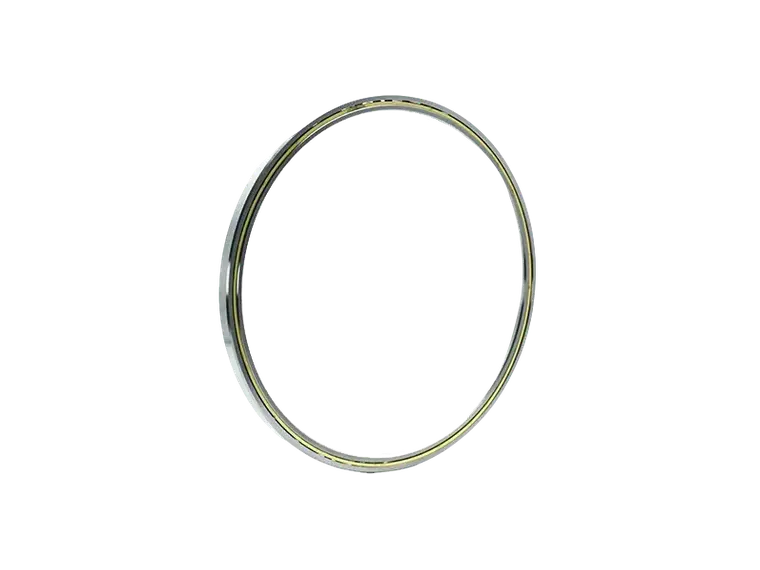
When facing a moment load challenge, engineers often compare crossed roller bearings against other options. Here's how they stack up:
- Angular contact ball bearings (paired): Can handle moment loads when mounted in pairs, but require more axial space, preload adjustment, and can be less rigid than a single crossed roller bearing.
- Tapered roller bearings: High radial and axial capacity, but moment load capability depends on paired arrangement. They also generate more friction and heat at high speeds.
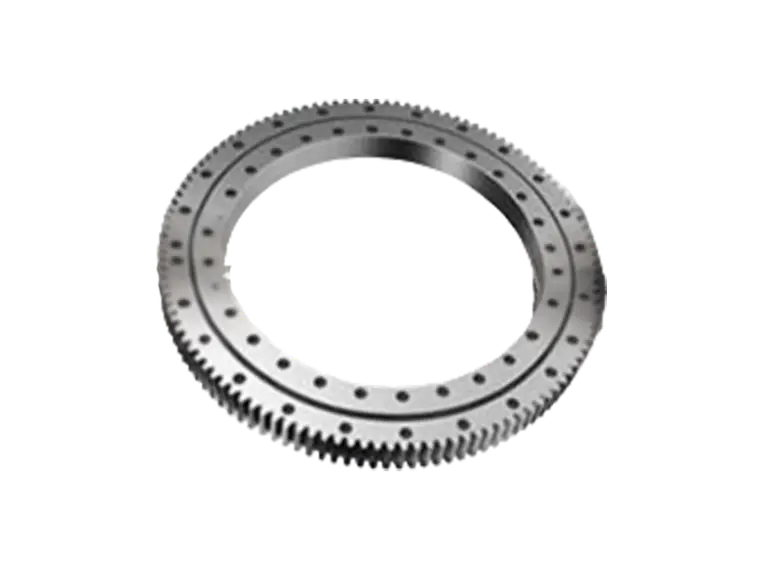
- Slewing rings: Excellent for very large moment loads and slow rotation, but bulky and expensive for small to medium-sized systems.
- Crossed roller bearings: Best balance of moment capacity, rigidity, compact size, and precision for small to medium applications. Ideal when a single bearing must do the work of two or three.
The choice depends on load magnitude, available space, required precision, and rotational speed. For many precision motion systems, the crossed roller bearing is the most efficient solution.
Real-World Applications Where Moment Loads Dominate
Moment loads are not theoretical—they appear in everyday engineering challenges. Consider these examples:
- Robotic arms: Each joint experiences a moment load proportional to the arm length and payload weight. A crossed roller bearing at the base joint provides the rigidity needed for accurate positioning.
- Rotary indexing tables: When a workpiece is mounted off-center, the table experiences a moment load. Crossed roller bearings maintain flatness and angular accuracy during rotation.
- Medical CT scanners: The rotating gantry carries heavy imaging equipment at a distance from the rotation axis, creating a significant moment load. Crossed roller bearings ensure smooth, precise rotation.
- Solar panel trackers: Wind loads on large panels create moment forces on the drive mechanism. Crossed roller bearings provide the necessary stiffness and corrosion resistance.
- Machine tool rotary axes: Cutting forces applied away from the spindle center generate moment loads. Crossed roller bearings help maintain tool position and surface finish quality.
In each case, the bearing must resist the moment without sacrificing smooth rotation or positional accuracy.
Installation Best Practices for Moment-Loaded Bearings
Proper installation is as important as proper selection. Follow these guidelines to maximize performance and service life:
- Prepare flat, rigid mounting surfaces. Use precision machining and verify flatness with a dial indicator. Any gap or high spot will distort the bearing rings.
- Apply uniform clamping force. Tighten mounting bolts in a star pattern to avoid uneven compression.
- Check runout after installation. Measure axial and radial runout to confirm the bearing is seated correctly.
- Use the correct preload. Some crossed roller bearings require a specific preload to achieve rated stiffness. Follow the manufacturer's recommendation.
- Monitor temperature during initial operation. A temperature rise above normal may indicate excessive preload or insufficient lubrication.
PRS provides technical support and documentation to help customers get installation right the first time.
Common Questions About Crossed Roller Bearings and Moment Loads
Can a crossed roller bearing handle pure moment load with no radial or axial load?
Yes, but it's rare in practice. Most applications combine loads. When specifying, check the combined load rating rather than assuming the moment rating alone is sufficient.
How do I know if my application requires a crossed roller bearing?
If you have a moment load that causes unacceptable deflection with ball bearings, or if you need high rigidity in a compact space, a crossed roller bearing is likely the right choice. Consulting with a bearing engineer can confirm the selection.
What is the typical life expectancy of a crossed roller bearing under moment load?
Life depends on load magnitude, speed, lubrication, and environmental conditions. With proper selection and maintenance, crossed roller bearings can achieve millions of revolutions. Use the manufacturer's life calculation formulas for a more precise estimate.
Final Thoughts on Moment Loads and Bearing Selection
Moment loads are a critical design consideration for any precision motion system. Crossed roller bearings offer a unique combination of high moment capacity, tilting stiffness, and compact design that makes them ideal for demanding applications. By understanding the nature of moment loads and evaluating key parameters like load rating, stiffness, and installation requirements, engineers can specify the right bearing with confidence.
For over a decade, PRS has helped customers solve complex bearing challenges across robotics, medical, aerospace, and industrial automation. If you're facing a moment load problem, the right crossed roller bearing—and the right partner—can make all the difference.