

When rotating equipment must perform reliably in washdown, marine, chemical, or pharmaceutical environments, standard bearing steel quickly becomes a liability. Corrosion leads to pitting, lubricant degradation, and premature failure. Stainless steel thin section bearings offer a proven solution, combining a compact cross-section with the inherent corrosion resistance of martensitic or austenitic stainless steels. This article provides a technical yet practical overview for engineers and procurement specialists seeking to specify the right bearing for demanding corrosive applications.
Why Thin Section Bearings Are Critical in Corrosive Environments
Thin section bearings are characterized by a relatively small radial cross-section compared to their bore diameter. This design saves weight, reduces housing space, and allows for larger shafts or smaller overall machine envelopes. In corrosive environments, the stakes are higher. A bearing failure in a food processing line or offshore actuator can halt production and create safety hazards. Stainless steel thin section bearings maintain the same dimensional advantages while resisting rust and chemical attack.
Material Selection: Not All Stainless Steel Is Equal
The phrase “stainless” is an umbrella term. For thin section bearings, the most common materials are AISI 440C, AISI 304, and precipitation-hardening grades like 17-4 PH. The choice dictates hardness, corrosion resistance, and load capacity.
- 440C is a high-carbon martensitic stainless steel that can be hardened to approximately 58–60 HRC. It offers good corrosion resistance in mild environments and is suitable for higher load capacities.
- 304 is an austenitic stainless steel with excellent corrosion resistance but low hardness. It is used for bearing rings in low-load, high-corrosion applications where hardness is secondary.
- 17-4 PH combines good corrosion resistance with high strength and hardness after precipitation hardening, making it a preferred choice for marine and chemical processing.
For rolling elements, 440C or ceramic (silicon nitride) balls are common. Hybrid bearings with stainless rings and ceramic balls offer both corrosion resistance and electrical insulation, which is an added advantage in motor applications.
Design Considerations for Maximizing Corrosion Resistance

Selecting a stainless steel thin section bearing is only the first step. The bearing’s design, internal clearance, seals, and lubrication all impact its service life in corrosive media.
Seals and Shields
Open bearings allow contaminants to enter easily. In corrosive environments, sealed or shielded versions are usually necessary. Contact seals (e.g., nitrile or FKM) provide the best protection against water ingress and particle contamination. Non-contact shields are less frictional but offer less protection. PRS supplies bearings with a range of seal materials suitable for acids, alkalis, and high-temperature washdowns.
Internal Clearance and Thermal Expansion
Stainless steel has a higher coefficient of thermal expansion than chrome steel. If the bearing housing and shaft are also stainless, the overall expansion must be considered. Choosing the correct radial internal clearance (C3 or C4) prevents preload from building up at elevated operating temperatures. For oscillating or low-speed applications, a greater clearance can also help accommodate misalignment without binding.
Advantages of Choosing PRS Stainless Steel Thin Section Bearings
PRS has specialized in thin section bearing technology for over a decade, and our stainless steel product line is a direct response to industry demands for longevity in harsh environments. The key benefits our customers experience include:
- Enhanced material traceability: Every PRS stainless bearing is supplied with a material certificate, confirming chemical composition and hardness.
- Customizable configurations: We offer a wide range of bore sizes, cross-sections, seal types, and cage materials (PTFE, PEEK, or stainless steel) to match the exact operating conditions.
- Precision manufacturing: Our thin section bearings are machined and ground to ABEC 5 or higher tolerances, ensuring smooth rotation and low torque even under corrosive attack.
- Local engineering support: Instead of guessing from a catalog, PRS engineers evaluate your medium, temperature, load, and speed to recommend the optimal bearing design.
Practical Guidance for Specifying a Corrosion-Resistant Thin Section Bearing
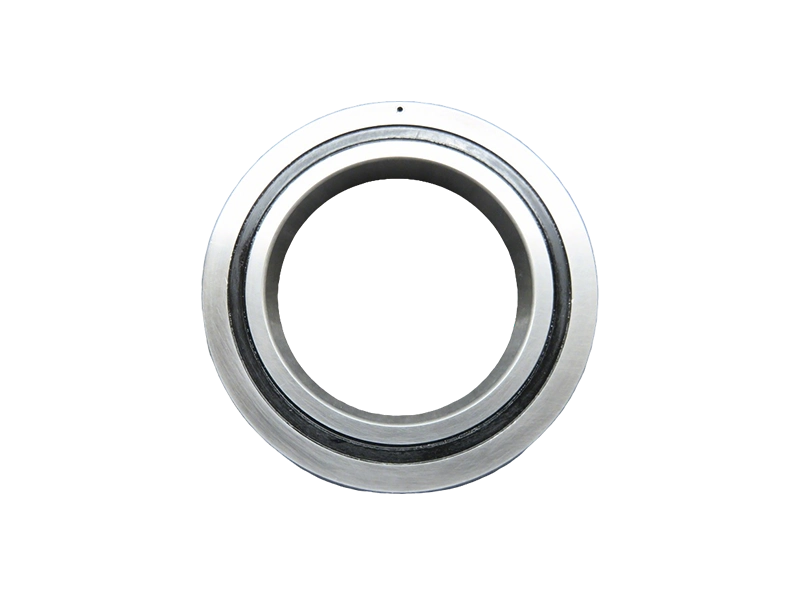
To avoid premature failure, follow these steps when preparing your specification:
- Define the corrosive medium. Is it seawater, sodium chloride spray, sulfuric acid, or a cleaning agent? Different media require different steel grades and seal elastomers.
- Estimate operating temperature. This affects material hardness, lubrication, and clearance. For temperatures above 150°C, standard PTFE seals may not suffice.
- Determine speed and load. If loads are light, austenitic stainless (e.g., 304) can be used to maximize corrosion resistance. For higher loads, 440C or hybrid ceramics are preferable.
- Consider lubrication. In corrosive environments, lubricants can wash out. Use food-grade greases with high water resistance where necessary, or specify a lubrication system that continuously replenishes the grease.
- Contact PRS for a material and design review. Our engineers will validate your choice and provide a bearing that matches your application, not just a generic part number.
Conclusion: The Right Bearing Keeps Operations Running
Corrosion is a relentless enemy of rotating equipment. However, by choosing stainless steel thin section bearings from a supplier with deep technical expertise, you can eliminate early bearing failures, reduce maintenance downtime, and improve total cost of ownership. The key is to move beyond a simple material name and evaluate the entire bearing system—rings, rolling elements, cage, seals, and lubrication—against the specific corrosive challenge. PRS’s engineering team is ready to assist you with a custom solution, ensuring your equipment runs cleanly and dependably in even the most aggressive environments.