

Precision optical instruments—from gimbaled cameras and laser trackers to spectrometers and telescope mounts—depend on extremely accurate rotary motion. The bearings that support these systems must minimize runout, friction, and size while maintaining repeatable positioning under varied thermal and load conditions. Thin section bearings have emerged as the preferred solution for such demanding applications, offering a unique balance of compact geometry and high precision. This article examines why these bearings are essential for precision optical instruments, how they contribute to system performance, and what engineers should consider when selecting a supplier.
Why Thin Section Bearings Are Critical for Optical Instrument Performance
Optical instruments require precise angular alignment between optical elements, sensors, and targets. Any radial or axial displacement of a rotating component can cause beam deviation, image blur, or measurement error. Standard bearings often have large cross-sections that add unnecessary weight and envelope, which is problematic for portable or space-constrained instruments. Thin section bearings maintain a small cross-section relative to their bore diameter, allowing larger hollow shafts for cabling, optics, or scanning mechanisms without sacrificing stiffness or accuracy.
Furthermore, thin section bearings offer design flexibility. Their reduced radial height means instrument designers can place rotary stages closer to the optical axis, minimizing Abbe errors and improving overall system accuracy. In multi-axis gimbals, the compact bearing envelope enables tighter package densities and reduced inertia, which directly benefits servo control bandwidth and settling time.
Key Performance Advantages of Thin Section Bearings

When selecting bearings for precision optical instruments, several performance characteristics become decisive. Thin section bearings, especially those engineered by specialists like PRS, deliver measurable advantages over conventional bearing types.
- High rotational accuracy: Ultra-low radial and axial runout, often in the sub-micrometer range, ensures consistent optical alignment.
- Low and uniform friction torque: Smooth, predictable motion is critical for fine positioning and closed-loop control.
- Compact cross-section: Saves space and weight, enabling miniaturization and easier integration into optical subassemblies.
- High stiffness-to-weight ratio: Maintains structural rigidity without adding mass that could induce vibration or thermal drift.
- Wide operating temperature range: Stable geometry and material choices accommodate thermal expansion differences in optical housings.
- Interchangeable configurations: Available in radial, angular contact, and four-point contact designs to suit varying axial and moment loads.
Radial vs. Angular Contact Thin Section Bearings
Radial thin section bearings handle primarily radial loads and offer low friction, making them suitable for simple turntables. Angular contact thin section bearings, on the other hand, provide higher axial and moment stiffness, which is essential for gimbals and scanners that experience overturning moments. Four-point contact versions combine high load capacity with a single bearing race, reducing component count and optimizing axial space.
Selecting the Right Thin Section Bearing for Optical Systems
Choosing the correct bearing involves more than picking a catalog number. Engineers must evaluate load conditions, speed, accuracy class, and environmental factors. The following considerations are particularly important for precision optical instruments.
Accuracy and Tolerance Class
Optical applications typically require ABEC 7 or ABEC 9 (ISO P4 or P2) tolerances. These tighter classes control raceway geometry, ball sphericity, and assembly clearance, directly limiting the runout transmitted to the optical payload. PRS offers bearings manufactured to these high standards, with inspection reports available for critical applications.
Preload and Contact Angle
For zero backslash and high stiffness, bearings must be preloaded correctly. Too little preload leads to ball skidding and positional uncertainty; too much generates heat and accelerates wear. The optimal preload depends on the expected load cycle and speed. In optical instruments where motion is often slow and incremental, a light or medium preload usually provides the best balance of smoothness and stiffness.
Material and Coating Options
Bearing rings are typically made from 52100 chrome steel or 440C stainless steel. For environments with high humidity or outgassing requirements, stainless steel with ceramic balls (hybrid bearings) offers superior corrosion resistance and lower thermal expansion. PRS can supply bearings with special rings, ceramic balls, and custom lubricants to meet vacuum, cryogenic, or cleanroom conditions.
Lubrication and Sealing
Lubricant viscosity and volatility affect torque stability and lifetime. Precision instruments often use low-outgassing greases or thin oil films applied in controlled amounts. Seals or shields may be necessary to protect against particulates, but they add friction. For extremely sensitive applications, open bearings with light lubrication are preferred, and the surrounding assembly must be kept clean.
How PRS Supports Precision Optical Instrument Design
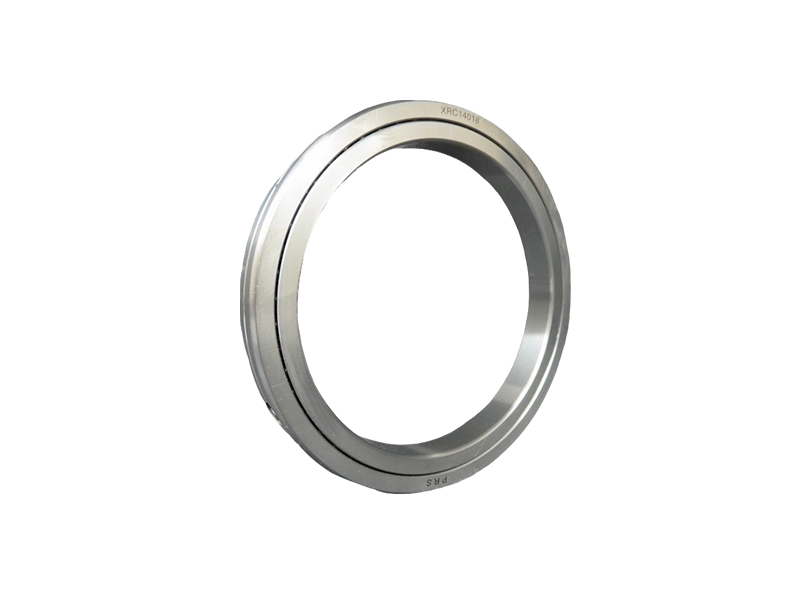
PRS specializes in engineered thin section bearing solutions. Unlike general bearing distributors, PRS works directly with OEMs from the concept stage through prototyping and production. Their team provides technical guidance on bearing arrangement, tolerance selection, and integration methods—helping avoid common pitfalls such as over-constrained mounting or insufficient shaft and housing fits.
PRS also offers custom geometries, including non-standard cross-sections, integrated raceway modifications, and specialized preloads. For optical instruments that require matched bearing pairs or sets, PRS can match bearings to ensure consistent running torque and minimal differential runout across multiple axes. This level of engineering partnership reduces development risk and accelerates time to market.
Application Examples in Precision Optics
Thin section bearings from PRS are found in optical gimbals used in surveillance and targeting systems, where they support the payload while maintaining a low profile. In laser scanning equipment, these bearings enable rapid, accurate sweeping motions with minimal wobble. Spectrometers and interferometers use them in rotary stage assemblies that must preserve wavelength accuracy over long measurement periods. In every case, the bearing's inherent precision and mechanical stability directly contribute to the instrument's overall certainty and repeatability.
Conclusion
Thin section bearings are not merely a compact alternative to standard bearings; they are a precision component that can significantly enhance the performance of optical instruments. By offering low runout, smooth motion, and design flexibility, they help engineers meet strict accuracy requirements in constrained packages. When selecting a supplier, look for demonstrated expertise in high-tolerance manufacturing, material science, and application engineering. PRS provides this depth of knowledge, making them a reliable partner for your next precision optical system.