

Every gram of mass removed from an unmanned aerial vehicle (UAV) directly contributes to longer mission endurance, higher usable payload, or greater flight agility. Yet in the search for lighter structural components, engineers frequently overlook a hidden heavyweight: the bearing assembly. For years, aerospace designers accepted the mass penalty of conventional bearings as unavoidable. That paradigm is shifting, largely because of precision thin section bearings, which offer a remarkable balance of reduced cross-section, low weight, and high load-carrying robustness. These compact rolling elements are enabling next-generation rotorcraft, gimbal systems, and surveillance turrets to shed structural weight without sacrificing the rigidity needed for stable flight performance. For design teams evaluating bearing options, understanding the mechanical and operational advantages of thin section technology is essential to making an informed specification decision.
Why UAV Engineering Demands a New Class of Bearings
The structural requirements of a UAV flight control system are unforgiving. Unlike ground-based machines that can tolerate heavier actuation components, a UAV must allocate its takeoff mass with precision. Each bearing in the gimbal, actuator linkage, or propeller pitch control mechanism affects the mass of the supporting bracket, the motor sizing, and ultimately the battery capacity. A heavier bearing therefore cascades into a heavier aircraft at multiple levels of the system architecture.
Conventional bearings, designed decades ago, maintain cross-sections that are often oversized for modern UAV applications. They are built for heavy-duty industrial shafts with standardized load-carrying conventions, offering far higher load ratings than a small aerial platform will ever encounter. The result is an unnecessary weight and space penalty inside precision mechanisms where every millimeter of envelope matters.
What Exactly Are Thin Section Bearings?
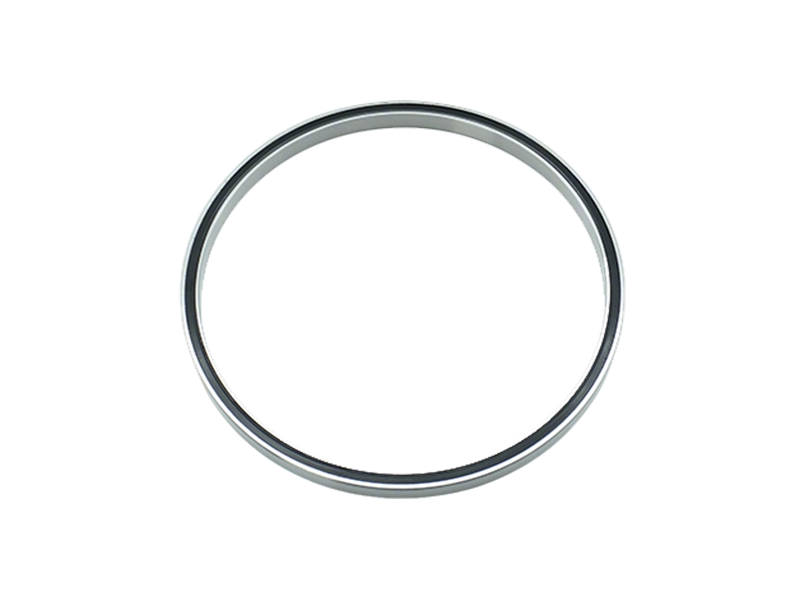
A thin section bearing is defined by its cross-sectional geometry, not by its bore diameter. Where a standard ball bearing has a cross-section that scales proportionally with the bore, a thin section bearing maintains a small, reduced cross-section across a wide range of bore sizes. This allows engineers to use a large-diameter bearing for moment stability and drift resistance without carrying the associated bulk and mass of a traditional bearing.
Constant Cross-Section Advantage
The distinguishing hallmark of thin section bearings is consistent geometry across varying diameters. A thin section bearing with a 100 mm bore and a bearing with a 200 mm bore share nearly identical cross-sectional dimensions. This design philosophy enables substantial structural weight savings in large-diameter rotating systems, especially for UAV gimbals and turret systems where a larger diameter offers inherently better resistance to tipping moments.
How Thin Section Bearings Deliver Strength Without Mass
The term lightweight can misleadingly imply reduced strength. In practice, thin section bearings handle the lighter yet highly dynamic loads of UAV flight through a combination of geometric design and advanced material treatment.
Optimized Raceway Geometry
The load-carrying capacity of a thin section bearing relies on precisely machined raceways and a carefully matched ball complement. Given the smaller cross-section, manufacturers must ensure raceway curvature and surface finish are held to exacting tolerances. Any slight imperfection in the raceway dramatically reduces the contact area and accelerates wear under cyclic vibration loads common to propeller-driven platforms. High-precision grinding and superfinishing processes are therefore non-negotiable for aerospace-grade thin section bearings.
Engineered Material Selection
Thin section bearings are available in a range of materials, from vacuum-degassed high-carbon chromium steel to martensitic stainless steel and hybrid ceramic variants. For UAVs, 440C stainless steel is frequently specified for its corrosion resistance in atmospheric and moisture-laden conditions, while hybrid ceramic assemblies, combining silicon nitride balls with steel races, provide significantly lower inertia and excellent high-speed performance without the need for heavy lubrication.
Given this material palette, engineering teams can specify a thin section bearing that exactly matches the load profile and environmental exposure of the UAV system. Over-specifying material strength is no longer the only path to reliability.
The Core Performance Advantages of Thin Section Bearings in UAV Systems
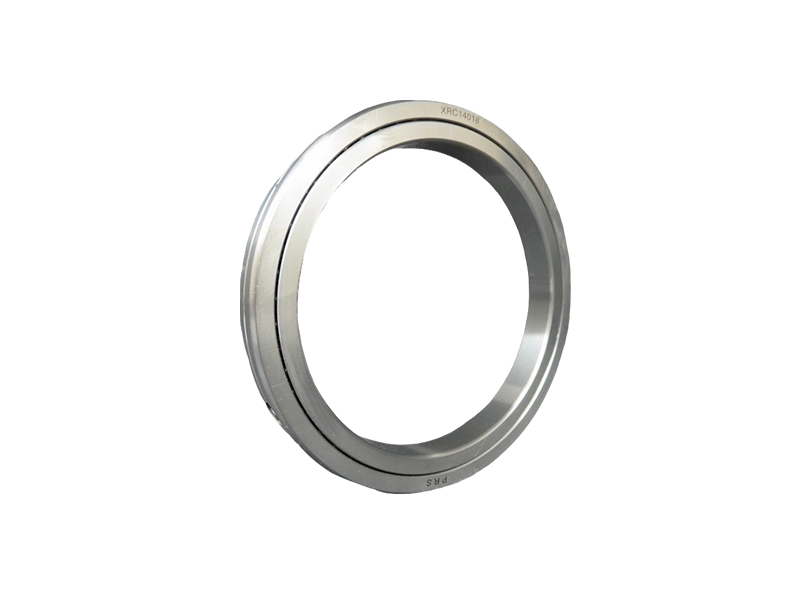
When compared directly with conventional bearings of similar bore size, thin section bearings deliver several measurable performance benefits that align closely with the priorities of UAV design teams:
- Mass reduction of up to 65% in many actuator and gimbal bearing packages, because the radial cross-section is only a fraction of standard bearing depth.
- Envelope efficiency that frees up critical space inside nacelles and housing assemblies, enabling more compact aerodynamic designs.
- Higher stiffness-to-weight ratio due to the large-diameter placement of the load-carrying elements, effectively creating a larger moment arm for resisting tilt loads.
- Lower torque through precision raceway finishing, meaning smaller and lighter servo motors can achieve the same angular positioning performance.
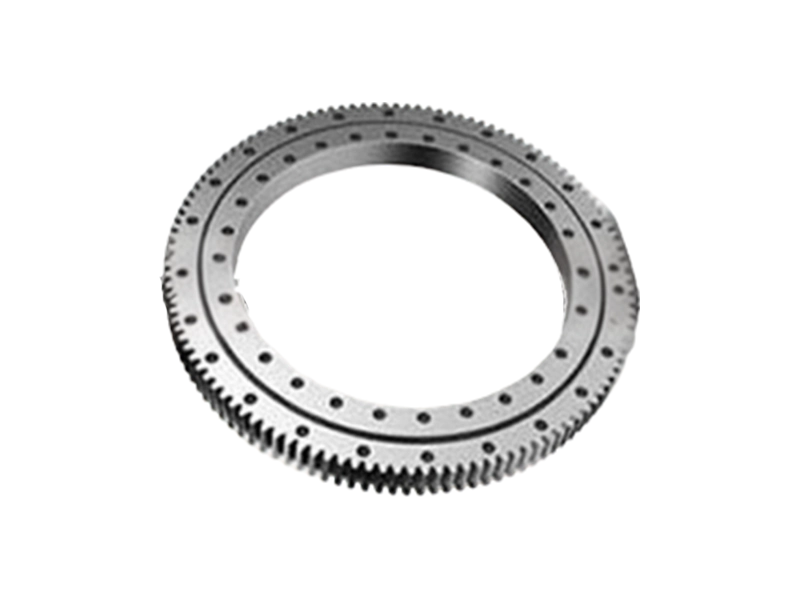
- Design flexibility for custom integration, such as thin section bearings with integrated gear teeth, mounting holes, or specialized coatings for extended life in airborne environments.
PRS: Precision Thin Section Bearing Solutions for Aerospace Platforms
For engineers seeking an experienced bearing partner, PRS has established itself as a specialist in the design and manufacture of thin section bearings for high-precision aerospace and unmanned vehicle applications. The PRS engineering portfolio covers bore diameters up to 1,200 mm and cross-sections from 6.35 mm upward, allowing UAV design teams to select a standard catalog option or pursue a fully custom engineered solution.
What distinguishes PRS bearings is not simply the geometry, but the disciplined manufacturing process. Each PRS thin section bearing is produced using multi-axis grinding technology that achieves sub-micron raceway roundness and surface finishes designed to hold torque values within strict specifications. This level of precision is essential for UAV payload stabilization gimbals, where friction variations directly set the resolution limit of the imaging system.
Low-Torque Performance for Long-Endurance Missions
Endurance is a critical performance metric across nearly every UAV operation. A gimbal bearing that drags, vibrates, or rotates inconsistently forces compensation currents to increase across the gimbal motors, draining battery resources that could otherwise extend mission range. PRS thin section bearings are manufactured specifically to minimize friction variability across both the rotational cycle and the full operating temperature window of the platform.
Reliability Across the Full Mission Environment
Whether a UAV operates in tropical humidity, arctic cold, or the low-pressure environment of high-altitude flight, bearing performance cannot become a point of failure. PRS offers sealed and shielded variants, along with surface coatings engineered to resist oxidation and micrometer-level contamination. Each bearing undergoes complete dimensional and geometric inspection, ensuring lot-to-lot consistency for production-scale UAV builds.
Selecting Between Conventional Bearings and Thin Section Bearings
Not every bearing position in a UAV demands a thin section geometry. Engineers should carefully evaluate the application based on load conditions, allowable envelope, and rotational accuracy requirements. As a general guideline, thin section bearings become advantageous when the bearing bore diameter exceeds approximately 40 mm and the primary design challenge involves minimizing housing size or reducing associated structural mass.
For smaller shafts under 20 mm, where the conventional bearing cross-section is naturally compact, the weight savings offered by thin section designs are less significant. The calculation then becomes a question of whether the reduced cross-section can carry the expected axial and radial loads with acceptable service life. In nearly all UAV gimbal, antenna positioning, and camera turret applications, thin section designs hold a decisive advantage.
Future Trends in UAV Bearing Technology
As UAV platforms continue to evolve toward smaller, faster, and longer-duration profiles, the demands on bearing systems will intensify. The integration of condition monitoring sensors into thin section bearing assemblies is beginning to emerge, allowing flight controllers to track bearing friction and micro-vibration signatures in real time. PRS is investing in this domain, looking toward intelligent bearings that not only support the rotor system but also feed data into the UAV health management network.
Manufacturers are also refining thin section bearing designs with lower-profile seals and advanced grease formulations that retain performance at temperature extremes without compromising torque. The direction of the industry is clear: small, intelligent, and load-efficient bearing technology represents a competitive advantage in the rapidly maturing unmanned systems market.
As UAV programs progress from prototypes to production fleets, the choice of bearing technology becomes a defining factor in overall system performance. Thin section bearings offer a compelling path to weight reduction, envelope efficiency, and operational reliability, and PRS stands ready to support engineering teams with precision-engineered solutions. For any defense, commercial, or industrial UAV program, evaluating the bearing cross-section early in the design phase is a worthwhile investment in aircraft performance and mission success.