
Manufactured by PRS Bearings, the PA13020 is a precision Metric Series Bearing. You may consider it as an interchangeable alternative and replacement for KAYDON K13020AR0. Key dimensional parameters include a 130 mm bore diameter, a 170 mm outer diameter, and a mm overall width. With matching boundary dimensions, this component is designed to meet standard load requirements and ensure consistent operational performance. For comprehensive technical evaluation, please explore the detailed specifications, dimensional data, product images, and CAD drawings provided below. A complete PDF data sheet is also readily available for direct download to support your engineering and procurement needs.
PA13020 - Metric Series Bearing
Technical Specifications
| Direct Interchange | KAYDON K13020AR0 |
|---|---|
| Overview | |
| Basic Model | PA13020 |
| Weight | 1.04 kg |
| Dimensions | |
| Bore Dia (d, mm) | 130 mm |
| Outer Dia (D, mm) | 170 mm |
| Load Ratings | |
| Dynamic Load (Cr) | 2154 kN |
| Static Load (Cor) | 4030 kN |
| Dynamic Axial Load (Ca) | 4927 kN |
| Static Axial Load (Coa) | 11635 kN |
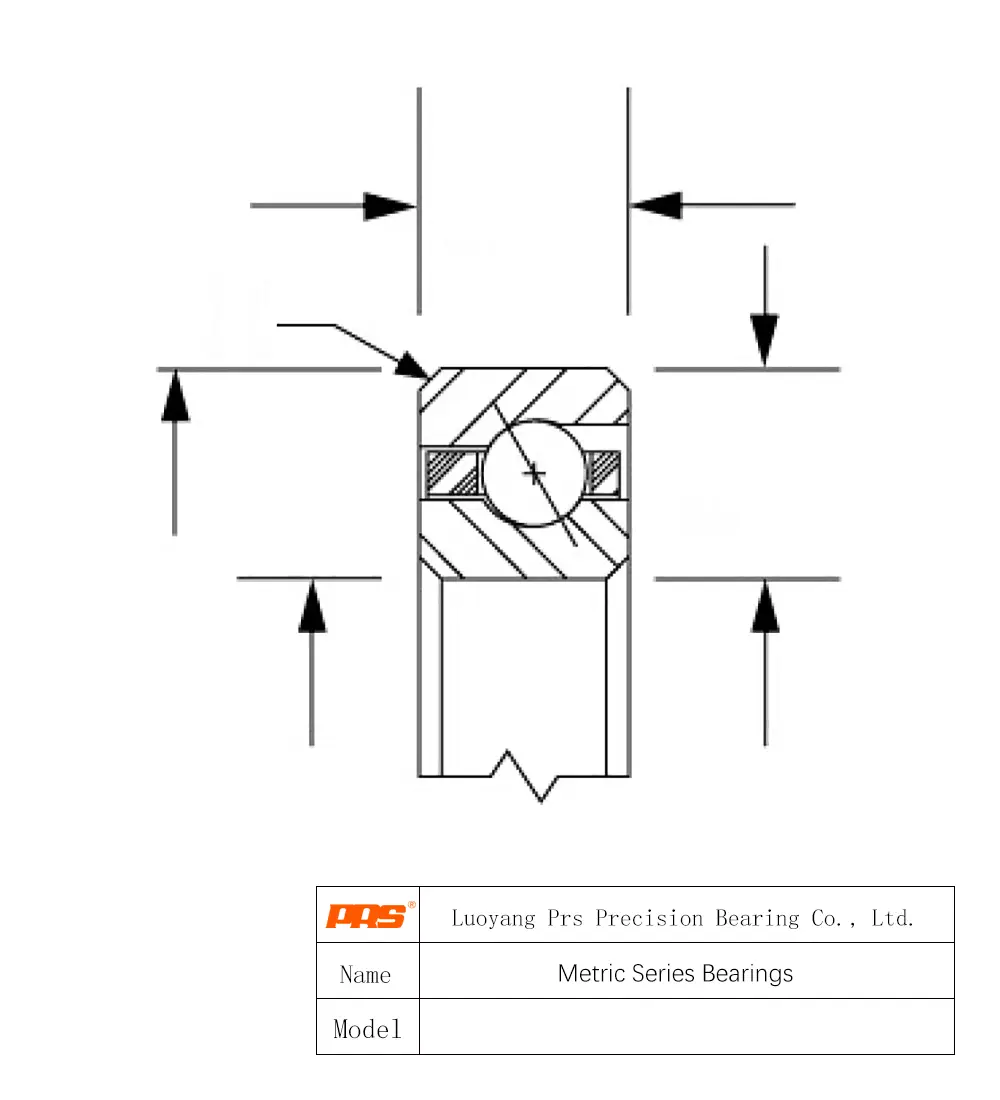 170 mm 130 mm PA13020
 Frequently Asked Questions about PA13020 Metric Series Bearing
Find key technical answers regarding dimensions, specifications, and replacement options for this model.
Every PA13020 batch undergoes 100% automated vibration and noise testing at the PRS Bearings factory. We guarantee compliance with Z1/V1 standards, with premium Z3/V3 options available for high-end electric motors.
Yes, while the standard PRS Bearings PA13020 meets ISO P0 (ABEC-1) levels, PRS Bearings also manufactures high-precision variants in P6 (ABEC-3) and P5 (ABEC-5) for applications requiring minimal runout and extreme rotational accuracy.
Absolutely. The precise manufacturing of the PRS Bearings PA13020 results in stable, predictable vibration baselines. This makes it highly compatible with modern IoT condition monitoring sensors for early fault detection.
The PA13020 utilizes high-purity bearing steel treated with PRS Bearings's advanced thermal processes. This creates a tough core that effectively absorbs shock loads while maintaining a highly wear-resistant surface on the raceways.