

Turntable Bearings by PRS Bearing: Precision and Durability for Rotational Applications

Engineered for high-load, low-speed rotation, PRS turntable bearings deliver reliable performance in cranes, excavators, wind turbines, and more. Explore our slewing ring solutions and request a quote today.

black ground
General Overview

What Is a Turntable Bearing?

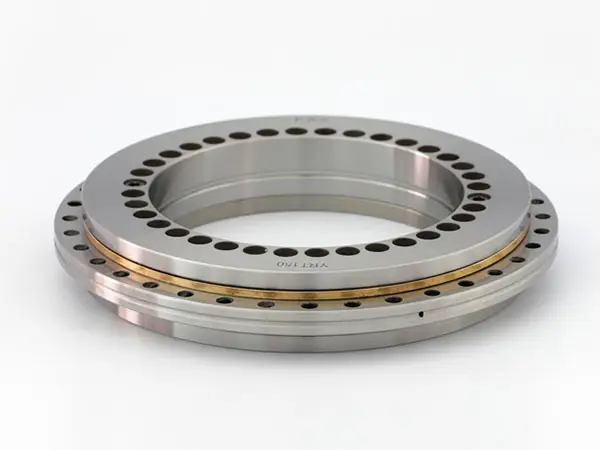
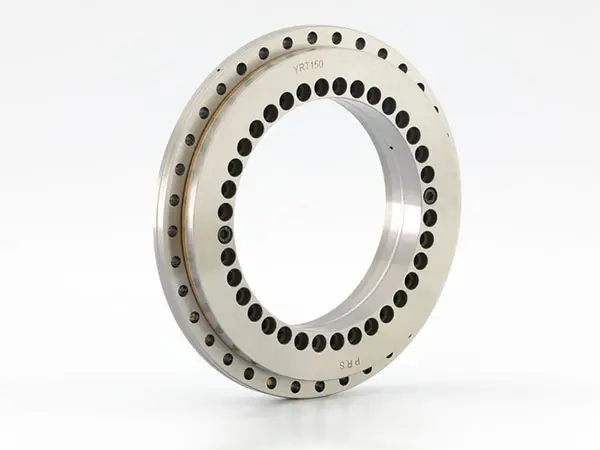
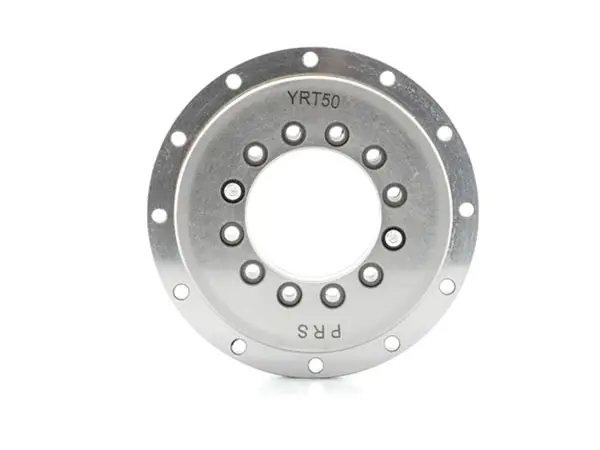
A turntable bearing, also known as a slewing ring or slewing bearing, is a large-diameter rotational bearing engineered to support combined axial loads, radial loads, and tilting moments. Its compact integrated design delivers stable rotation and precise positioning for heavy-duty equipment and space-constrained applications.

Customization Available: Product specifications, dimensions, materials, and configurations can be adjusted based on project requirements.

High Load Capacity & Structural Strength

Turntable bearings are designed to withstand substantial axial and radial loads as well as high tilting moments. Robust raceways, optimized internal structures, and suitable material and heat-treatment options provide the strength and durability required for demanding operating conditions.

Compact Integrated Design

Mounting holes, raceways, and optional internal or external gears can be integrated into a single bearing assembly, helping simplify equipment design and reduce installation space. Different bearing configurations, including four-point contact, crossed roller, ball, and roller designs, are available for different load and stiffness requirements.

Precise & Reliable Rotation

Precision-manufactured raceways and controlled manufacturing tolerances support smooth, stable rotation with low friction and controlled backlash. Turntable bearings are suitable for applications that require accurate positioning, consistent motion, and reliable performance under heavy loads.

Range of Applications

Turntable bearings are widely used in cranes, excavators, construction machinery, wind turbines, robotics, medical equipment, packaging machinery, and other rotary systems. PRS Bearing provides application-specific bearing solutions with engineering support and custom design capabilities to meet different load, speed, dimensional, and operating requirements.

DSC_7484(1)
Specifications

Turntable Bearing Technical Specifications

Key parameters such as load capacity, speed limits, torque, clearance, and materials determine the performance and life of your turntable bearing. Use this guide to make an informed selection.

Load Capacity

Turntable bearings are rated for axial load (Ca), radial load (Cr), and tilting moment (M). The load capacity depends on the bearing type, size, and internal geometry. For slewing rings, axial load capacities can range from 10 kN to over 10,000 kN, while tilting moment capacities can exceed 5,000 kNm. Always consider the combined loading condition and apply a safety factor (typically 1.2 to 1.5) based on application dynamics.

Speed Limits

Turntable bearings are generally designed for low-speed rotation. The permissible speed depends on the bearing type, lubrication, and sealing. For slewing rings, typical maximum speeds range from 1 to 50 RPM. Crossed roller bearings can achieve higher speeds (up to 200 RPM) with proper lubrication. Exceeding speed limits can lead to overheating and premature wear.

Torque

Starting torque and running torque are critical for drive system design. Factors influencing torque include bearing preload, lubrication viscosity, seal friction, and gear meshing (if applicable). PRS provides torque data for each bearing series to assist in motor sizing.

Clearance and Preload

Internal clearance affects bearing stiffness, noise, and life. Standard turntable bearings are supplied with a small clearance (e.g., 0.05–0.2 mm). For precision applications, preloaded bearings eliminate clearance and increase stiffness, but at the cost of higher torque. Specify clearance or preload based on your accuracy and rigidity requirements.

Materials and Coatings

Standard turntable bearings are made from through-hardened bearing steel (e.g., 42CrMo, 50Mn). For corrosive environments, stainless steel (e.g., 440C) or surface treatments such as zinc plating, black oxide, or PTFE coating are available. Consult PRS for material recommendations based on your operating conditions.

Applications

Applications and Industries

PRS turntable bearings are trusted in demanding industries worldwide. Explore how our bearings perform in cranes, excavators, wind turbines, robotics, medical equipment, and packaging machinery.
01

Cranes and Heavy Machinery

Mobile cranes, tower cranes, and ship cranes rely on slewing ring bearings to support the boom and rotate the superstructure. These bearings must withstand high axial and moment loads, often in harsh outdoor environments. PRS heavy-duty slewing rings feature hardened raceways and robust seals to ensure reliable operation and long service life. Case study: A European crane manufacturer reduced downtime by 30% after switching to PRS bearings with enhanced sealing.

02

Excavators and Construction Equipment

Excavators use turntable bearings to connect the upper structure to the undercarriage, enabling 360-degree rotation. The bearings must handle shock loads and continuous operation. PRS offers slewing rings with internal gears and high load capacities, specifically designed for excavators. Our bearings are tested to exceed 10,000 hours of service life in typical digging conditions.

03

Wind Turbines

Wind turbine yaw and pitch bearings are critical for optimizing energy capture and reducing loads. These turntable bearings operate in extreme weather and must be maintenance-free for years. PRS supplies slewing rings with special coatings and lubrication systems for wind applications. Our bearings are certified to industry standards and have been installed in over 5,000 turbines globally.

04

Robotics and Automation

Robotic arms and rotary tables require precise, low-backlash rotation. PRS precision turntable bearings, including crossed roller and four-point contact types, provide high stiffness and repeatability. They are used in assembly lines, welding robots, and semiconductor handling equipment. Our bearings help achieve positioning accuracy within ±0.01 mm.

05

Medical Equipment

CT scanners, surgical tables, and rehabilitation equipment depend on smooth, quiet rotation. PRS turntable bearings are designed with low noise and minimal vibration, ensuring patient comfort and image quality. We offer stainless steel and sealed designs for cleanroom environments.

06

Packaging Machinery

Rotary filling, capping, and labeling stations use turntable bearings for indexing and continuous rotation. PRS bearings provide reliable performance at speeds up to 100 RPM, with options for washdown and corrosion resistance. Our bearings help packaging lines achieve higher throughput and reduced maintenance.

Installation and Maintenance

Turntable Bearing Installation and Maintenance

Step 1: Preparation

Inspect the bearing for damage during shipping. Clean the mounting surfaces and remove any burrs or debris. Check that the mounting holes align with the mating structure. Verify that the bearing rotates freely by hand.

Step 2: Mounting

Place the bearing on the mounting surface and align the holes. Install bolts finger-tight, then tighten in a star pattern to the specified torque (refer to PRS installation manual). Use calibrated torque wrenches. For geared bearings, ensure proper gear meshing with the pinion.

Step 3: Lubrication

Apply the recommended lubricant (grease or oil) to the raceways and gear teeth. PRS bearings are typically pre-lubricated, but additional lubrication may be required for high-load or high-speed applications. Use a grease with good EP properties and temperature range. For centralized lubrication systems, connect the provided ports.

Step 4: Inspection and Troubleshooting

Regularly inspect for signs of wear, leakage, or abnormal noise. Check bolt torque after the first 100 hours of operation and every 500 hours thereafter. Common issues include inadequate lubrication, contamination, and misalignment. If you notice increased torque or vibration, discontinue use and consult PRS support.

Step 5: Extending Service Life

Follow the maintenance schedule in the PRS manual. Re-lubricate at recommended intervals (typically every 100–500 hours depending on conditions). Keep seals intact and replace if damaged. Store bearings in a dry, clean environment. With proper care, PRS turntable bearings can exceed 20,000 hours of service.

WHY CHOOSE US

Why Choose PRS Bearing

From quality assurance to custom engineering, PRS Bearing delivers reliable turntable bearing solutions backed by global support.

Quality Assurance

PRS bearings are manufactured under ISO 9001:2015 certified processes. Each bearing undergoes rigorous inspection, including dimensional checks, hardness testing, and load testing. We provide material certificates and test reports for full traceability.

Engineering Support

Our team of experienced engineers offers free application analysis, selection assistance, and custom design services. We help you optimize bearing performance and reduce total cost of ownership.

Global Distribution

With warehouses in North America, Europe, and Asia, PRS ensures fast delivery and local support. We ship to over 50 countries and maintain stock of popular sizes for immediate availability.

Custom Solutions

Need a non-standard bearing? PRS specializes in custom turntable bearings with unique dimensions, gear profiles, materials, and sealing. Our rapid prototyping and flexible production lines accommodate small to large batch orders.

bg-image_1.original
CONTACT US
Ready to Get Started?
Request a quote today and let our engineers help you find the perfect turntable bearing for your application.

    Get a quick quote

    We typically confirm within 24 hours.

    FAQ

    Frequently Asked Questions

    Find answers to common questions about turntable bearings, their selection, installation, and maintenance.

    What is the difference between a slewing ring bearing and a turntable bearing?

    They are essentially the same. "Turntable bearing" is a general term for a bearing that allows rotation, while "slewing ring bearing" is a specific type of turntable bearing that integrates raceways and often gearing. In practice, the terms are often used interchangeably.

    What lubrication is recommended for turntable bearings?

    Most turntable bearings are grease-lubricated. Use a high-quality lithium or calcium complex grease with EP additives. For high-temperature or high-speed applications, synthetic oils may be used. Always follow the PRS lubrication instructions.

    Can PRS provide custom turntable bearings?

    Yes. We specialize in custom designs with unique dimensions, gear profiles, materials, and sealing. Our engineering team works closely with you to meet your exact specifications. Contact us for a quote.

    How do I choose the right turntable bearing for my application?

    Consider the load types (axial, radial, moment), load magnitudes, speed, available space, and environmental conditions. Use our selection guide or contact PRS engineering for assistance. We offer free application analysis.

    How often should I inspect my turntable bearing?

    Inspect after the first 100 hours of operation, then every 500 hours or as recommended in the manual. Check for abnormal noise, vibration, leakage, and bolt torque. Re-lubricate at recommended intervals.

    What is the lead time for turntable bearings?

    Standard sizes are often in stock and ship within 1–2 weeks. Custom bearings typically require 4–8 weeks depending on complexity. Contact PRS for current lead times.