Avoid Installation Errors with Thin Section Bearing Tolerances
2026-09-07 02:39:32PRS Bearings
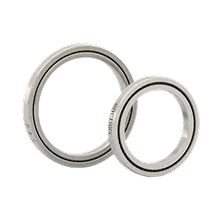
When installing a thin section bearing, even a few microns of error can lead to premature failure, excessive noise, or complete seizure. Unlike standard bearings, thin section bearings have a slender cross-section that makes them highly sensitive to housing shape, shaft fit, and clamping forces. Understanding the role of tolerances is not just a technical detail—it is the most effective way to avoid costly installation mistakes. This guide explains how tolerances affect your assembly, highlights the most common errors, and provides actionable recommendations drawing on PRS engineering experience.
Why Tolerances Matter in Thin Section Bearings
Thin section bearings are designed to save weight and space while carrying substantial loads. Their small cross-section means that the raceway rings are relatively flexible. If the surrounding structure does not provide adequate support, the bearing can deform, leading to uneven load distribution and premature wear. Tolerances define the permissible limits of dimensional variation for the bearing and its mounting surfaces. The tighter the tolerance, the more precise the fit. But precision is not the only goal—the correct tolerance class also ensures that the bearing remains properly preloaded, lubricated, and aligned under operating conditions.
Key Tolerance Parameters
- Bore and outer diameter tolerance – controls how the bearing fits on the shaft and in the housing.
- Raceway runout tolerance – limits the variation in radial and axial runout, reducing vibration.
- Width tolerance – affects axial positioning and clamping accuracy.
- Ring flexibility – a unique concern for thin section bearings, requiring careful matching with mating part rigidity.
Choosing the wrong tolerance class can cause excessive interference, which increases friction and heat, or excessive clearance, which leads to vibration and loss of accuracy. PRS offers several tolerance classes to match different application requirements, from generic industrial use to high-precision robotics.
Common Installation Errors with Thin Section Bearings
Installation errors often happen because technicians apply the same practices used for standard bearings. However, thin section bearings demand a different approach.
Over-clamping the Bearing Rings
Because the rings are thin, heavy clamping force can distort the raceway. This is especially common when using end caps or locknuts that are torqued excessively. The result is a binding ball path, increased friction, and accelerated wear. Tolerance-aware design specifies the correct clamping limits based on the bearing width and the stiffness of adjacent parts.
Incorrect Shaft and Housing Fits
Even when the bearing itself meets tolerance standards, the shaft or housing may not. Out-of-round bores, tapered seats, or excessive surface roughness can transfer deformation to the bearing. Always measure the mating parts before assembly. PRS recommends using a tolerance class that allows for a small amount of press fit while keeping the stress low enough not to reduce the bearing internal clearance.
Ignoring the Direction of Load
Thin section bearings often support combined loads. If the installers do not account for the load path, they may misalign the bearing rings, leading to edge loading. The tolerances on raceway parallelism and axial runout become critical here. Using a bearing with a higher precision class helps maintain the proper contact angle.
How Tolerances Prevent Installation Errors
Selecting the right tolerance is your first defense. But more importantly, understanding how tolerances interact with your assembly process can eliminate many common pitfalls.
Clearance Management
The internal clearance of a thin section bearing is partly determined by the fit. A tight interference fit can eliminate the radial play, causing the bearing to run hot. Conversely, too loose a fit can produce vibration and brinelling. Tolerances give you a predictable range of clearance after installation. For example, PRS supplies bearings with a specified internal clearance that can be matched with recommended fits in the engineering manual.
Runout Control
Misalignment during installation often shows up as runout. By selecting a bearing with tight runout tolerances, you can ensure that the raceway rotates about the true axis. This reduces the possibility of uneven wear and noise. During installation, use proper alignment fixtures and measure runout after mounting to verify that no deformation has occurred.
Preload Consistency
In many thin section bearing arrangements, preload is applied to eliminate clearance and increase stiffness. But preload must be controlled. Tolerance of the bearing width and raceway geometry directly influences how the preload distributes across the balls. PRS advises using bearings with defined width tolerance and parallel faces to avoid uneven preload.
Best Practices for Installers
To avoid installation errors, follow a documented procedure that accounts for tolerance requirements.
- Inspect the shaft and housing for roundness, taper, and surface finish before mounting.
- Use the fitting values recommended for the specific tolerance class. Do not rely on generic charts.
- Apply force to the ring that is being press-fitted, never through the balls or the opposite ring.
- Check axial and radial runout after the bearing is mounted but before final locking.
- Ensure that any locking nuts or caps are torqued to the recommended values—not just to a tightness feeling.
- When in doubt, consult the bearing manufacturer's engineering data. PRS provides detailed tolerance documentation and technical support for every product.
Choosing the Right Tolerance Class with PRS
PRS offers multiple precision classes for thin section bearings, from standard ABEC 1 to high-precision ABEC 7 and beyond. The choice depends on your application speed, load, and required rotational accuracy. For robotic joints or medical devices, tighter tolerance is usually worth the cost. For heavy-duty turntables, a standard class may suffice if the mounting structure is rigid. Always explain the full operating environment to your supplier. PRS engineers can help you select not only the tolerance class but also the proper internal clearance and preload strategy.
By respecting the tolerances and following the installation practices outlined above, you can avoid most thin section bearing failures. Precision in mounting is just as important as precision in manufacturing. With PRS products and proper installation techniques, your equipment will run smoother, longer, and more reliably.


 XRT Series Crossed Tapered Roller Bearings
 XV Series Crossed Cylindrical Roller Bearing
 XRU Crossed Roller Bearings
 XRSU Crossed Roller Bearings
 XRE Crossed Roller Bearings
 XRC Crossed Roller Bearings
 XRBH Crossed Roller Bearings
 XRB Crossed Roller Bearings
 Ultra Thin XRBS Crossed Roller Bearings
 Ultra Thin XRA-C Crossed Roller Bearings
 Ultra Thin XRA Crossed Roller Bearings
 XRBC Crossed Roller Bearings