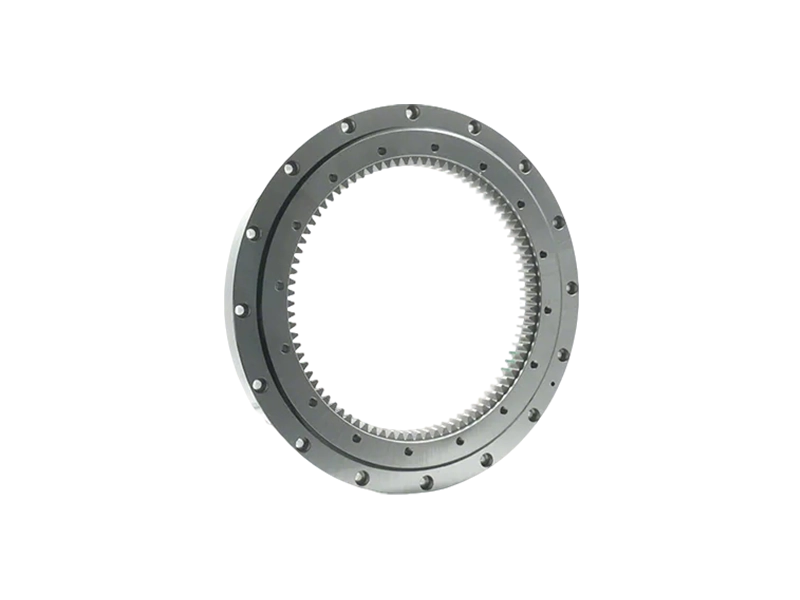
Custom Thin Section Bearings: Bore Sizes from 1 Inch to 40
2026-09-01 02:39:27PRS Bearings
For engineers and procurement specialists seeking precision components with exacting geometry, custom thin section bearings offer a critical advantage: the ability to match a bearing’s bore size, cross-section, and performance characteristics to a specific application. PRS manufactures these specialized components with bore sizes ranging from 1 inch to 40 inches, providing a versatile platform for industries from robotics to aerospace. Unlike standard off-the-shelf bearings, custom thin section bearings are engineered to your load, speed, and stiffness requirements—ensuring optimal performance in even the most compact designs.
What Are Custom Thin Section Bearings?
Thin section bearings are characterized by a radial cross-section that is substantially smaller than the bearing’s overall diameter. This compact geometry allows designers to achieve large bore diameters without sacrificing critical envelope space. When customization is introduced, the bearing can be tailored not only in bore size but also in material, rolling element type, cage design, sealing arrangement, and mounting features.
For example, a custom thin section bearing can be manufactured with a 1-inch bore for a miniature optical encoder, while a 40-inch bore version might support a heavy-duty radar antenna. The same fundamental design principle—thin cross-section—applies across the entire range, but the engineering details change significantly. This is where working with a specialist like PRS becomes invaluable.
Why Choose a Custom Bearing Solution?
- Space optimization: Custom thin section bearings reduce outer diameter and width, freeing up space for other system components.
- Weight reduction: By removing excess material, these bearings lower the overall weight of rotating assemblies—critical for aerospace and portable equipment.
- Application-specific load handling: Whether axial, radial, or moment loads dominate, custom geometries and internal designs can be optimized accordingly.
- Simplified mounting: Custom bore sizes can be matched directly to mating shafts, eliminating the need for adapters or spacers.
Bore Sizes from 1 Inch to 40: The Scope of Customization
The 1-inch to 40-inch bore range covers an extraordinary spectrum of equipment. Small-bore bearings are common in robotic joints, medical instruments, and measuring devices, where precision and low friction are paramount. Large-bore bearings, by contrast, are found in wind turbine blade pitch systems, tunnel boring heads, and large rotating turntables.
One of the key advantages of ordering from PRS is the ability to select a bore size that exactly matches your shaft diameter. Standard bearings often force designers to choose between a limited set of inner diameters, which can lead to unnecessary shaft steps or reduced strength. With custom manufacturing, the bore is produced to your drawing, within your specified tolerance class.
It is important to note that the term “custom” does not mean sacrificing quality. Every PRS bearing is machined from high-grade bearing steels or corrosion-resistant materials, heat-treated for dimensional stability, and inspected to strict quality standards. Whether you need a one-off prototype or a production run of thousands, the engineering rigor remains consistent.
Key Considerations When Specifying Custom Thin Section Bearings
To get the most out of a custom thin section bearing, you must provide clear performance requirements. PRS engineers use these inputs to optimize the internal geometry and select the appropriate materials and tolerances.
Material Selection
Bearing steel (such as AISI 52100) offers high hardness and fatigue resistance for most industrial applications. For corrosive environments or where weight is a concern, stainless steel (440C or 316) provides improved rust resistance and cryogenic compatibility. In specialized cases, hybrid bearings with ceramic rolling elements deliver electrical insulation and lower thermal expansion. PRS can also supply non-magnetic or high-temperature alloys when required.
Precision and Tolerance
Thin section bearings can be manufactured to ABEC ratings ranging from standard commercial tolerance to ABEC-7 or ABEC-9 for high-speed, low-runout applications. Additionally, the radial play (or preload) is a critical parameter. For applications demanding high stiffness, a light preload eliminates clearance and improves rotational accuracy. PRS can set the internal clearance to your specified value—from a few microns to loose clearance—depending on operating temperature and interference fits.
Cage and Rolling Element Options
The cage (also called a retainer) prevents rolling elements from contacting each other and guides them through the load zone. Options include pressed steel, machined brass, phenolic, and PEEK. Each has trade-offs in speed, temperature compatibility, and wear resistance. For large-bore bearings, a segmented cage may be used to simplify assembly and provide better lubricant flow. Rolling elements can be balls or cylindrical rollers, chosen based on the ratio of axial to radial loads. PRS engineers can simulate load distributions to recommend the optimal configuration.
Why PRS for Your Custom Thin Section Bearings?
PRS has built its reputation on engineering-led manufacturing. Unlike standard catalog suppliers, PRS treats every custom bearing as a new design challenge. Here are the key reasons design engineers worldwide choose PRS:
- In-house engineering support: From the initial consultation to final design approval, PRS provides application engineering, FEA analysis, and tolerance stack-up reviews.
- Flexible manufacturing: Our manufacturing process supports bore sizes from 1 to 40 inches, with short lead times for prototypes and low-volume production.
- Materials variety: We source certified materials and maintain full traceability, ensuring compliance with aerospace, medical, or defense specifications.
- Rigorous quality control: Each bearing undergoes dimensional inspection, noise testing, and surface finish verification before shipment.
- Custom sealing and lubrication: PRS can integrate contact or non-contact seals, and pre-fill lubricants ranging from low-temperature greases to high-speed oils.
Applications That Benefit from PRS Custom Thin Section Bearings
The versatility of PRS thin section bearings is reflected in the wide range of industries that rely on them. Some notable examples include:
- Robotics – Large-diameter, thin cross-section bearings for collaborative robot arms and rotary index tables, where high precision and low weight are essential.
- Aerospace – Actuator assemblies, satellite deployment mechanisms, and radar rotation systems that demand low mass and high reliability over long service lives.
- Medical technology – CT scanners and surgical robots benefit from non-magnetic, corrosion-resistant bearing materials and smooth, low-friction operation.
- Renewable energy – Solar tracker arrays and wind turbine pitch control systems rely on large-bore thin section bearings to handle eccentric loads and periodic rotation.
- Semiconductor manufacturing – Vacuum-compatible bearings with special seals and lubricants are used in wafer handling equipment and inspection stages.
How to Get Started with PRS Custom Bearings
Specifying a custom thin section bearing does not require a complete drawing package—although drawings are always welcome. A typical engagement begins with a conversation or a simple inquiry form. PRS engineers will ask about the intended application, operating environment, load spectrum, speed, and life expectancy. From that information, we can generate a conceptual design and a quotation. If required, samples or prototypes can be produced before full-scale manufacturing.
For more complex designs, PRS can work directly with your design team to translate functional requirements into a manufacturable bearing. By combining our knowledge of material science, heat treatment, and precision machining, we ensure that the final bearing not only meets but exceeds your expectations.
Conclusion
Custom thin section bearings with bore sizes from 1 inch to 40 inches provide engineers with the flexibility to design more compact, efficient, and reliable machinery. PRS has the expertise, manufacturing capability, and quality control to deliver bearings that are precisely matched to your application. Whether you are upgrading an existing system or creating a new one, partnering with PRS ensures that your thin section bearing requirements are met with precision and confidence.


 XRT Series Crossed Tapered Roller Bearings
 XV Series Crossed Cylindrical Roller Bearing
 XRU Crossed Roller Bearings
 XRSU Crossed Roller Bearings
 XRE Crossed Roller Bearings
 XRC Crossed Roller Bearings
 XRBH Crossed Roller Bearings
 XRB Crossed Roller Bearings
 Ultra Thin XRBS Crossed Roller Bearings
 Ultra Thin XRA-C Crossed Roller Bearings
 Ultra Thin XRA Crossed Roller Bearings
 XRBC Crossed Roller Bearings