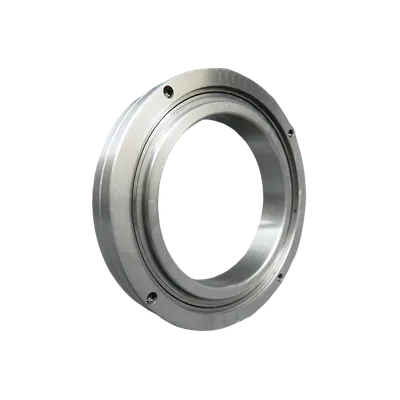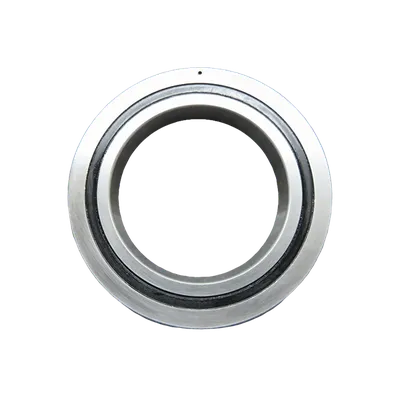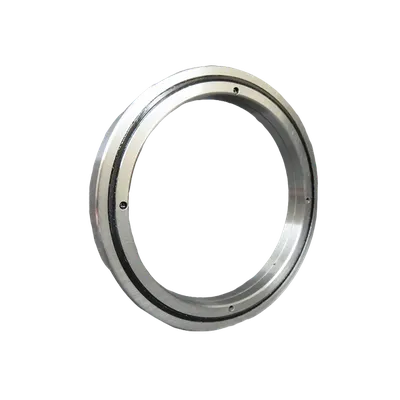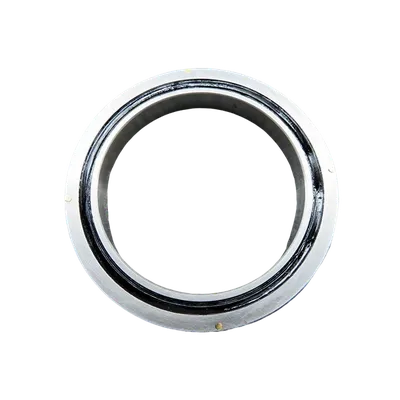
In precision machinery and robotics, the ability to withstand heavy loads while maintaining rigidity is often the deciding factor between success and failure. Crossed roller bearings have emerged as a superior solution for applications demanding both high load capacity and exceptional stiffness. Unlike conventional ball bearings that rely on point contact, crossed roller bearings utilize cylindrical rollers arranged in a unique cross-pattern between inner and outer rings. This design fundamentally changes how forces are distributed, allowing the bearing to handle radial, axial, and moment loads simultaneously with minimal deflection. For engineers seeking reliability in demanding environments such as machine tools, medical imaging equipment, and industrial robots, understanding the technical advantages of crossed roller bearings is essential. This article examines the structural principles and performance benefits that make them the preferred choice for applications where precision and durability are non-negotiable.
Structural Design Principles Behind Superior Load Capacity
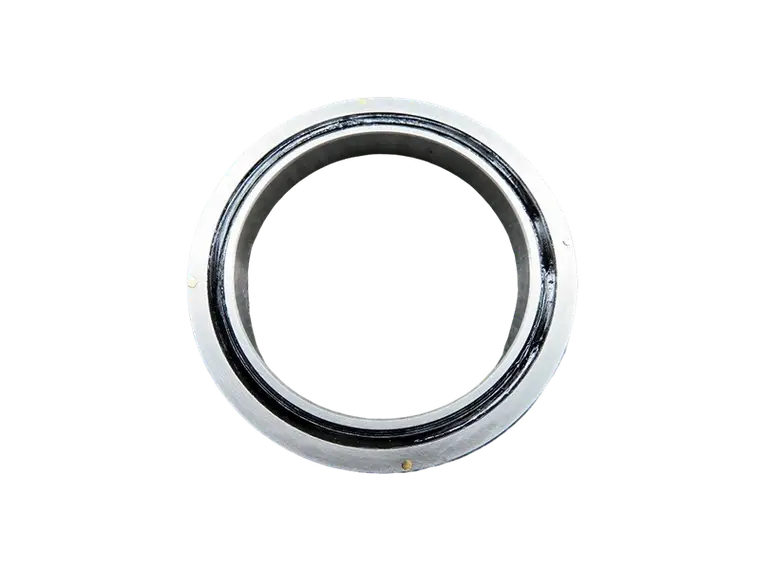
The core of a crossed roller bearing lies in its roller arrangement. Cylindrical rollers are positioned at 90-degree angles to each other, separated by a retainer that maintains precise spacing. This cross-pattern allows each roller pair to share loads from multiple directions simultaneously. Because the rollers make line contact with the raceway surfaces rather than point contact, the contact area is significantly larger than in ball bearings. For a given load, this reduces stress concentration, enabling the bearing to support up to several times the load of an equivalently sized ball bearing. Additionally, the alternating orientation of rollers ensures that radial, axial, and tilting moments are all absorbed by the same roller set, eliminating the need for separate bearing rows in many applications.
Roller Geometry and Material Optimization
PRS manufactures crossed roller bearings using bearing-grade steel with precise roller crowning to avoid edge stress. The rollers are typically through-hardened to achieve optimal hardness and wear resistance. The combination of line contact and controlled roller geometry means that load capacity scales nearly linearly with roller diameter and length, a critical advantage when space constraints demand compact yet robust solutions.
Stiffness Advantages Over Traditional Bearing Types
Stiffness—the ability to resist deformation under load—is even more critical than load capacity in many precision applications. Crossed roller bearings exhibit significantly higher stiffness compared to ball bearings and even some cylindrical roller bearings. The line contact interface creates a larger elastic deformation zone, which paradoxically reduces total deflection because the load is distributed over a broader area. Furthermore, the preload capability of crossed roller bearings is exceptional. By adjusting the radial clearance during manufacturing, engineers can achieve near-zero or even negative clearance, resulting in a bearing that exhibits virtually no measurable deflection under moderate loads.
Comparative Stiffness Breakdown
- Ball bearings: Point contact leads to high initial deflection; stiffness is low and nonlinear, especially under moment loads.
- Cylindrical roller bearings: Line contact provides good radial stiffness but poor axial and moment stiffness because rollers are oriented in one direction only.
- Crossed roller bearings: Line contact in two perpendicular orientations delivers isotropic stiffness—equally high in radial, axial, and moment directions. This is why they are preferred for rotary tables and gantry systems where multi-directional rigidity is required.
Practical Advantages in Precision Applications
The combined load and stiffness benefits translate directly into real-world performance. In CNC machining centers, crossed roller bearings in the rotary axis allow heavier workpieces to be machined with tighter tolerances. In medical CT scanners, the bearing must support the heavy rotating gantry while maintaining alignment within microns—a task for which PRS crossed roller bearings have become the industry standard. The reduced deflection also minimizes vibration, which is critical for high-speed imaging and laser cutting systems.
Lifecycle and Maintenance Benefits
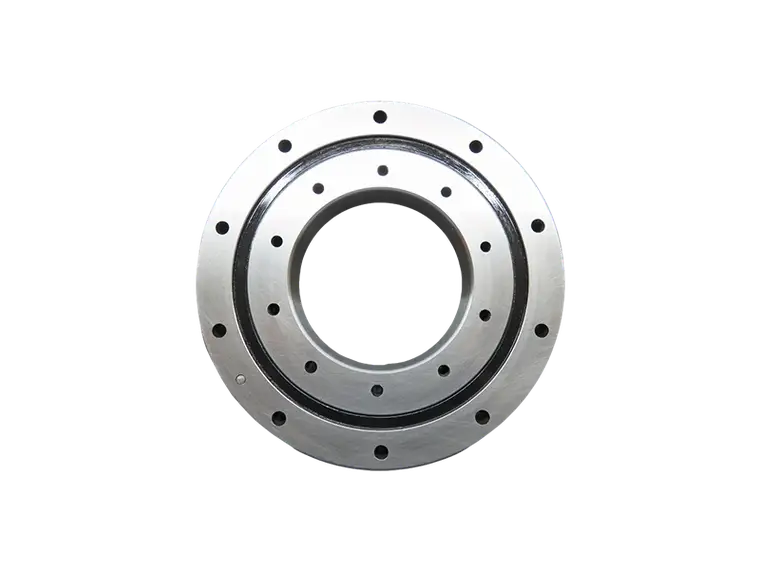
Because the load is distributed over many line contacts, the contact stresses are lower, leading to longer fatigue life. Crossed roller bearings can operate for tens of thousands of hours under full load without degradation. Moreover, the retainer design ensures consistent roller spacing, reducing torque fluctuation and enabling smooth rotation even after extended service. For OEMs that prioritize reliability, this means fewer field failures and lower total cost of ownership.
Why Engineers Choose PRS Crossed Roller Bearings
While the fundamental design of crossed roller bearings is well-established, manufacturing precision is paramount. PRS employs advanced grinding and lapping processes to achieve raceway roundness within sub-micron tolerances. Each bearing undergoes 100% inspection for rolling torque, noise, and stiffness before leaving the factory. With decades of expertise in custom bearing solutions, PRS offers both standard catalog sizes and custom-engineered variants to suit unique application requirements. When load capacity and stiffness are the deciding factors, PRS crossed roller bearings provide the reliability and performance that precision equipment demands.
Summary of Key Takeaways
- Crossed roller bearings offer load capacities up to 300% higher than ball bearings of the same size.
- They provide isotropic stiffness, equally robust in radial, axial, and moment loading.
- Line contact reduces stress and extends fatigue life significantly.
- Preload capability allows near-zero deflection for the highest precision applications.
For engineers seeking to maximize machine performance without increasing footprint or weight, crossed roller bearings represent a proven technology that has been refined over decades. By choosing PRS as your bearing partner, you gain access to engineering support, custom modifications, and a quality standard that meets the most stringent industry certifications.