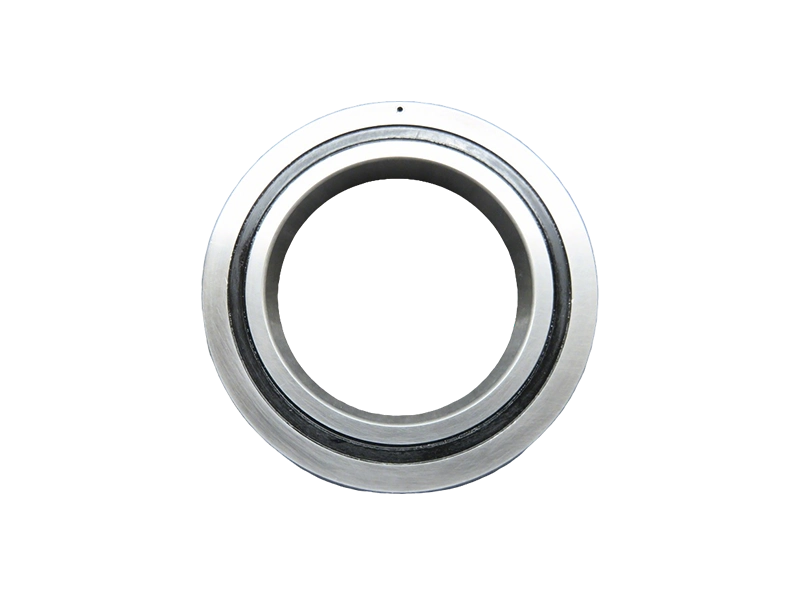
In applications demanding exceptional rigidity, high rotational accuracy, and compact design, precision crossed roller bearings have become indispensable. From robotics and medical imaging to machine tool spindles and semiconductor equipment, the right bearing directly impacts performance and service life. But with numerous specifications and manufacturers on the market, how do you objectively evaluate which features truly matter? This guide highlights the top 5 features that distinguish high-quality crossed roller bearings and explains why they are critical for your application. As a trusted provider of precision bearing solutions, PRS brings deep insight into what separates an average bearing from a superior one.
1. Roller Geometry and Cage Material
The core of any crossed roller bearing lies in its rollers and the cage that spaces them. Unlike standard ball bearings, crossed roller bearings use cylindrical rollers arranged in a cross pattern, allowing them to handle both radial and axial loads simultaneously.
Roller Profile Precision
High-grade bearings employ rollers with a logarithmic profile or slight crown. This geometry reduces edge stress under load, preventing premature fatigue. Look for bearings where roller roundness and diameter tolerance are held within 0.5 μm – this directly translates to lower vibration and smoother motion.
Cage Material Selection
The cage (retainer) must provide low friction while maintaining precise roller spacing. Premium options include polymide (PA66) with glass fiber for low noise and high wear resistance, or brass cages for high-speed applications. PRS bearings, for example, use optimized cage designs that balance strength with thermal stability, ensuring consistent performance across varying temperatures.
2. Bearing Accuracy Grade (ISO/ABMA Standards)
Precision crossed roller bearings are classified into grades such as P0, P6, P5, P4, and P2 (ISO) or ABEC 1, 3, 5, 7, 9. For most high-precision rotary tables and indexing applications, P4 (ABEC 7) or higher is recommended.
Why Grade Matters
A higher grade means tighter tolerances on inner/outer ring runout, radial clearance, and mating surface geometry. This reduces wobble and improves repeatability. When evaluating a bearing, request the manufacturer’s actual measurement data (e.g., radial runout ≤ 2 μm, axial runout ≤ 3 μm). PRS supplies bearings with certified accuracy reports, giving engineers confidence in their designs.
Preload Consistency
Some applications require a specific preload to eliminate clearance and increase stiffness. Look for bearings offered with preload classes (light, medium, heavy) and ensure the preload force is uniform across all rollers. Inconsistent preload leads to uneven wear and reduced service life.
3. Contact Angle and Crossed Arrangement Precision
In a crossed roller bearing, the rollers are oriented at 90° to each other in alternating pockets. The contact angle (typically 45°) determines how radial and axial loads are distributed.
Angle Tolerance
The nominal contact angle must be maintained within ±0.5° across the entire bearing. Deviations create unbalanced load zones and increase frictional torque. Advanced manufacturing processes, like those used by PRS, employ laser measurement to verify the crossing angle during assembly.
Crossed Alignment Uniformity
Check whether the bearing uses a single-piece inner or outer ring (the classic design) or a split type. Split designs allow easier installation but can compromise alignment if not precisely machined. For applications demanding the highest dynamic performance, a one-piece raceway with precision ground pockets ensures that each roller contacts the raceway at the correct angle throughout rotation.
4. Material Quality and Heat Treatment
Bearing steel directly affects hardness, wear resistance, and dimensional stability over time. The dominant material for precision crossed roller bearings is bearing steel (e.g., SUJ2, 52100, or 100Cr6), but higher-end variants may use stainless steel (for corrosion resistance) or ceramic rollers (for reduced inertia).
Hardness and Case Depth
The raceway and rollers should be through-hardened to HRC 58–62. Additionally, a uniform case-hardening depth of 0.8–1.2 mm is essential for resisting indentation from shock loads. Inferior bearings often have surface hardness only, leading to Brinelling under heavy loads.
Heat Treatment Stability
Dimensional changes after heat treatment must be minimized. Premium manufacturers use sub-zero treatment (cryogenic processing) to convert retained austenite, stabilizing geometry and preventing growth over the bearing’s life. PRS applies a proprietary stabilization cycle that ensures bearings maintain their accuracy even after thousands of operating hours.
5. Load Ratings and Fatigue Life Prediction
Even the best-designed bearing will fail if it is undersized for the application. Two critical parameters are the basic dynamic load rating (C) and static load rating (C0). But beyond the catalog numbers, real-world fatigue life depends on how loads are distributed across the rollers.
Effective Load Distribution
Crossed roller bearings excel at handling combined loads, but the true capacity is determined by the number of rollers that share the load simultaneously. Look for bearings with a high number of rollers relative to the bore diameter. For example, a PRS CRB series bearing with 64 rollers (instead of a competitor’s 56) offers 14% more load-carrying area per revolution.
Fatigue Life Calculation
Reputable manufacturers provide L10 or Lm life curves based on ISO 281. When evaluating suppliers, ask for test data under actual operating conditions (speed, temperature, lubrication). Avoid relying solely on theoretical calculations; independent testing by the manufacturer adds credibility. PRS publishes verified fatigue test results on their website for each model.
Final Considerations: Sealing and Lubrication
While not always listed as a “feature,” the effectiveness of seals and the lubrication strategy can make or break a bearing’s real-world performance. Seals (contact or non-contact) prevent contamination ingress; proper grease selection (e.g., low-outgassing grease for vacuum environments) extends relubrication intervals. PRS offers custom sealing options and pre-filled lubrication based on application requirements.
Frequently Asked Questions (FAQ)
Q: How do I choose between a standard and high-precision grade?
A: If your application requires positioning accuracy better than 10 arc-seconds or speeds above 500 rpm, opt for P4/ABEC 7 or higher. For slower, heavier-load applications, P5/ABEC 5 may be sufficient.
Q: Can I retrofit a crossed roller bearing from another brand with PRS bearings?
A: Yes, PRS bearings are designed to interchangeable dimensions (bore, OD, width) per ISO standards. Always verify the mounting interface and preload requirements, but cross-referencing is straightforward.
Q: What is the typical lead time for custom precision bearings?
A: Custom dimensions or special coatings usually require 6–10 weeks. Standard models from PRS stock ship within 1–2 weeks.
Conclusion
Choosing the right precision crossed roller bearing is a blend of understanding geometry, materials, manufacturing tolerances, and real-world validation. By focusing on these five features—roller geometry, accuracy grade, contact angle precision, material quality, and load ratings—you can confidently select a bearing that delivers long life, low vibration, and reliable performance. For applications that demand the highest standards, PRS provides full technical support and custom solutions. Evaluate your next project with these criteria, and you will ensure your machine runs at its peak potential.


 XRT Series Crossed Tapered Roller Bearings
 XV Series Crossed Cylindrical Roller Bearing
 XRU Crossed Roller Bearings
 XRSU Crossed Roller Bearings
 XRE Crossed Roller Bearings
 XRC Crossed Roller Bearings
 XRBH Crossed Roller Bearings
 XRB Crossed Roller Bearings
 Ultra Thin XRBS Crossed Roller Bearings
 Ultra Thin XRA-C Crossed Roller Bearings
 Ultra Thin XRA Crossed Roller Bearings
 XRBC Crossed Roller Bearings