Crossed Roller Bearings vs Angular Contact: Key Differences
2026-06-08 02:39:29PRS Bearings
When designing precision rotary tables, robotic joints, or machine tool spindles, engineers often face a critical decision: crossed roller bearings versus angular contact ball bearings. Both provide high accuracy and rigidity, but their structural differences lead to distinct performance characteristics in load handling, stiffness, and space utilization. Understanding these differences is essential for selecting the optimal bearing arrangement for your specific application, whether it demands moment load resistance, compactness, or high-speed capability. This article provides a detailed comparison to guide your selection process, with insights drawn from PRS's extensive experience in precision bearing manufacturing.
1. Understanding the Basic Structures
Crossed Roller Bearings
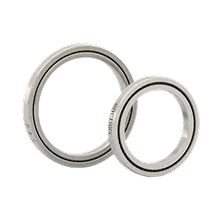
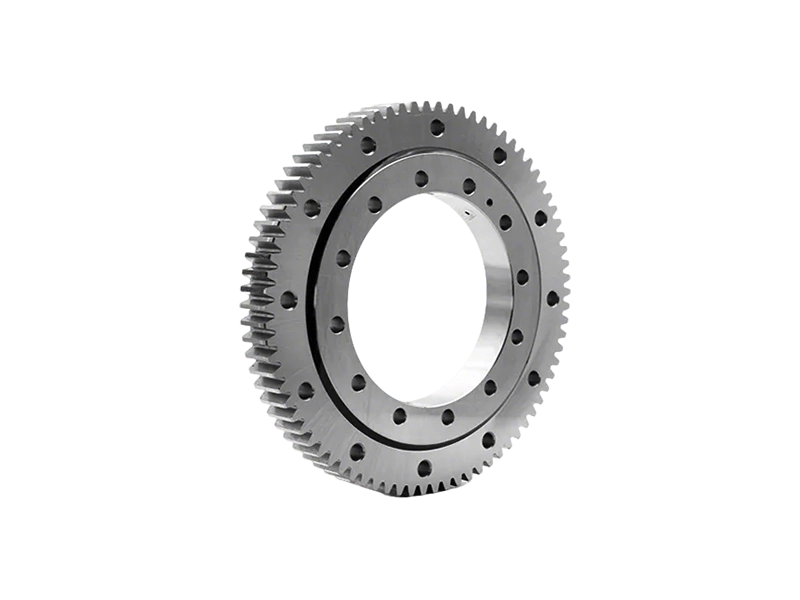
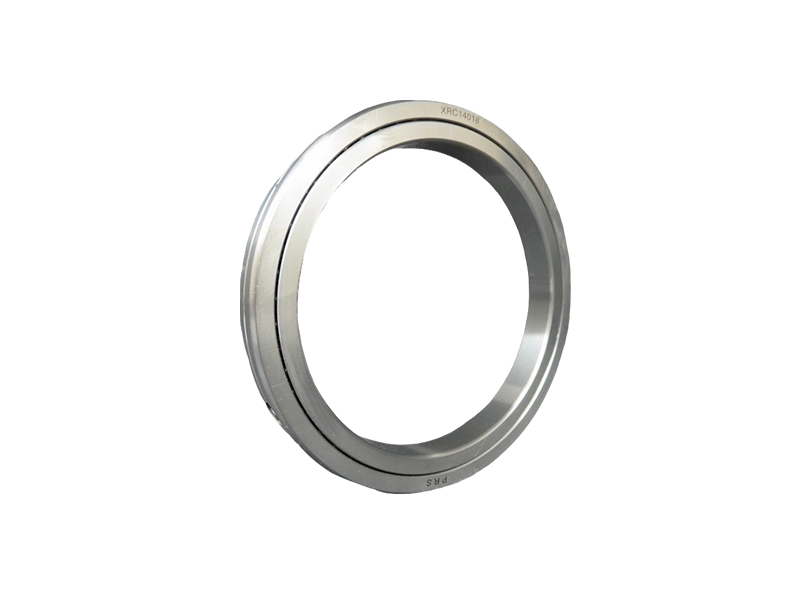
Crossed roller bearings consist of cylindrical rollers arranged in a cross pattern—typically with alternating rollers oriented at 90 degrees to each other within a single raceway. This unique design enables the bearing to handle radial, axial, and moment loads simultaneously from any direction. The rollers are separated by spacers (or a retainer) to prevent friction between them. Because the contact surface between the roller and raceway is a line (rather than a point), the load capacity per unit area is high. PRS offers crossed roller bearings in both inner-ring rotation and outer-ring rotation configurations, with options for integral sealing and preload adjustment.
Angular Contact Ball Bearings
Angular contact ball bearings feature balls running on raceways that are angled relative to the bearing axis. This angle (typically 15°, 25°, or 40°) allows the bearing to accommodate combined radial and axial loads. They are usually used in pairs (back-to-back, face-to-face, or tandem) to achieve bidirectional thrust capacity and increased rigidity. The contact between the ball and raceway is a point, which results in lower friction but also lower load capacity compared to roller bearings of similar size. Angular contact bearings are widely used in high-speed spindles and precision mechanisms where low heat generation is critical.
2. Load Capacity and Stiffness Comparison
The most decisive difference between these two bearing types lies in how they handle loads, particularly moment (tilting) loads and combined loads.
- Moment Load (Tilting) Resistance: Crossed roller bearings excel in moment load capacity thanks to the crossed roller arrangement. The alternating orientation of rollers creates a large effective lever arm, enabling the bearing to resist overturning moments with minimal deflection. This makes them ideal for applications like rotary tables and indexing devices where the load is offset from the bearing center.
- Radial & Axial Load Capacity: For pure radial or pure axial loads, a properly sized angular contact bearing pair can often match or exceed a crossed roller bearing of equivalent envelope size. However, when both radial and axial loads are present simultaneously (combined loading), crossed roller bearings maintain higher stiffness because all rollers are actively engaged.
- Stiffness: Crossed roller bearings generally offer higher stiffness (lower elastic deformation under load) than angular contact ball bearings due to line contact versus point contact. For precision positioning applications where micron-level accuracy is mandatory, this stiffness advantage is critical. PRS crossed roller bearings can be supplied with specified preload levels to further enhance stiffness.
3. Speed, Friction, and Operating Temperature
Angular contact ball bearings are inherently better suited for high-speed operation. The point contact between balls and raceways generates significantly less friction than the line contact of crossed rollers. This translates to lower heat generation and the ability to operate at higher rotational speeds without excessive temperature rise. For example, a typical machine tool spindle running at 10,000 RPM will almost always use angular contact ball bearings (often in a hybrid silicon nitride ball version) rather than crossed roller bearings. Crossed roller bearings, while capable of moderate speeds, are generally limited to lower rpm ranges compared to ball equivalents of the same diameter. However, in many precision rotary table applications, speed is not the primary concern; accuracy and rigidity under heavy loads are more important.
4. Space Requirements and Configuration Flexibility
Another key differentiator is the compactness of the bearing arrangement. Crossed roller bearings can handle radial, axial, and moment loads in a single unit, eliminating the need for multiple bearings arranged in a complex preloaded set. This reduces axial space (height) and simplifies housing design. Angular contact bearings, on the other hand, require two or more bearings arranged back-to-back or face-to-face to achieve bidirectional moment stability, which increases the overall axial length and complexity of the mounting structure. For applications where axial space is limited—such as robotic wrist joints or optical positioning stages—crossed roller bearings offer a distinct packaging advantage.
5. Application-Specific Guidance from PRS
Based on PRS's field engineering experience, here is a practical selection framework:
- Choose Crossed Roller Bearings when:
- High moment load capacity is required (rotary tables, indexing tables, heavy-duty turntables).
- Axial space is limited and you need a single unit to handle all load directions.
- High static and dynamic stiffness are critical (precision measurement equipment, CMMs).
- Operating speed is moderate (below approximately 500 RPM for large diameters, lower for very large units).
- Choose Angular Contact Ball Bearings when:
- High rotational speed is the priority (spindles, high-speed machining centers, centrifuges).
- Loads are primarily radial or axial with minimal moment (or when moment can be managed by a bearing pair).
- Low friction and minimal heat generation are essential.
- Cost is a driving factor—angular contact bearings are generally less expensive than crossed roller units for the same envelope size.
PRS offers both product families with standard and custom dimensions. For applications that do not fit neatly into either category, such as high-speed rotary tables requiring moment stiffness, PRS engineers can help design hybrid arrangements or special preload configurations to optimize performance.
Frequently Asked Questions
Can crossed roller bearings replace angular contact bearings directly?
Not without redesigning the housing and shaft. Crossed roller bearings have different dimensions, mounting flange patterns, and preload systems. However, in new designs, substituting a crossed roller bearing for a pair of angular contact bearings is often feasible if speed is not prohibitive.
Which bearing type offers better rotational accuracy?
Both can achieve high accuracy classes (P2, P4, etc.). However, crossed roller bearings typically maintain better runout under moment loading because the load is distributed over multiple rollers. Angular contact bearings may exhibit slight tilting under heavy moment loads due to the elastic deformation of the ball contacts.
How do I calculate the required preload for a crossed roller bearing?
PRS provides preload recommendations based on the specific bearing size, application load, and desired stiffness. Generally, a light preload is used for low-friction applications, while heavy preload is applied when maximum rigidity is needed. Contact PRS technical support for a detailed calculation.
Conclusion
The choice between crossed roller bearings and angular contact bearings ultimately hinges on your application's primary performance drivers: speed versus stiffness and moment capacity. Crossed roller bearings deliver superior rigidity and multi-directional load handling in a compact package, while angular contact bearings offer higher speed capability and lower friction at a lower cost. By carefully evaluating your load profile, speed requirements, and spatial constraints, you can select the optimal bearing solution. PRS offers extensive technical resources and custom engineering support to help you make the right decision for your precision motion system.


 XRT Series Crossed Tapered Roller Bearings
 XV Series Crossed Cylindrical Roller Bearing
 XRU Crossed Roller Bearings
 XRSU Crossed Roller Bearings
 XRE Crossed Roller Bearings
 XRC Crossed Roller Bearings
 XRBH Crossed Roller Bearings
 XRB Crossed Roller Bearings
 Ultra Thin XRBS Crossed Roller Bearings
 Ultra Thin XRA-C Crossed Roller Bearings
 Ultra Thin XRA Crossed Roller Bearings
 XRBC Crossed Roller Bearings