Robot arm designers face a persistent challenge: improving speed and payload capacity while maintaining precision and repeatability. The joints and rotary tables of industrial robots demand components that are simultaneously lightweight, stiff, and accurate. This is where thin section bearings have become a critical engineering solution. By reducing cross-sectional thickness without compromising performance, these bearings allow compact joint designs, lower inertia, and greater design freedom. This article explores how thin section bearings contribute to robot arm optimization, what design parameters matter most, and why selecting the right bearing partner—such as PRS—can elevate your robotic system to the next level.
What Are Thin Section Bearings and Why They Matter in Robotics
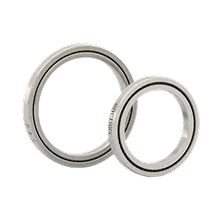
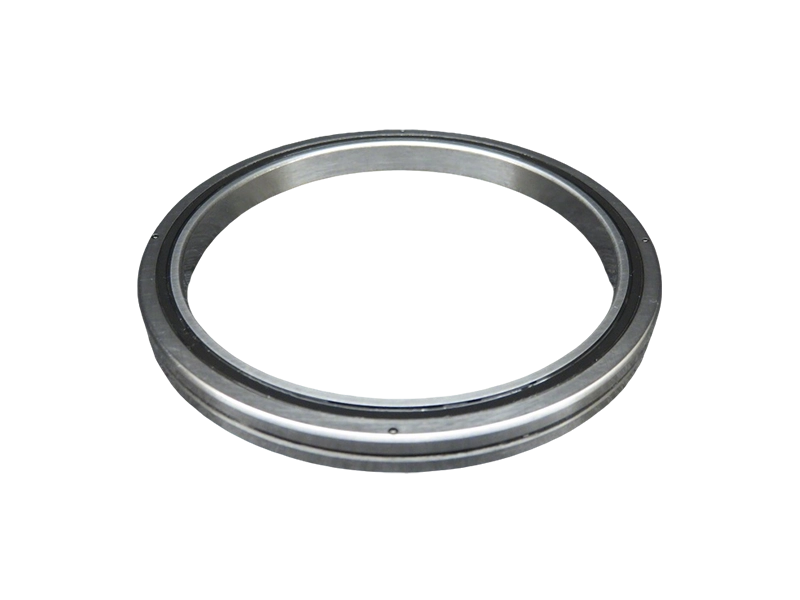
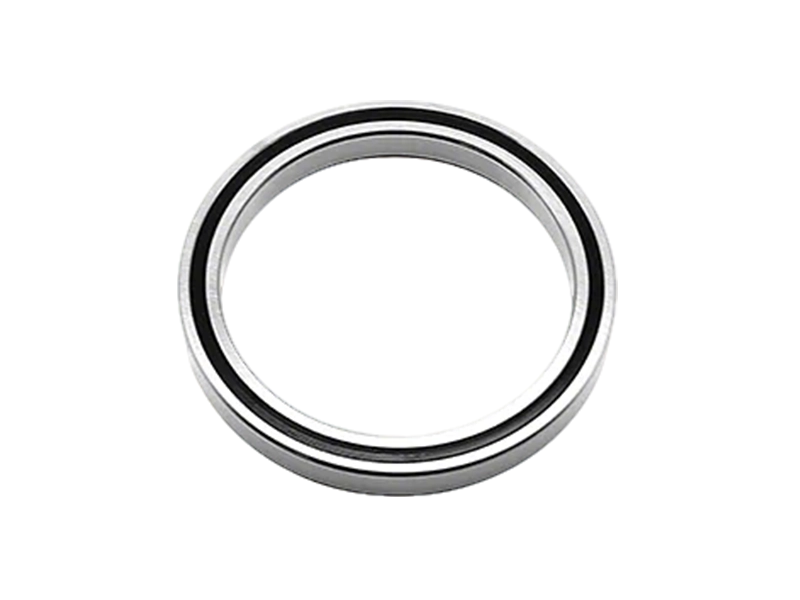
Thin section bearings are radial bearings with a small cross-sectional area relative to their bore diameter. Unlike standard bearings where the cross-section grows with bore size, thin section bearings maintain a constant cross-section across a wide range of diameters. This unique architecture makes them ideal for robot joints where space is tight and weight is a critical factor.
In robotic arms, every gram of rotating mass affects the motor torque required to accelerate the link. Thinner bearings minimize the overall joint envelope, allowing designers to place larger actuators or integration into slimmer arm profiles. Furthermore, the reduced mass lowers inertia, which directly improves dynamic response and energy efficiency.
Key Mechanical Characteristics of Thin Section Bearings
- Constant cross-section: The radial and axial space occupied remains the same regardless of bore size, enabling scalable joint designs.
- Low friction: Optimized raceway geometries and cage designs reduce starting torque—essential for high-precision robotic movements.
- High rigidity: Despite their slim profile, well-engineered thin sections maintain excellent stiffness when properly preloaded.
- Variety of configurations: Available as deep groove, angular contact, and four-point contact types to suit different load profiles.
Optimizing Robot Arm Dynamics with Reduced Inertia and Weight
The most direct performance gain from thin section bearings comes from inertia reduction. A standard deep groove ball bearing with a 300 mm bore might weigh several kilograms. A comparable thin section bearing could weigh as little as 15–20% of that mass, depending on series and material. In a multi-joint arm, the cumulative weight saving significantly reduces the load on each adjacent motor and gearbox.
Lower inertia also means the servo loop can be tuned more aggressively. Robotic arms with reduced rotating mass exhibit less overshoot and can settle into position faster. For applications such as pick-and-place, cobots, or CNC tool changers, this directly translates into higher cycle rates and productivity.
Moreover, lighter moving components reduce the structural bending moments on the arm. This enables longer reach designs without requiring heavier cross-sections or larger counterweights. In addition, the reduced gravitational torque means smaller brakes are needed for fail-safe operation, contributing to further weight savings.
Precision and Rigidity: Maintaining Accuracy Under Load
Robotic precision depends on the rigidity of every joint bearing. If a bearing deflects under load, the end-effector position will deviate from the commanded trajectory. Thin section bearings, when properly selected and preloaded, can offer remarkable stiffness-to-weight ratios.
Angular contact thin section bearings are often chosen for combined axial and radial loads in multi-axis arms. They can be arranged in duplex pairs to eliminate axial play and increase system rigidity. Four-point contact bearings are another popular option for pure moment-loaded joints such as wrist axes, because they can handle bidirectional axial loads from a single bearing.
Raceway parallelism and ring thickness uniformity are critical manufacturing attributes. High-quality thin section bearings from PRS are manufactured with strict geometric tolerances, ensuring consistent contact patterns and low vibration. For applications involving high-speed rotation, this precision minimizes heat generation and extends lubricant life.
Preload Strategies for Robot Arm Bearings
Preload is a double-edged sword. Too little results in ball skidding and loss of positioning accuracy; too much generates excessive heat and reduces bearing life. Thin section bearings can be preloaded using locating bearings, shims, or specially matched mating parts. In robotic rotating units, adjustable preload mechanisms are sometimes required to fine-tune stiffness after assembly.
PRS engineering team can assist with preload specifications based on the expected duty cycle, speed, and temperature range. Their experience in robotic joints helps customers avoid common pitfalls such as thermal expansion leading to excessive preload in continuous operation.
Comparative Advantages of PRS Thin Section Bearings
When choosing a bearing partner for a high-performance robot arm, not all thin section bearings are equal. PRS combines advanced manufacturing techniques with application-specific engineering support.
- Tailored bearing geometry: PRS can modify raceways, cage materials, and lubrication for your exact load and speed profile.
- Superior material quality: Premium bearing steels and optional ceramic hybrid balls deliver longer fatigue life and lower friction.
- Compact cross-sections: PRS offers one of the widest ranges of thin section series, enabling designers to choose the minimal cross-section that still meets their structural demands.
- Integrated support: From bearing selection to prototype validation, PRS provides engineering consultation to reduce development risk.
Design Considerations and Common Pitfalls
Integrating thin section bearings into a robot arm is not a simple drop-in replacement. Careful attention must be paid to housing and shaft tolerances. Because the rings are thinner, they are more sensitive to non-circular mounting surfaces.
Designers must also account for the load distribution around the bearing's circumference. Point loads at the bearing's outer ring can cause deflection that is much more pronounced than in standard-section bearings. Therefore, the adjacent structure should provide continuous, rigid support. A common practice is to use a machined shoulder or a close-fit housing with a generous radius to reduce stress concentrations.
Another consideration is the cage design. While standard pressed steel cages are common, robot arms with oscillating movements may benefit from phenolic or polyamide cages with lower inertia and better wear characteristics. PRS can recommend the appropriate cage material to match the motion profile—whether the bearing rotates continuously or only reciprocates through a limited angle.
Lubrication is equally critical. Many robotic joints operate in clean environments with limited access for re-lubrication. Grease with high base oil viscosity, low evaporation rate, and good low-temperature performance is often selected. Sealed thin section bearings from PRS can be customized with friction-reducing contact seals, preserving lubrication while minimizing torque.
Case-Oriented Recommendations for Robot Arm Architects
For a robot arm with heavy payloads and large moment capacities, a four-point contact thin section bearing with a 50-60 mm cross-section is a typical choice in the shoulder and elbow joints. For wrist units where space is extremely limited, a sealed angular contact pair or a thin section radial bearing with a smaller cross-section can provide the necessary performance.
If your robot arm's performance is currently limited by joint weight or inadequate stiffness, retrofit designs with thin section bearings often yield immediate improvements. However, always validate the dynamic behavior using FEA and physical testing. PRS can supply test bearings and technical guidance to help you iterate quickly.
Conclusion: Partner with PRS for Robot Arm Optimization
Optimizing a robot arm is a multidisciplinary challenge that requires meticulous attention to mechanical design, material selection, and process control. Thin section bearings provide a proven pathway to achieve lighter weight, lower inertia, and higher precision. By partnering with PRS, engineering teams gain access to both a diversified product portfolio and deep industrial expertise. Whether you are designing a new collaborative robot or upgrading an existing industrial work-cell, thin section bearings are a strategic choice to elevate your performance metrics. For a deeper consultation on your specific bearing requirements, contact PRS and accelerate your journey toward more agile and accurate robotic systems.


 XRT Series Crossed Tapered Roller Bearings
 XV Series Crossed Cylindrical Roller Bearing
 XRU Crossed Roller Bearings
 XRSU Crossed Roller Bearings
 XRE Crossed Roller Bearings
 XRC Crossed Roller Bearings
 XRBH Crossed Roller Bearings
 XRB Crossed Roller Bearings
 Ultra Thin XRBS Crossed Roller Bearings
 Ultra Thin XRA-C Crossed Roller Bearings
 Ultra Thin XRA Crossed Roller Bearings
 XRBC Crossed Roller Bearings