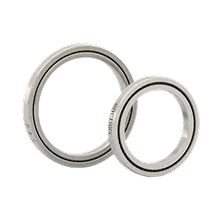
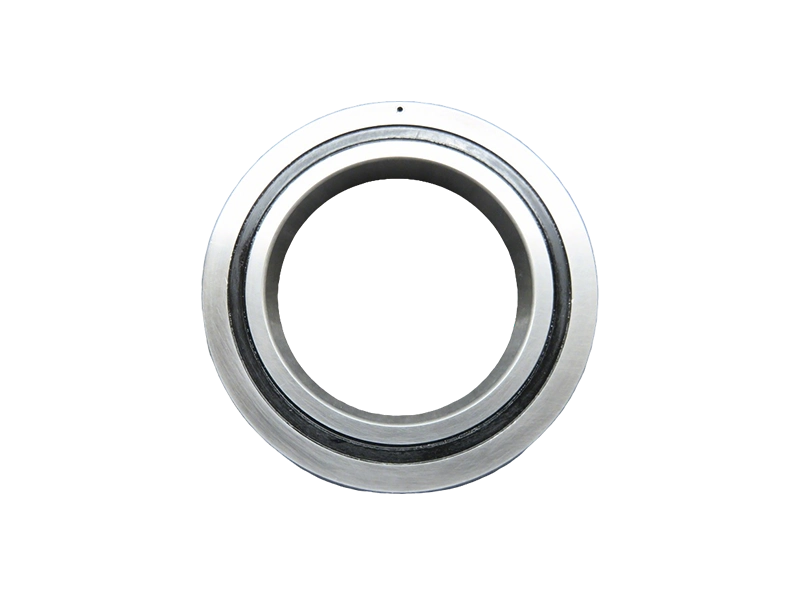
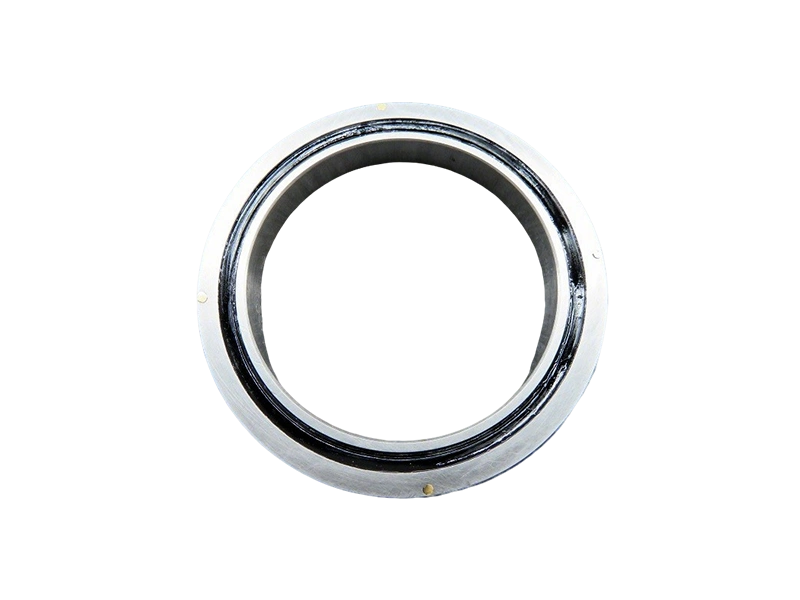
Thin section bearings are a critical component in countless precision machines, from robotic arms and medical devices to aerospace actuators and semiconductor equipment. Their slim profile allows engineers to reduce weight, save space, and optimize system design—but that same compactness makes them more sensitive to operating conditions than standard bearings. When maintenance is rushed or overlooked, the consequences go far beyond a single component failure: accuracy degrades, unplanned downtime accumulates, and the entire machine can suffer premature wear. Understanding the specific care requirements of thin section bearings is the first step toward protecting your equipment investment and maximizing its operational life.
What Makes Thin Section Bearings Different?
Unlike conventional bearings with larger cross-sections, thin section bearings have a reduced radial and axial cross-section relative to their bore diameter. This design saves valuable space and weight, but it also means that the load-carrying capacity is lower per unit of size. The raceways and rolling elements are more susceptible to stress concentrations, misalignment, and contamination. Consequently, proper care is not simply a "best practice"—it is a decisive factor in whether the bearing achieves its design life or fails early.
Because these bearings are often used in race applications and precision positioning systems, any deviation from ideal operating conditions is quickly amplified. Thermal expansion, slight misalignment, or a minor lack of lubrication can produce measurable changes in running accuracy. For engineers and maintenance teams, this means paying close attention to the unique physical constraints of thin section bearings rather than treating them as smaller versions of standard units.
Common Failure Modes and Their Root Causes
To extend the service life of thin section bearings, it is essential to recognize the most frequent causes of premature failure. In our experience, the following issues account for the majority of unexpected bearing replacements:
- Raceway fatigue from insufficient lubrication: A thin lubricant film leads to metal-to-metal contact, accelerating surface wear and flaking.
- Contamination ingress: Fine particles entering the bearing act as an abrasive, scoring the raceways and increasing friction.
- Improper preload or clearance: Inaccurate axial play causes uneven load distribution, shortening bearing life.
- Misalignment during mounting: A cocked bearing creates asymmetric stresses, often resulting in rapid spalling within hours or days of installation.
- Corrosion from moisture or aggressive media: Thin section bearings are especially vulnerable in sealed but humid environments.
Recognizing these failure modes early is critical. In many cases, the warning signs—noise, vibration, torque irregularity—are subtle at first but become severe as damage progresses. Implementing a structured maintenance program can help catch problems before they lead to system failure.
Best Practices for Thin Section Bearing Maintenance
A robust maintenance schedule for thin section bearings involves several complementary steps. Each step must be executed with precision, because the tolerance for error is much lower than with conventional bearings.
1. Mounting and Handling
Never apply mounting force through the rolling elements. Instead, use an arbor press or a dedicated mounting tool that applies pressure only to the ring being installed. The bearing must be seated fully and squarely in its housing or on the shaft; even a 1-degree tilt can cause severe load distortion. Verify that the shaft and housing bores meet the specified tolerance and roundness. For thin section bearings, the housing bore should be measured at multiple points to avoid clamping-induced out-of-roundness.
2. Lubrication: Quality, Quantity, and Interval
Thin section bearings operate most reliably with a high-quality grease or oil specifically designed for low starting torque and high-speed capability. The base oil viscosity should match the operating temperature and speed. Too little grease leads to starvation; too much causes excessive churning and heat. Re-lubrication intervals must be based on the manufacturer's recommendations, adjusted for actual load and environment. In clean, temperature-stable applications, an annual lubrication interval may be appropriate; however, in contaminated or high-humidity settings, more frequent intervals are necessary.
When reapplying grease, purge the bearing compartment to remove old, oxidized grease and any contaminants that have accumulated. In applications where wash-down is common, use sealed thin section bearings to keep water and cleaning agents away from the raceways. Remember that thin section bearings do not have the same grease reservoir as standard bearings, so replenishment should be conservative and methodical.
3. Preload Control and Clearance Adjustment
Many precision applications require a specific preload to eliminate play and increase stiffness. However, excessive preload accelerates wear and heat generation. For thin section bearings, preload is typically set with shims, springs, or adjustable locknuts. The correct preload value must be verified using a torque gauge or a custom fixture, not by feel. Similarly, if the design uses radial clearance, the fit between the bearing bore and shaft must avoid excessive interference that reduces clearance to zero, creating friction and premature failure.
4. Sealing and Protection
Keep thin section bearings protected from abrasives and moisture at all times. If the machine has an external sealing arrangement, inspect it regularly for wear or gaps. For bearings that are exposed during cleaning, consider additional shielding or a purge system. Even a clean workbench can be a source of contamination during assembly; always handle bearings with clean gloves and keep them in their original packaging until the moment of installation.
5. Vibration Monitoring and Operational Checks
Thin section bearings often give early warnings of damage through small changes in vibration signature. Implementing a periodic vibration measurement program is one of the most effective ways to extend equipment life. An increase in high-frequency vibration often indicates lubrication starvation, while low-frequency peaks may suggest raceway damage or misalignment. For smaller, non-instrumented machines, simple operational checks—listening for noise, feeling for abnormal heat, and monitoring motor current—can reveal developing issues.
PRS, a recognized OEM supplier with years of bearing application knowledge, recommends integrating bearing care into your preventive maintenance system rather than treating it as a reactive task. By tracking bearing temperature and vibration baselines during machine commissioning, you establish a reference that makes future anomalies obvious.
Creating a Sustainable Bearing Care Schedule
The frequency and depth of maintenance tasks should be defined based on machine criticality, operating hours, and environment. For most industrial equipment, a quarterly inspection of thin section bearings is reasonable, with a more comprehensive assessment—removal, inspection, and re-lubrication—performed annually. In high-precision environments such as semiconductor fabs, where downtime carries enormous cost, a monthly check of lubrication integrity and operational torque may be justified.
A practical way to structure care is to assign ownership to a specific technician. That person tracks service hours, records any unusual operating parameters, and ensures that only approved lubricants and tools are used. Documentation is key: comparing maintenance logs over time helps identify gradual wear patterns before they become failures.
Conclusion
Thin section bearing care is not a one-time event but a continuous discipline. When engineers and maintenance teams respect the design constraints of these bearings—proper mounting, precise lubrication, correct preload, and contamination control—they directly extend equipment life and operational reliability. Investing time in routine care always pays back through fewer breakdowns, more consistent product quality, and lower lifecycle costs. Partnering with a knowledgeable supplier like PRS can further help you select the right bearing and define a maintenance plan that fits your specific application needs.
By making thin section bearing care a priority, you protect not just a single component, but the entire machine's performance and your organization's bottom line.


 XRT Series Crossed Tapered Roller Bearings
 XV Series Crossed Cylindrical Roller Bearing
 XRU Crossed Roller Bearings
 XRSU Crossed Roller Bearings
 XRE Crossed Roller Bearings
 XRC Crossed Roller Bearings
 XRBH Crossed Roller Bearings
 XRB Crossed Roller Bearings
 Ultra Thin XRBS Crossed Roller Bearings
 Ultra Thin XRA-C Crossed Roller Bearings
 Ultra Thin XRA Crossed Roller Bearings
 XRBC Crossed Roller Bearings