Our reliance on compact, high-precision machinery has never been greater, yet at the heart of many such assemblies is the thin section bearing. These bearings are valued for their extremely low cross-section, which permits significant weight and space savings in robotics, aerospace systems, medical devices, and industrial automation. But once the decision is made to use a thin section bearing, engineers face another critical question: should it be sealed or open? The answer is rarely straightforward, as it depends on operating environment, speed, temperature, maintenance access, and expected service life. This article offers a thorough comparison of sealed and open thin section bearings, and explains how PRS helps customers select the most reliable and cost-effective solution for their specific application.
Understanding Thin Section Bearings
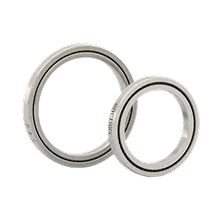
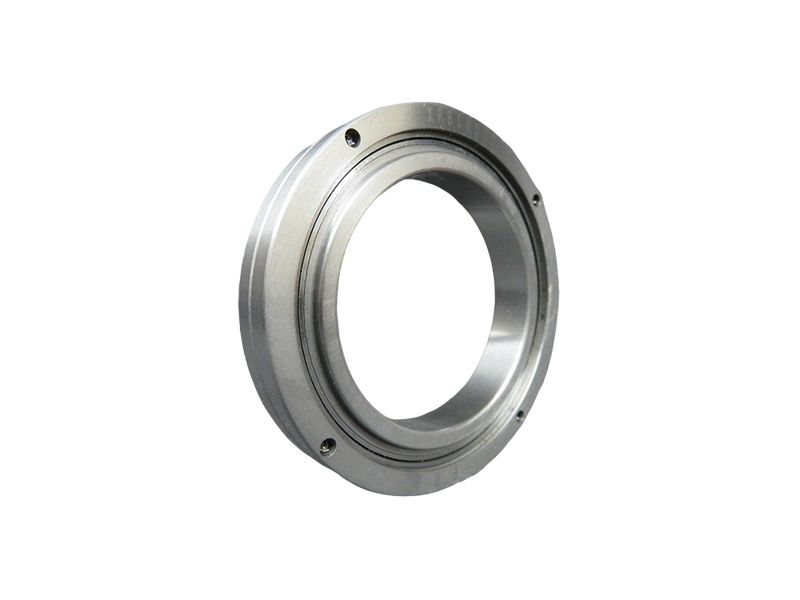
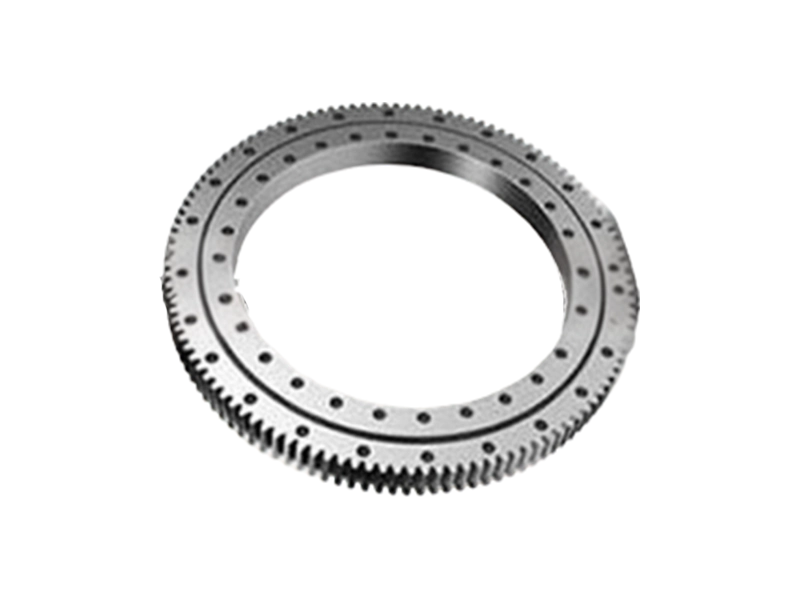
Thin section bearings are characterized by a constant cross-section dimension, regardless of bore diameter. This unique geometry allows them to occupy far less axial and radial space than standard bearings, making them ideal for large-diameter rotating assemblies such as turntables, gimbals, and rotary indexing tables. Common types include radial contact, angular contact, and four-point contact versions, each offering different load capacity, stiffness, and moment behavior. In every case, the sealing arrangement plays a decisive role in overall performance. A sealed configuration integrates a contact or non-contact seal into the bearing rings, while an open configuration leaves the rolling elements exposed, relying on the surrounding housing to manage protection and lubrication.
Sealed vs. Open Thin Section Bearings: Critical Differences
Choosing between sealed and open bearings requires a careful comparison of five core factors: design, contamination resistance, lubrication, torque, and long-term cost. The following sections examine each factor in detail.
Design and Construction
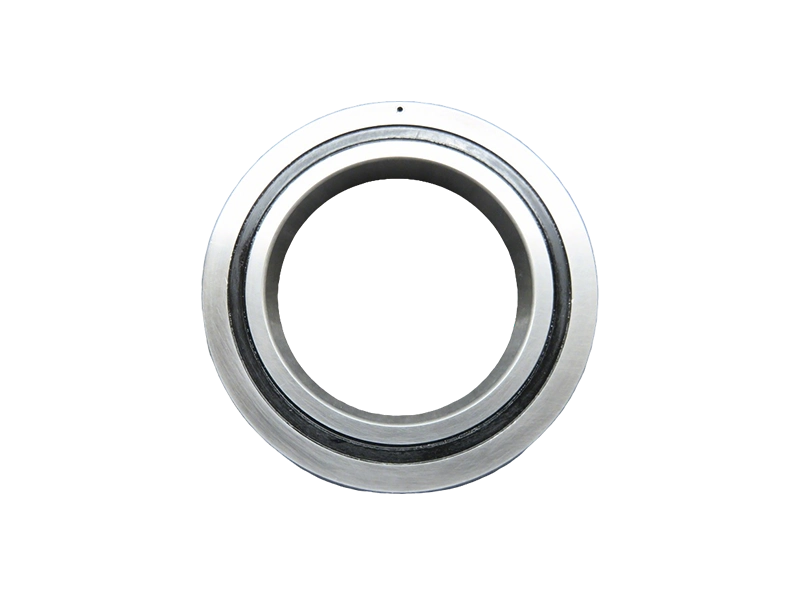
Sealed thin section bearings are manufactured with either non-contact shields or contact seals made from nitrile, fluorocarbon, or PTFE-based compounds. The seal element fits into a groove in the outer ring and forms a small gap against the inner ring, retaining grease while keeping out dust and moisture. Open bearings have no integral sealing option, which provides greater design freedom for custom lubricant paths and external dynamic seal systems. The choice directly affects frictional torque, allowable speed, and the need for housing-supplied sealing features.
Contamination Resistance and Protection
Contamination is the most common cause of premature bearing failure. Sealed bearings give immediate protection against fine powders, wash-down fluids, and airborne debris, an essential benefit for food processing, outdoor robotics, and certain agricultural applications. Open bearings, by contrast, remain vulnerable unless housed in a tightly sealed assembly. That said, an open bearing inside a well-designed labyrinth or purge housing can achieve comparable protection while offering better thermal ventilation. Users must therefore assess not only the bearing but also the full enclosing system.
Lubrication and Speed Performance
Sealed thin section bearings usually arrive pregreased for life. This simplifies installation and removes the risk of under- or over-lubrication, but it also means the grease must last for the entire bearing lifetime. Open bearings allow the end user to choose a custom oil or grease and to re-lubricate at planned intervals. For high-speed operations, an open bearing with controlled oil flow may run cooler and produce lower torque than a contact-sealed bearing. It is also important to distinguish between contact seals and non-contact shields on "sealed" designs, since non-contact shields provide less protection but lower friction.
Maintenance and Life-Cycle Cost
Price alone does not reveal the better choice. Sealed bearings generally cost more upfront but can reduce maintenance labor, downtime, and mistakes during manual grease operations. Open bearings usually have a lower purchase price, yet they may generate recurring costs for external seals, periodic greasing, and inspections. In critical equipment, lubrication error is a frequent cause of early failure, which can push the total cost of an open bearing system far above that of a sealed alternative. PRS has observed that a lifecycle cost analysis often overturns assumptions based on catalogue price.
Advantages at a Glance
Advantages of sealed thin section bearings:
- Integrated protection against dust, debris, moisture, and wash-down
- Minimal maintenance and reduced risk of lubrication errors
- Simpler housing design with fewer external sealing requirements
Advantages of open thin section bearings:
- Lower initial cost and lower frictional drag, especially at high speed
- Flexibility to select, replace, or recirculate lubricant
- Simpler inspection and compatibility with existing external sealing
Application-Driven Selection
No bearing type is inherently superior in every environment. The decision depends on your application’s demands and constraints.
When Sealed Bearings Excel
Sealed thin section bearings are the strongest candidates where the machine will never be re-lubricated and where contamination is a persistent risk. Examples include surgical scanners, robotic joints with restricted access, and continuously operating rotary stages. If speeds are moderate and viscous drag is not a limiting factor, a non-contact or low-torque contact seal gives dependable protection for years. For these applications, sealed bearings reduce design complexity and improve reliability.
When Open Bearings Offer a Clear Advantage
Open bearings are preferable in very high speed spindles, high temperature ovens, vacuum equipment, and other environments where no standard seal elastomer can survive. They are also appropriate when the surrounding machine already provides effective dynamic sealing, such as a turntable with labyrinth seals and a dry air purge. Open configurations allow engineers to design the lubrication system for the bearing’s exact thermal and speed duty, often yielding cooler operation and lower system drag than a sealed version.
The PRS Approach to Bearing Reliability
PRS specializes in high-precision thin section bearings for demanding applications, and offers both sealed and open configurations with a range of materials, cage types, and preload options. Selection is more than a catalogue question; it requires a clear understanding of bearing torque, grease life, thermal behavior, and housing seal interaction. PRS engineers work directly with customers to evaluate operating conditions, machine architecture, and maintenance strategy. With documented engineering support, PRS ensures that the chosen bearing delivers predictable performance and durability throughout its service life.
Frequently Asked Questions
Can a sealed thin section bearing be re-lubricated?
Some sealed bearings include a lubrication hole or designed re-lubrication path, but most thin section bearings are not intended for repeated regreasing. If periodic re-lubrication is mandatory, an open bearing or a specially configured sealed design should be considered.
Are open bearings always less expensive than sealed bearings?
Not when total ownership costs are considered. Open bearings can require external sealing, lubricant application, and more frequent maintenance. In many low-maintenance applications, a sealed bearing provides lower overall cost despite a higher purchase price.
What is the difference between a shield and a seal?
A shield is typically a non-contact metal disc that blocks large particles but cannot reliably retain grease. A seal contacts the bearing ring, providing far better protection and lubricant retention at the expense of additional friction. Thin section bearings are available with both options.
Final Verdict
Sealed versus open thin section bearings is not a matter of universal superiority. Sealed bearings excel in contamination-prone or maintenance-limited environments, while open bearings offer maximum flexibility for high-speed, high-temperature, or custom-lubrication needs. The correct answer depends on operating conditions, system design, and total lifecycle goals. PRS encourages engineers to base their choice on quantified trade-offs rather than assumptions. By considering torque, contamination, lubrication, and cost together, you can select a bearing that delivers genuine long-term value.


 XRT Series Crossed Tapered Roller Bearings
 XV Series Crossed Cylindrical Roller Bearing
 XRU Crossed Roller Bearings
 XRSU Crossed Roller Bearings
 XRE Crossed Roller Bearings
 XRC Crossed Roller Bearings
 XRBH Crossed Roller Bearings
 XRB Crossed Roller Bearings
 Ultra Thin XRBS Crossed Roller Bearings
 Ultra Thin XRA-C Crossed Roller Bearings
 Ultra Thin XRA Crossed Roller Bearings
 XRBC Crossed Roller Bearings