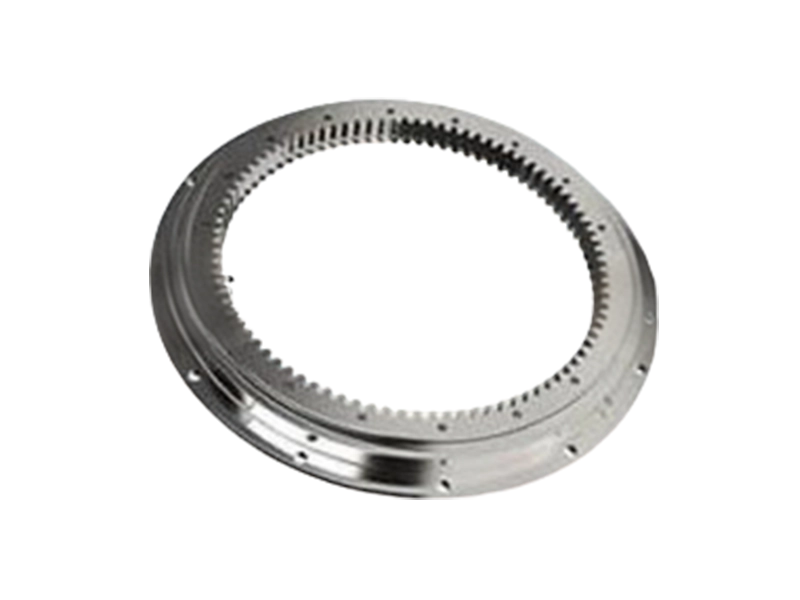
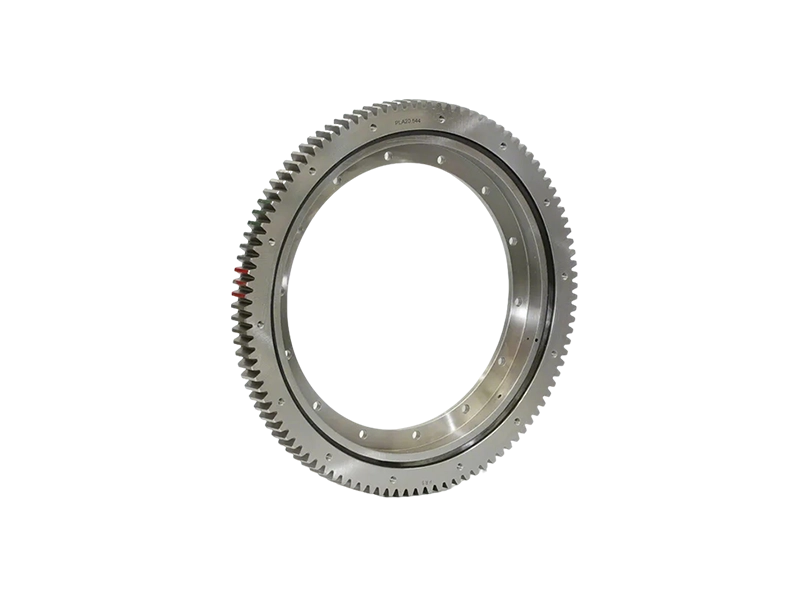
Crossed roller bearings have become a
cornerstone in modern mechanical design, particularly in applications where
precise rotation and load capacity are critical. From industrial robotics to
heavy-duty machinery and aerospace platforms, the demand for bearings that
maintain accuracy under stress is ever-growing. However, when these bearings
operate in corrosive environments—such as chemical plants, marine applications,
or wastewater treatment facilities—the challenge of material selection becomes
paramount. Choosing the right material can significantly impact the bearing's
lifespan, reliability, and maintenance costs.
Understanding Crossed Roller Bearings

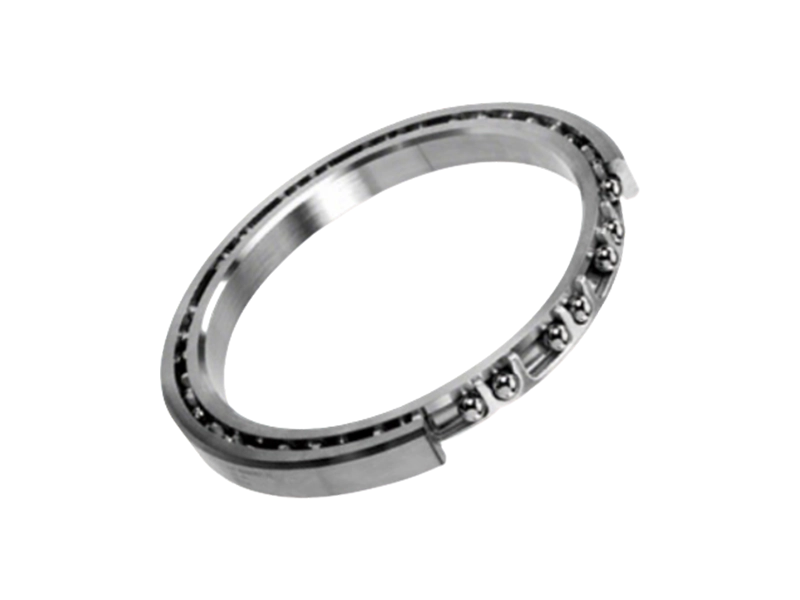
A crossed roller bearing is a type of
bearing where cylindrical rollers are arranged at right angles to each other
between inner and outer rings. This configuration allows the bearing to
accommodate axial, radial, and moment loads simultaneously, providing high
rigidity and smooth rotation. The precision of crossed roller bearings makes
them essential in applications such as medical imaging equipment, rotary
tables, and precision turntables used in optical and semiconductor industries.
Despite their advanced design, crossed
roller bearings are vulnerable to corrosion when exposed to harsh environments.
Standard steel bearings, while robust in controlled settings, can quickly
deteriorate under exposure to moisture, salt, or chemical agents. This
deterioration can lead to surface pitting, increased friction, and ultimately,
operational failure.
The Importance of Material Selection
Material selection plays a critical role in
extending the service life of crossed roller bearings under corrosive
conditions. The ideal material must combine mechanical strength with chemical
resistance, maintaining the precision and load-bearing capacity required by
modern machinery. Several materials have emerged as preferred choices for these
demanding conditions:
1. Stainless Steel
Stainless steel, particularly grades such
as AISI 440C and AISI 304, has long been favored for corrosion resistance.
These alloys offer a balance between hardness and chemical stability. AISI
440C, with its high carbon content, provides excellent wear resistance while
maintaining reasonable corrosion resistance, making it suitable for moderately
corrosive environments. For applications with more aggressive chemicals or
higher humidity, AISI 304 stainless steel offers superior protection against
oxidation and rust.
However, stainless steel bearings may
exhibit slightly lower load capacity than traditional hardened steel bearings.
To counteract this limitation, designers often use surface treatments or
coatings, such as passivation or electroless nickel plating, to enhance
corrosion resistance without compromising mechanical strength.
2. Silicon Nitride (Si₃N₄) Ceramics
Ceramic materials, particularly silicon
nitride, have gained prominence in high-performance crossed roller bearings
exposed to severe corrosive conditions. Silicon nitride is lightweight,
exceptionally hard, and chemically inert, making it resistant to acids,
alkalis, and saltwater environments. Bearings with ceramic rollers not only
reduce weight but also minimize thermal expansion, ensuring precision under
varying temperatures.
A hybrid configuration, combining stainless
steel races with silicon nitride rollers, is increasingly popular. This design
leverages the chemical resistance of ceramics while maintaining the structural
integrity of steel rings, offering an optimal compromise between performance
and durability.
3. Coated and Surface-Treated Bearings
Advanced coating technologies provide
another avenue for enhancing corrosion resistance. Titanium nitride, chromium
nitride, and diamond-like carbon (DLC) coatings create a protective layer on
the bearing surfaces, preventing direct contact with corrosive agents. These
coatings are particularly effective in environments where bearings are
subjected to both chemical attack and abrasive wear. Combined with stainless
steel or ceramic components, coated bearings offer a comprehensive solution for
demanding applications.

Application Considerations
Selecting the right material extends beyond
chemical resistance; engineers must also consider operational load, rotational
speed, and temperature. For instance, in offshore wind turbines, crossed roller
bearings must endure high axial and radial loads while resisting saltwater
corrosion. In medical equipment, bearings must operate with near-zero
lubrication and resist sterilization chemicals, highlighting the need for
biocompatible and corrosion-resistant materials.
Proper maintenance and lubrication
strategies further enhance the performance of bearings in corrosive environments.
Lubricants with anti-corrosive additives, combined with periodic inspections,
can prevent premature failure and maintain operational precision over time.
Future Trends in Bearing Materials
Research in bearing materials continues to
evolve, with a growing focus on nanostructured coatings, advanced ceramics, and
composite materials. These innovations aim to offer even higher corrosion
resistance, reduced friction, and longer service life. The integration of smart
sensors into bearings is also on the horizon, enabling real-time monitoring of
temperature, load, and wear, providing predictive maintenance capabilities that
minimize downtime in critical applications.
Conclusion
The selection of materials for crossed
roller bearings in corrosive environments is a complex but essential task for
engineers and designers. Stainless steel remains a reliable choice for moderate
corrosion, while silicon nitride ceramics offer unmatched chemical resistance
in the most aggressive conditions. Coatings and surface treatments further
enhance longevity, providing tailored solutions for specific industrial needs.
By carefully considering material properties, load requirements, and
environmental factors, manufacturers can significantly improve bearing
performance, reduce maintenance costs, and ensure the long-term reliability of
their machinery.
Ultimately, investing in high-quality
materials for crossed roller bearings is not merely a technical decision—it is
a strategic choice that safeguards operational efficiency, minimizes downtime,
and enhances the overall return on investment for equipment operating in
corrosive environments.



 XRT Series Crossed Tapered Roller Bearings
 XV Series Crossed Cylindrical Roller Bearing
 XRU Crossed Roller Bearings
 XRSU Crossed Roller Bearings
 XRE Crossed Roller Bearings
 XRC Crossed Roller Bearings
 XRBH Crossed Roller Bearings
 XRB Crossed Roller Bearings
 Ultra Thin XRBS Crossed Roller Bearings
 Ultra Thin XRA-C Crossed Roller Bearings
 Ultra Thin XRA Crossed Roller Bearings
 XRBC Crossed Roller Bearings