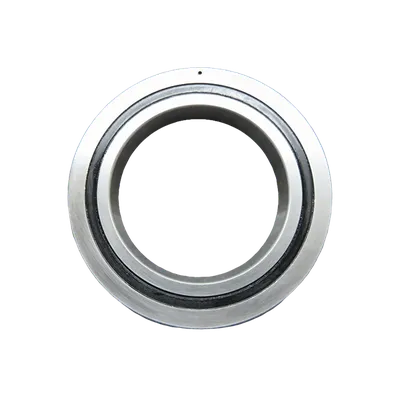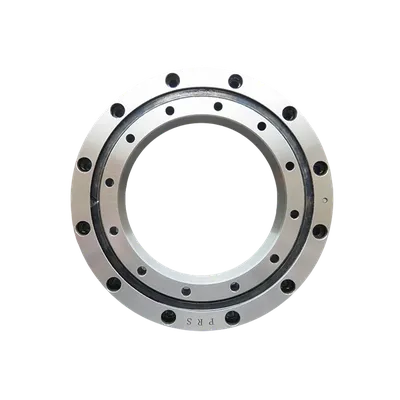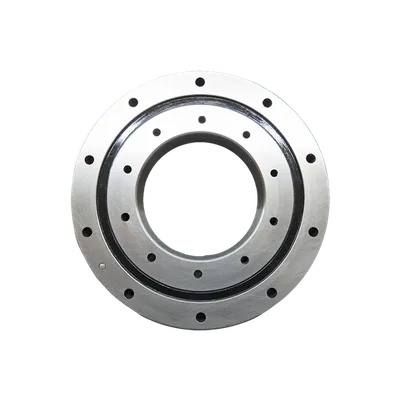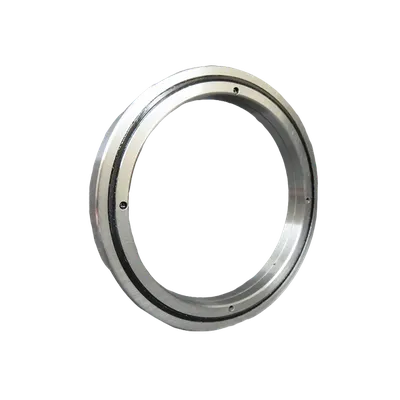

Slim-type crossed roller bearings have become a preferred solution in industries that demand high precision, compact design, and reliable load performance. Engineers who work with robotics, automation systems, medical devices, and CNC equipment often select these bearings because they deliver exceptional rigidity while maintaining a slim profile. However, many users still struggle to fully understand how load capacity works in these specialized bearings and how to select the right model for their application.
This guide explains the load capacity of slim-type crossed roller bearings in a clear, practical, and experience-driven way. It focuses on real engineering considerations rather than textbook definitions, helping you make informed decisions that improve equipment performance and service life.
What Are Slim-Type Crossed Roller Bearings?
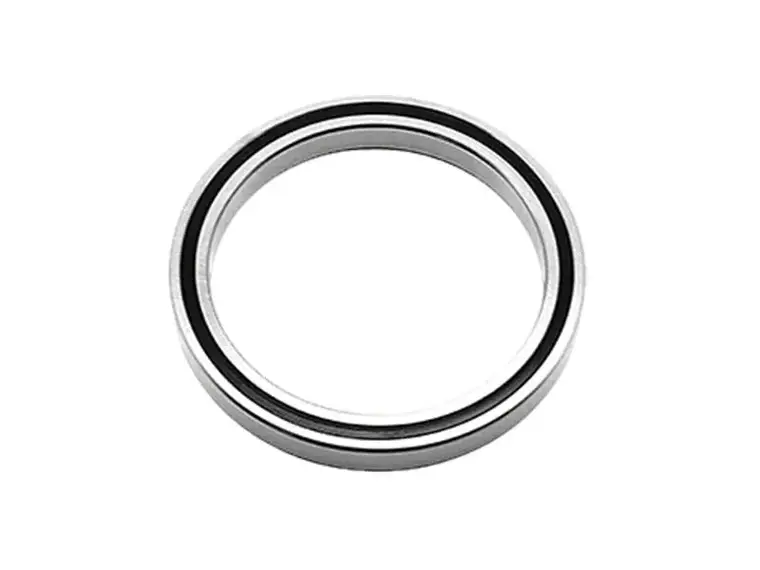
Slim-type crossed roller bearings are a variation of crossed roller bearings designed with a reduced cross-section. Manufacturers arrange cylindrical rollers orthogonally (at 90 degrees) between inner and outer rings. This structure allows a single bearing to simultaneously handle radial loads, axial loads, and moment loads.
Unlike traditional bearings that require multiple units to support different load directions, slim-type crossed roller bearings simplify system design. Their compact structure makes them ideal for applications where space and weight constraints are critical.
Load Capacity of Slim-Type Crossed Roller Bearings
Load capacity is not a single fixed value. Engineers typically evaluate it through two main parameters:
Dynamic Load Capacity (C): This value represents the load a bearing can handle during rotation over a defined lifespan.
Static Load Capacity (C₀): This value indicates the maximum load a bearing can withstand without permanent deformation when stationary.
Slim-type crossed roller bearings often show high load capacity relative to their size. However, actual performance depends heavily on operating conditions, installation accuracy, and load distribution.
Key Factors That Affect Load Capacity
1. Bearing Geometry and Roller Arrangement
The crossed arrangement of rollers ensures that load is distributed evenly across multiple contact points. This design significantly increases rigidity and load-bearing capability compared to standard ball bearings.
Slim-type designs, however, reduce material thickness. Engineers must balance compactness with strength. A thinner ring structure may slightly reduce absolute load capacity, but optimized internal geometry compensates for this in most applications.
2. Material Quality and Heat Treatment
High-quality bearing steel and precise heat treatment processes directly influence load capacity. Manufacturers who control hardness, residual stress, and microstructure can significantly enhance fatigue resistance.
In real-world applications, bearings made with inferior materials often fail prematurely, even if their catalog load ratings appear similar. This is why sourcing from reliable manufacturers is critical for long-term performance.
3. Preload Settings
Preload plays a major role in determining how a slim-type crossed roller bearing handles load. Proper preload eliminates internal clearance, increases stiffness, and improves positioning accuracy.
However, excessive preload can reduce load capacity by increasing internal stress and friction. Engineers must carefully match preload levels with application requirements.
4. Mounting Accuracy
Even the highest-quality bearing will underperform if installation is incorrect. Misalignment, uneven bolt tightening, or improper housing tolerances can cause uneven load distribution.
This leads to localized stress concentrations, which reduce effective load capacity and accelerate wear. Precision mounting is especially important for slim-type bearings because their compact structure leaves less margin for error.
5. Load Direction and Combination
Slim-type crossed roller bearings are designed to handle multi-directional loads. However, the ratio between radial, axial, and moment loads affects overall performance.
For example:
High moment loads require careful selection of bearing diameter and cross-section.
Combined loads may reduce effective capacity compared to single-direction loads.
Engineers should always evaluate real operating conditions rather than relying solely on catalog values.
How to Calculate Bearing Life Based on Load Capacity
Engineers often estimate bearing life using the basic rating life formula:
L10 = (C / P)³ × 10⁶ revolutions
Where:
C = dynamic load capacity
P = equivalent dynamic load
This formula provides a theoretical lifespan under ideal conditions. In practice, factors such as lubrication, contamination, and temperature must also be considered.
For slim-type crossed roller bearings used in high-precision equipment, many designers apply additional safety factors to ensure reliability.
Practical Application Scenarios
Robotics and Automation
Robotic arms require compact bearings with high rigidity and consistent load performance. Slim-type crossed roller bearings support multi-axis motion while maintaining positioning accuracy.
Medical Equipment
Medical imaging devices such as CT scanners depend on smooth rotation and stable load handling. Slim-type bearings meet strict space and precision requirements.
CNC and Machine Tools
Machine tools generate complex load combinations during operation. Slim-type crossed roller bearings help maintain structural rigidity and machining accuracy.
Semiconductor Equipment
In semiconductor manufacturing, even slight deviations can affect product quality. These bearings provide the precision and load stability needed in ultra-clean environments.
Common Mistakes to Avoid
Many users misunderstand load capacity and make avoidable mistakes:
Selecting based only on size constraints: Compact design should not compromise load requirements.
Ignoring preload adjustments: Incorrect preload leads to early failure.
Overlooking installation quality: Poor mounting reduces actual load capacity.
Using catalog values blindly: Real conditions often differ from test environments.
Avoiding these mistakes can significantly extend bearing service life and improve equipment reliability.
How to Choose the Right Slim-Type Crossed Roller Bearing
A structured selection process ensures optimal performance:
Define all load types (radial, axial, moment).
Calculate equivalent dynamic load.
Evaluate required service life.
Consider installation conditions and space constraints.
Select appropriate preload and accuracy grade.
Verify manufacturer quality and testing standards.
Working with experienced suppliers who provide technical support can simplify this process and reduce risk.
Future Trends in Slim-Type Bearing Design
Manufacturers continue to improve slim-type crossed roller bearings through:
Advanced materials with higher fatigue resistance
Optimized roller profiles for better load distribution
Lightweight designs for energy efficiency
Integration with smart monitoring systems
These innovations will further enhance load capacity and reliability while meeting evolving industry demands.
Conclusion
The load capacity of slim-type crossed roller bearings is not just a specification in a catalog. It is the result of design, materials, installation, and real operating conditions working together. Engineers who understand these factors can make better decisions, reduce downtime, and improve overall system performance.
If your application requires high precision in a compact space, slim-type crossed roller bearings offer a powerful solution. However, selecting the right bearing requires careful analysis and practical experience. Investing time in proper evaluation will deliver long-term benefits in performance, reliability, and cost efficiency.