
In modern industrial applications, the demand for compact, high-precision rotational components has grown significantly. Thin section bearings have emerged as a solution, providing exceptional performance in confined spaces without compromising load capacity or rotational accuracy. Among the diverse designs available, the choice of contact style plays a pivotal role in determining the bearing's performance under varying operating conditions. This article explores thin section bearing Type A vs Type C vs Type X contact styles, highlighting their structural differences, operational advantages, and industry applications.
What Are Thin Section Bearings?
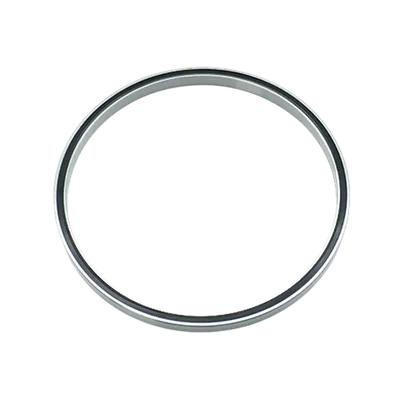
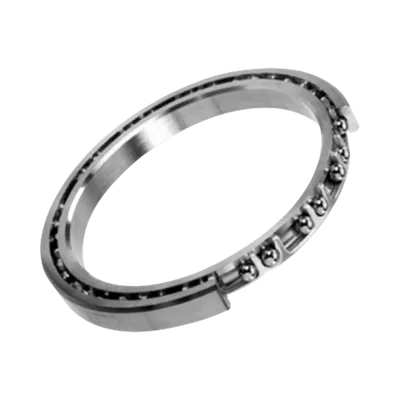
Thin section bearings are specialized bearings characterized by their small cross-sectional height relative to their bore diameter. This design enables engineers to integrate rotational components into applications where conventional bearings would be too bulky or heavy. Despite their reduced profile, these bearings maintain high load-carrying capacity, rigidity, and operational precision, making them ideal for robotics, aerospace, medical devices, and automation equipment.
The contact style of a bearing, which refers to how the rolling elements interact with the raceway surfaces, significantly impacts its axial and radial load handling, rotational smoothness, and resistance to misalignment. Understanding the distinctions among Type A, Type C, and Type X contact styles is crucial for engineers seeking optimal performance in thin section bearing applications.
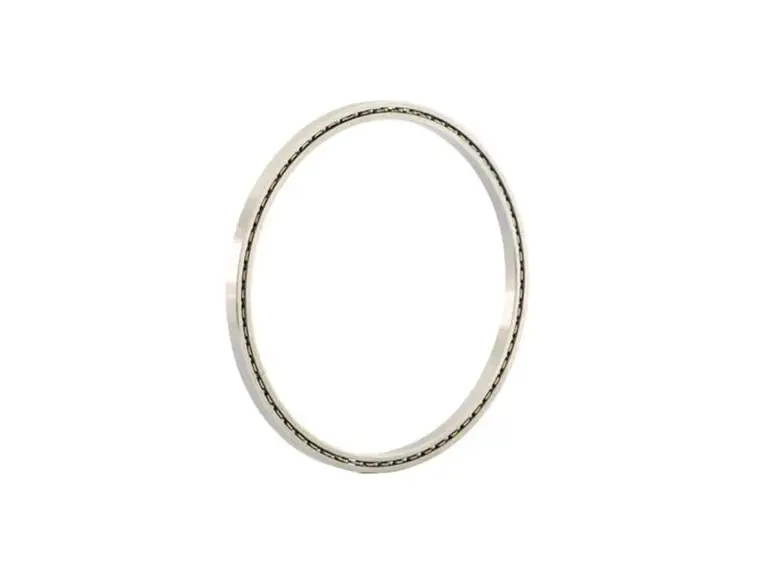
Type A Contact Style: Angular Contact with Standard Load Distribution
Type A thin section bearings utilize an angular contact design where the rolling elements make contact with the raceways at a moderate angle. This configuration allows the bearing to handle both radial and moderate axial loads in one direction. The Type A style is especially beneficial in applications requiring precise axial positioning while maintaining high rotational accuracy.
Advantages:
Balanced load distribution between radial and axial directions.
High rotational accuracy suitable for robotic joints and positioning systems.
Versatility in handling moderate axial forces without the need for additional support bearings.
Limitations:
Axial load capacity is directional; misalignment can reduce performance.
Not ideal for applications with high axial loads in both directions simultaneously.
Industries such as semiconductor equipment manufacturing and precision assembly machinery often favor Type A thin section bearings for their combination of compact size and balanced load handling.
Type C Contact Style: High Axial Load Capacity
Type C contact style bearings feature a more pronounced contact angle, increasing their ability to handle axial loads while maintaining radial load capacity. Unlike Type A, Type C bearings can accommodate higher axial forces in one direction, making them suitable for applications where thrust load is dominant.
Advantages:
Superior axial load capacity compared to Type A.
Enhanced rigidity for vertical or inclined load-bearing applications.
Maintains rotational accuracy under higher axial forces.
Limitations:
Axial load capacity is primarily unidirectional.
Slightly higher friction compared to Type A due to increased contact angle.
Common applications include vertical axis turntables, industrial automation slides, and rotary indexing tables, where axial load management is critical for long-term operational reliability.
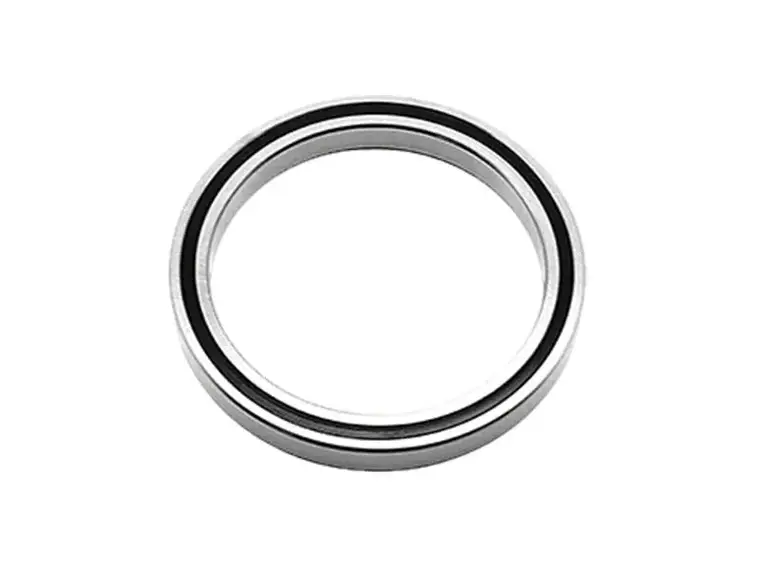
Type X Contact Style: Bidirectional Axial Load and Misalignment Compensation
Type X contact style represents the most versatile thin section bearing contact design. This style incorporates a cross-roller or multi-angle configuration, enabling the bearing to withstand axial loads in both directions while offering improved tolerance to misalignment. Type X bearings are particularly valuable in dynamic environments where precision and flexibility must coexist.
Advantages:
Bidirectional axial load support without additional bearing arrangements.
Enhanced resistance to misalignment and shock loads.
Suitable for high-speed rotational applications requiring smooth and precise motion.
Limitations:
Slightly larger cross-section may limit extremely compact designs.
Manufacturing complexity can increase cost relative to Type A and Type C.
Type X bearings are widely used in robotic arms, radar antenna systems, and aerospace gimbals, where multidirectional loads and alignment variations are common.
Choosing the Right Contact Style
Selecting the optimal thin section bearing requires evaluating several factors:
Load Type and Magnitude: Determine whether radial, axial, or combined loads dominate your application. Type A suits balanced loads, Type C excels in unidirectional axial loads, and Type X handles bidirectional axial loads effectively.
Space Constraints: Thin section bearings are designed for compact spaces, but the contact style can affect cross-sectional dimensions. Consider dimensional allowances for Type X bearings in highly constrained environments.
Precision Requirements: For applications demanding extremely high rotational accuracy, Type A and Type X bearings often outperform Type C in smooth motion under variable load conditions.
Operational Environment: Temperature, contamination, and vibration can influence bearing performance. Type X bearings generally offer greater tolerance to misalignment and dynamic forces.
Conclusion
Understanding thin section bearing Type A vs Type C vs Type X contact styles is essential for engineers seeking high-performance rotational solutions in modern industrial applications. Each contact style offers unique advantages and limitations, making it crucial to match bearing design to operational requirements carefully.
Type A provides balanced load handling and precision, Type C prioritizes high axial load capacity, and Type X delivers bidirectional axial support with misalignment compensation.
Choosing the right thin section bearing ensures optimal machine performance, longer service life, and reduced maintenance costs. For industries ranging from robotics to aerospace, selecting the correct contact style can be the difference between standard performance and exceptional operational efficiency.
Investing time in understanding these differences will allow businesses to implement precision engineering solutions that meet both current and future industrial demands, ultimately improving productivity and reducing operational downtime.